How to Clean and Care for Carbon Steel Cookware
How to Clean and Care for Carbon Steel Cookware
Cleaning carbon steel cookware is simple: wash it by hand, dry it immediately, and apply a very thin layer of cooking oil before storing it. The most important thing is to keep moisture away from the steel, since leaving a carbon steel pan wet or allowing it to air-dry can cause rust.
With this basic routine, your carbon steel cookware can develop a seasoned cooking surface and stay in good condition for years.
How to Clean Carbon Steel Cookware After Every Use
For everyday cleaning, allow your carbon steel pan to cool until it is safe to handle. Then:
- Wash it by hand with warm water. If needed, use a small amount of mild dish soap and a soft, non-abrasive sponge.
- Remove any food residue gently. Avoid aggressive scrubbing during routine cleaning.
- Rinse thoroughly.
- Dry the cookware immediately with a clean kitchen towel or paper towel.
- Apply a very thin layer of cooking oil over the clean, dry surface using a paper towel.
Do not leave carbon steel cookware in a drying rack to air-dry. Even a small amount of water left on exposed carbon steel can encourage rust.
For extra assurance that the pan is completely dry, place it over low heat briefly after towel-drying. Let it cool before applying the protective film of oil.
Before Using Carbon Steel Cookware for the First Time
New carbon steel cookware should be thoroughly cleaned before cooking.
Start by removing all labels and stickers. Do not scrape them off with a knife or another sharp metal object, as this can scratch the surface. If adhesive remains, rubbing alcohol can help remove the residue.
Next, wash the cookware with warm water, mild dish soap and a non-abrasive sponge. This initial cleaning helps remove manufacturing residues, including protective oils or polishing compounds.
Rinse thoroughly and dry the carbon steel immediately. Do not allow it to air-dry.
Once dry, wipe a very thin coating of cooking oil over the surface. The goal is a barely visible film rather than a heavy or sticky layer.
How to Remove Stuck-On Food From a Carbon Steel Pan
If food sticks to your carbon steel cookware, start with the gentlest cleaning method possible.
Add a little warm or hot water and use a soft sponge or wooden utensil to loosen the residue. For more stubborn deposits, a short simmer with water can help release cooked-on food before cleaning.
Avoid leaving a carbon steel pan soaking in the sink for long periods. Prolonged contact with water increases the chance of rust and is unnecessary for normal cleaning.
For particularly stubborn residue, a small amount of coarse salt can also be used as a gentle mechanical scrub. Once the food has been removed, rinse the pan, dry it immediately and finish with a thin coating of oil.
Aggressive abrasives such as steel wool should not be part of your everyday carbon steel cleaning routine. They can remove the seasoned surface along with the food residue.
How to Prevent and Remove Rust From Carbon Steel
Rust on carbon steel is usually the result of moisture remaining in contact with the metal. A pan left wet after washing, stored while damp or placed in a dishwasher is especially susceptible.
Prevention is straightforward:
- Never put carbon steel cookware in the dishwasher.
- Do not leave it soaking in water.
- Dry it immediately after washing.
- Apply a thin film of cooking oil after cleaning.
- Store it in a dry place.
If light surface rust does appear, the cookware is not necessarily ruined.
Scrub the affected area until the rust has been completely removed, then wash and rinse the cookware. Dry it thoroughly and restore the protective oil layer before storing it. If rust removal exposes bare metal or removes the existing seasoning, the affected surface should be seasoned again before normal use.
What to Avoid With Carbon Steel Cookware
A few habits make carbon steel care considerably easier.
| What to Avoid | Why It Matters |
|---|---|
| Never use the dishwasher | Dishwasher detergents and prolonged exposure to water can damage the seasoned surface and promote corrosion. |
| Never leave the cookware wet | Dry carbon steel cookware as soon as you finish washing it to help prevent rust. |
| Avoid prolonged soaking | If food is stuck, loosen it with warm water or a brief simmer instead of leaving the pan submerged. |
| Do not overheat an empty pan | Add your ingredients or cooking fat rather than leaving empty cookware over strong heat. |
| Match the burner to the pan | Use a burner appropriate for the diameter of the base. On gas stoves, excessive flames around the sides can make cleanup more difficult. |
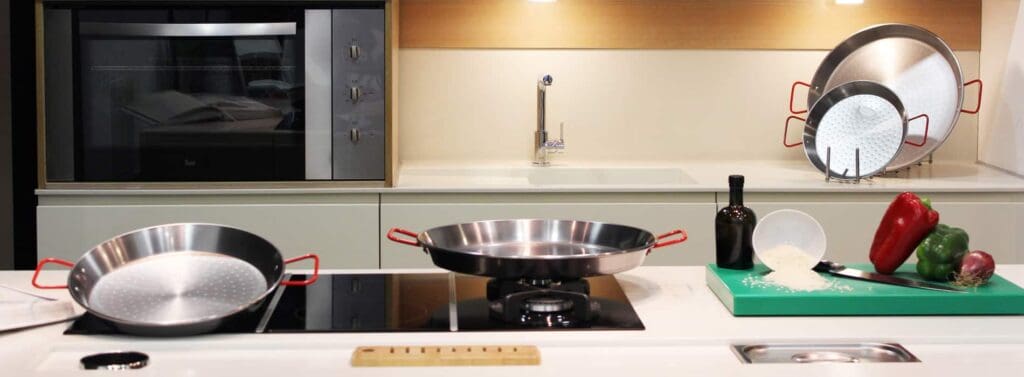
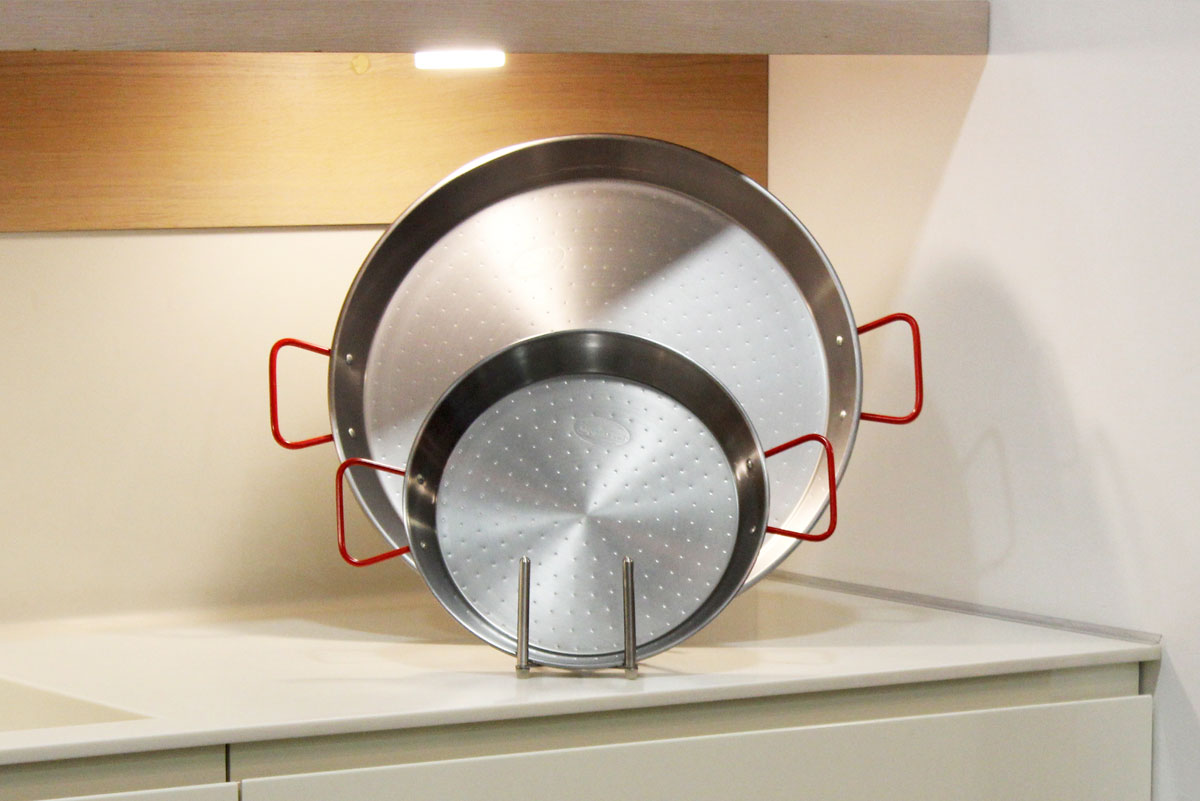
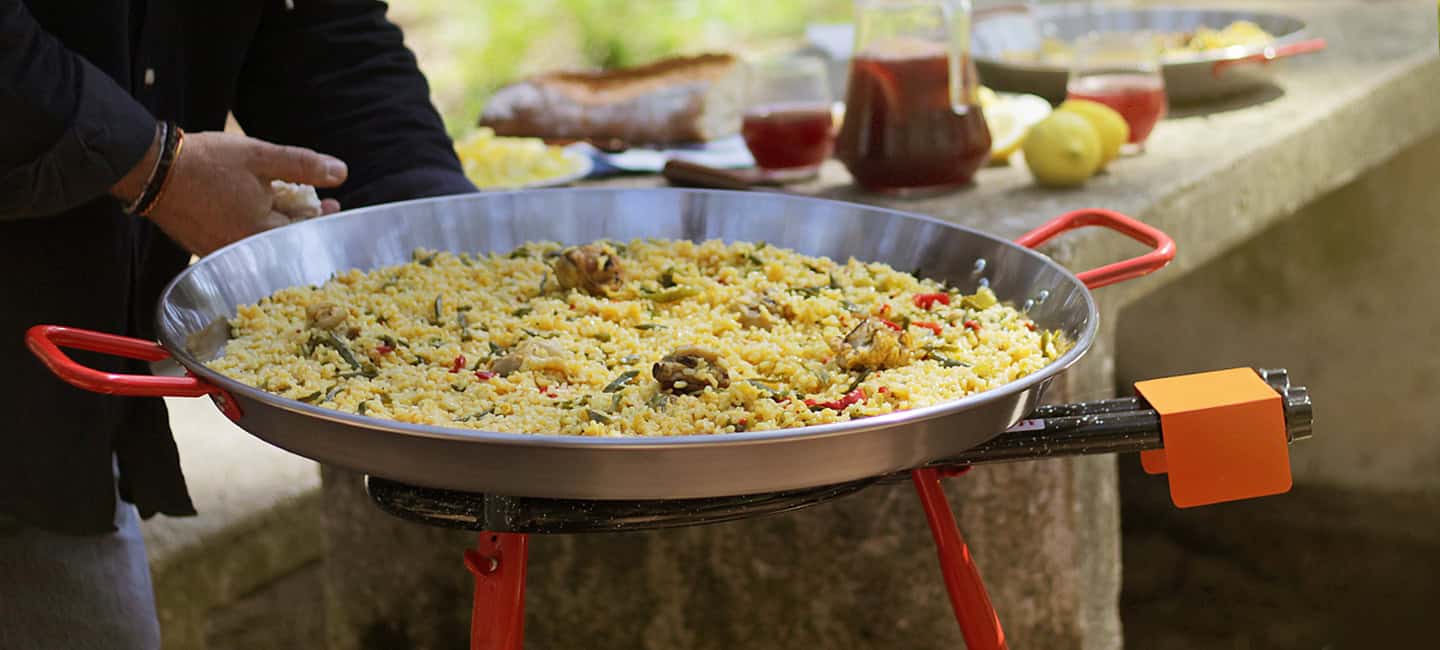
Carbon steel is particularly well suited to high-heat cooking when used correctly. Magefesa’s Carbon Steel Paella Pans are designed for cooking on heat sources including gas stoves and burners, making the same cleaning and moisture-control habits especially important after preparing paella outdoors.
How to Store Carbon Steel Cookware
Before putting your carbon steel cookware away, make sure it is completely clean and dry.
Wipe the cooking surface with a very thin layer of oil, removing any visible excess with a paper towel. Too much oil can become sticky during storage; only a light protective film is necessary.
Store the cookware in a clean, dry cabinet or another area protected from moisture. If you stack carbon steel pans with other cookware, placing a clean, dry paper towel between them can help prevent trapped moisture and surface scratches.
The essential carbon steel maintenance routine is easy to remember: clean, dry, lightly oil and store somewhere dry. Keeping water away from the steel is the most effective way to prevent rust and keep your cookware ready for its next use.
Frequently Asked Questions about Carbon Steel
Share