Can You Use a Pressure Cooker to Distill Water?
Can a pressure cooker distill water? Learn why modifying one is unsafe, how water distillation works, and safer ways to treat water.
Can You Use a Pressure Cooker to Distill Water? What to Know
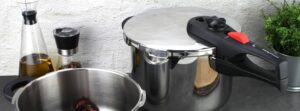
A standard pressure cooker should not be used as a homemade water distiller. Although distillation involves heating water and collecting condensed steam, a pressure cooker is designed to cook food under controlled pressure, not to operate with improvised hoses, cooling coils, or modified steam outlets.
Attaching equipment to a pressure cooker’s vent can interfere with its safety mechanisms and create a risk of burns or dangerous pressure buildup.
If you need distilled water, use a purpose-built water distiller. If you need safe drinking water during an emergency, the appropriate treatment depends on the contaminants present.
Can a Pressure Cooker Distill Water?
A pressure cooker can heat water and generate steam, but it is not designed to collect that steam and turn it into distilled water.
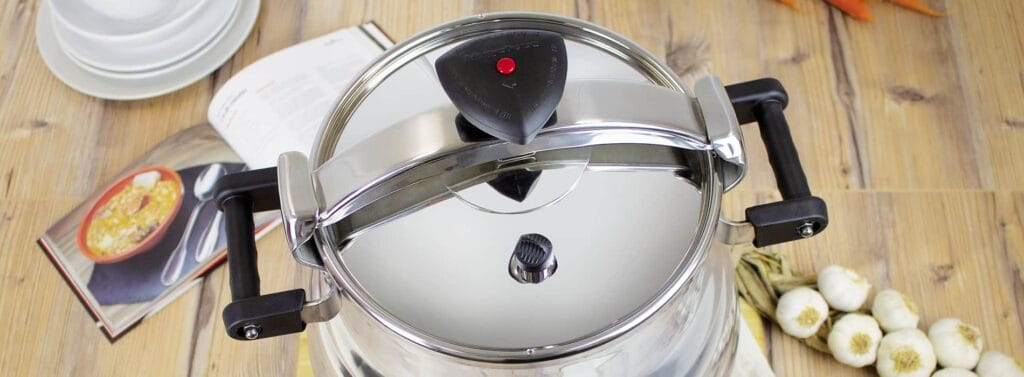
Pressure cookers rely on carefully engineered pressure regulators, steam vents, and safety systems. These components must remain unobstructed and function according to the manufacturer’s instructions.
Some older do-it-yourself methods suggest connecting plastic hoses and metal tubing to the steam outlet. However, these attachments can restrict steam flow or interfere with pressure regulation.
Even if a homemade system appears to produce condensed water, that does not establish that the setup is safe or that the collected water is suitable for drinking.
How Does Water Distillation Work?
Water distillation separates water from many dissolved substances through evaporation and condensation.
The process has three stages:
-
Evaporation: Water is heated until it turns into vapor.
-
Condensation: The vapor passes through a cooling system designed to turn it back into liquid.
-
Collection: The condensed water is collected in a clean container.
Because dissolved salts and many other impurities do not evaporate with water, distillation can remove them from the collected liquid. Properly designed and operated distillation systems can also remove many microorganisms.
However, distilled water is not automatically free from every contaminant.
Certain volatile chemicals can evaporate along with the water and reach the collection container. The equipment itself must also be clean and suitable for contact with drinking water.
The effectiveness of distillation depends on both the source water and the design of the treatment system.
Why Modifying a Pressure Cooker Is Unsafe
Using a pressure cooker as an improvised distiller creates risks that are not present when the appliance is used for its intended purpose.
Pressure buildup
A pressure cooker regulates internal pressure through designated components. Connecting tubing to a steam outlet can restrict the escape of vapor.
If the outlet becomes blocked or pressure regulation is disrupted, the cooker may become hazardous.
Steam burns
Steam escaping from a loose connection, damaged hose, or unexpected opening can cause serious burns.
A makeshift assembly may also shift or disconnect while hot.
Unsuitable materials
Not all food-grade tubing is suitable for high-temperature steam. A material may be safe for contact with food under ordinary conditions without being rated for use in a pressurized steam system.
Uncertain water quality
Condensed steam is not necessarily safe drinking water. Some contaminants can carry over during distillation, while unsuitable or dirty equipment can introduce additional impurities.
For these reasons, a household pressure cooker should not be converted into a water distiller using improvised components.
Safer Ways to Treat Water in an Emergency
The correct treatment depends on whether the water contains disease-causing microorganisms, dissolved salts, or chemical contaminants.
If the water may contain bacteria, viruses, or parasites
Boiling is an effective emergency treatment for many microbiological hazards.
According to the Centers for Disease Control and Prevention (CDC):
-
Bring clear water to a rolling boil for 1 minute.
-
At elevations above 6,500 feet, boil for 3 minutes.
-
Allow the water to cool naturally.
-
Store it in a clean, covered container.
If the water is cloudy, allow particles to settle and filter it through a clean cloth, paper towel, or coffee filter before boiling.
Boiling does not remove dissolved salts or most chemical contaminants.
If the water contains salt
Boiling seawater does not make it drinkable. As water evaporates, the salt remains in the original container.
Removing dissolved salt requires an appropriate desalination system, such as a purpose-built distiller or a reverse-osmosis device designed for saline water.
A standard pressure cooker cannot perform this function safely on its own.
If chemical contamination is suspected
Do not assume that boiling, ordinary household filtration, or improvised distillation will make the water safe.
Water contaminated by fuels, toxic chemicals, or other hazardous substances may require specialized treatment.
Follow instructions from local public health authorities and use bottled water or another confirmed safe supply whenever possible.
If you specifically need distilled water
Use a commercially manufactured water distiller intended for the task.
Follow its operating and cleaning instructions, and check the manufacturer’s specifications to understand which contaminants the equipment is designed to remove.
Not all water-treatment systems provide the same level of protection.
What Can a Pressure Cooker Safely Do?
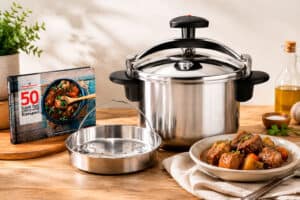
A pressure cooker is a versatile kitchen appliance, but its purpose is food preparation rather than water purification.
| Task | Is a Standard Pressure Cooker Suitable? |
|---|---|
| Cooking beans, stews, and other foods under pressure | Yes, when used according to the manufacturer’s instructions |
| Boiling water for ordinary kitchen use | Yes, without needing to cook under pressure |
| Removing salt from seawater | No |
| Collecting distilled water | No, not as designed |
| Reliably removing chemical contaminants from drinking water | No |
A pressure cooker can help prepare meals efficiently, but it should never be treated as a substitute for properly designed water-treatment equipment.
The safest approach is straightforward: use a pressure cooker for cooking, a dedicated distiller for distillation, and official public health guidance when treating potentially unsafe drinking water.
Sources
Frequently Asked Questions
Can you turn a pressure cooker into a water distiller?
A standard household pressure cooker should not be modified into a water distiller. Improvised attachments may interfere with pressure regulation and create serious safety risks.
Does boiling water remove salt?
No. Boiling does not remove dissolved salt. Desalination requires equipment designed to separate water from salts.
Is distilled water always safe to drink?
Not necessarily. Some volatile chemicals can carry over during distillation, and contaminated equipment can affect the collected water.
Can a pressure cooker purify drinking water?
A pressure cooker is not a dedicated water purification system. Boiling can address many microbiological hazards, but it does not reliably remove dissolved salts or chemical contaminants.
More Cooking Tips from Magefesa
Looking for more practical cooking advice? Visit the Magefesa YouTube channel for recipes, cooking techniques, and helpful tips on getting the most out of your cookware.
Share