How to Clean Aluminum Cookware: Easy Cleaning Tips
How to Clean Aluminum Cookware
Knowing How to clean aluminum cookware correctly helps prevent stains, scratches, discoloration, and damage to the surface. For everyday cleaning, let your cookware cool, then wash it by hand with warm water, mild dish soap, and a soft sponge. Rinse thoroughly and dry immediately rather than leaving it to air-dry.
Aluminum is particularly useful for cookware because it conducts heat efficiently while remaining relatively lightweight. It also naturally develops a thin protective oxide layer when exposed to air. However, aluminum requires appropriate cleaning and handling to keep pots, pans, and pressure cookers in good condition.
Here’s how to clean and care for your aluminum cookware before its first use, after cooking, and when stubborn food residue needs a little extra attention.
How to Clean Aluminum Cookware After Every Use
For routine cleaning, you usually don’t need anything more than warm water, mild dish soap, and a soft, non-abrasive sponge.
Let the pot or pan cool naturally before washing it. Placing hot aluminum cookware directly into cold water can cause a rapid temperature change that may warp or deform the base.
Once the cookware has cooled:
- Wash it by hand with warm water and mild dish soap.
- Use a soft sponge or non-abrasive cleaning pad to remove food and grease.
- Rinse thoroughly with clean water.
- Dry immediately with a soft cloth or paper towel.
Drying is an important part of aluminum cookware care. Water left to evaporate on the surface can leave mineral deposits and visible water spots, particularly in areas with hard water.
Magefesa recommends hand washing its aluminum cookware rather than putting it in the dishwasher. Some dishwasher detergents contain chemicals and salts that can discolor or damage aluminum over time.
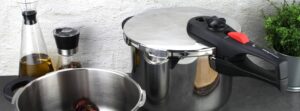
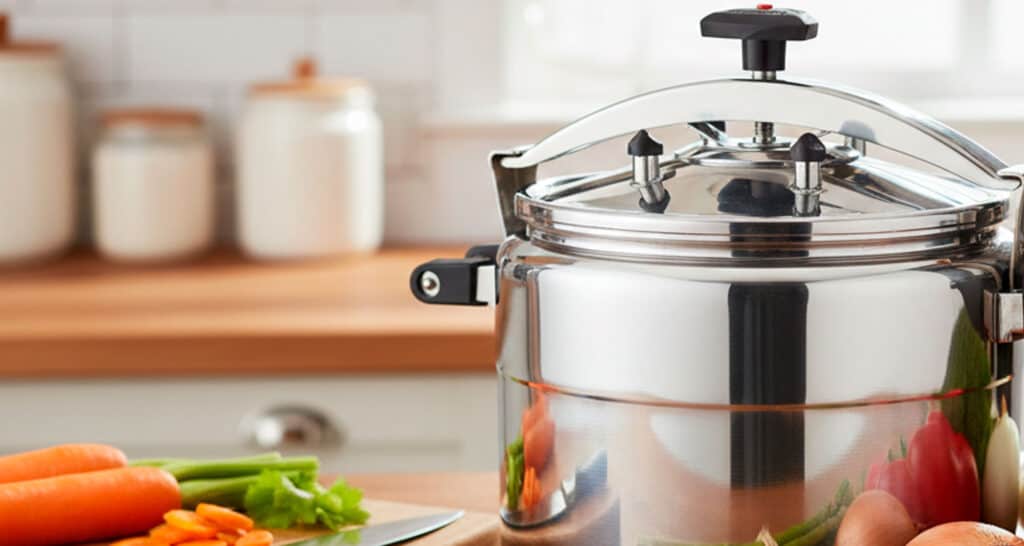
Proper hand washing is especially important for frequently used aluminum cookware, including larger pieces such as the Magefesa Chef 15 Qt. Aluminum Pressure Cooker. Allow the cookware to cool before cleaning and avoid abrasive tools that could damage its surface.
Before Using New Aluminum Cookware
New cookware should always be cleaned before its first use.
Start by removing all labels and stickers. If adhesive remains, lift it carefully with a non-metallic utensil. A small amount of rubbing alcohol can also help remove stubborn adhesive residue.
Avoid knives, metal scrapers, or other sharp objects. Aluminum is softer than materials such as stainless steel, so aggressive scraping can leave permanent marks.
Next, wash the cookware thoroughly with warm water, mild soap, and a non-abrasive sponge to remove any manufacturing or polishing residue.
For Magefesa aluminum frying and sauté pans, heat a small amount of oil over low heat for a couple of minutes, discard the oil, and wash the pan again.
For aluminum pots, fill approximately three-quarters of the pot with water and boil it for 20 to 30 minutes. Discard the water and wash, rinse, and dry the pot thoroughly.
Always check the care instructions supplied with your particular cookware, as preparation and cleaning requirements can vary according to its construction and coating. For example, if you use a Magefesa Avant Aluminum Pressure Cooker, follow the model-specific instructions for first use, cleaning, and maintenance.

How to Remove Stuck-On Food From Aluminum Pots and Pans
Avoid trying to scrape burned or stuck-on food from aluminum cookware with a knife, fork, steel wool, or another metal tool. You may remove the food, but you can also permanently scratch the cooking surface.
For stubborn food residue on Magefesa aluminum cookware, add water and a small amount of vinegar to the pan and boil it gently for approximately 4 to 5 minutes. Allow the cookware to cool before washing it normally with mild soap and a soft sponge.
The heat and liquid help loosen cooked-on residue so that less scrubbing is required.
For cookware with a nonstick coating, be especially gentle. Never use steel wool, abrasive scouring pads, or metal utensils on the coated cooking surface.
If you’re dealing with discoloration rather than food residue, remember that some changes in the appearance of aluminum can occur naturally over time. Aggressive polishing or harsh cleaners can cause more damage than the stain you’re trying to remove.
Protect Aluminum Cookware While You Cook
Good cleaning starts with good cooking habits. Preventing overheating and burned-on food makes cleaning aluminum pans considerably easier.
Aluminum conducts heat efficiently, so high heat is rarely necessary for everyday cooking. Use low to medium heat whenever the recipe allows. Excessive heat can discolor cookware, damage some finishes, and make food more likely to burn onto the surface.
The burner should also be similar in size to the base of your pot or pan. This is particularly important on gas stovetops: flames should remain beneath the cookware rather than extending up its sides.
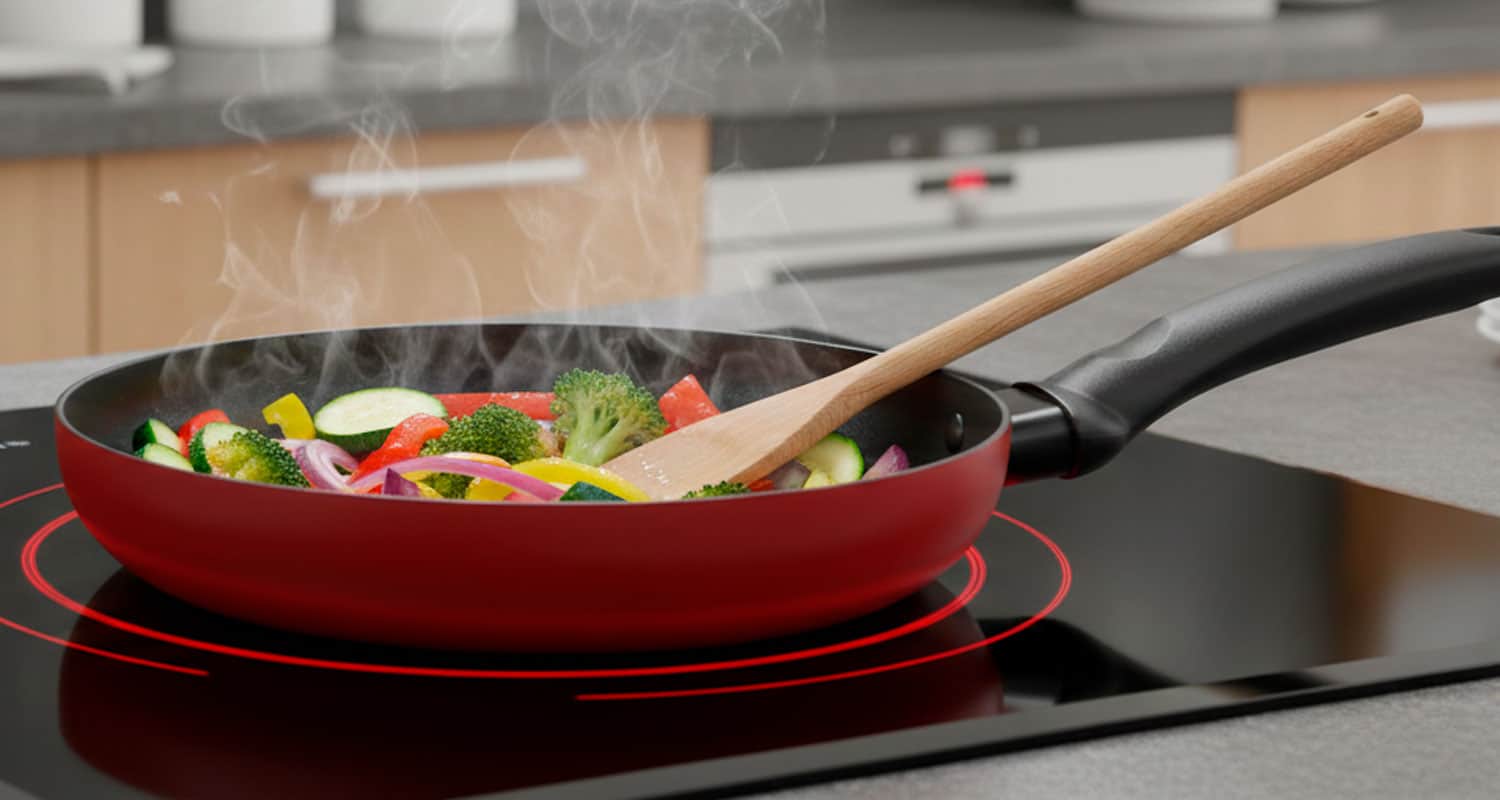
If your aluminum cookware has a nonstick coating, use wooden, silicone, or other non-metallic utensils suitable for nonstick surfaces. Metal utensils can scratch the coating and gradually reduce its performance.
And although it may seem convenient, never use a pot or frying pan as a cutting surface. Knives can damage both coated and uncoated cooking surfaces.
What Not to Use on Aluminum Cookware
The wrong cleaning method can turn a minor stain into permanent surface damage.
When cleaning aluminum cookware, avoid:
- Steel wool and metal scouring pads.
- Knives or metal tools for scraping away food.
- Bleach and other corrosive cleaners.
- Oven cleaners.
- Harsh or highly abrasive cleaning products.
- Sudden temperature changes, such as placing a very hot pan under cold running water.
Extra care is necessary with nonstick aluminum cookware. The aluminum body and the nonstick cooking surface have different characteristics, and anything abrasive enough to scratch the coating should be avoided.
If you’re unsure whether a cleaning product is appropriate, check the cookware manufacturer’s instructions before applying it.
How to Store Aluminum Cookware
Proper storage is part of aluminum cookware maintenance, particularly if several pots and pans are stacked in the same cabinet.
Avoid storing aluminum cookware in direct contact with sharp metal objects. When stacking nonstick pans, consider placing a soft pan protector or clean cloth between them to prevent one piece from scratching another.
Avoid placing excessive weight on lightweight cookware or storing it where it can easily be dropped or struck. Aluminum is malleable, and a sufficiently hard impact can deform the body or base.
Lids can be stored upside down when appropriate to improve airflow and help prevent odors during longer periods of storage.
A few simple habits make the biggest difference: clean aluminum cookware gently, avoid excessive heat, don’t use abrasive tools, and dry every piece thoroughly after washing. Following these steps will help preserve the surface and cooking performance of your aluminum pots and pans for longer.
Looking for a new pot or pan? Explore Magefesa cookware and check the care instructions for each material and finish before use.
Frequently Asked Questions about Aluminum Cookware
Share