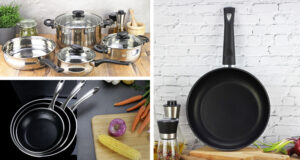
Can Cookware Go in the Dishwasher? A Guide by Material

Can Cookware Go in the Dishwasher?
Some cookware can go in the dishwasher, but dishwasher-safe doesn’t always mean dishwasher-preferred. Stainless steel, porcelain-on-steel, and some nonstick or aluminum cookware may be dishwasher-safe depending on the product, while traditional cast iron and seasoned carbon steel generally require hand washing.
Always check the care instructions for your specific cookware. Even when a pot or pan is dishwasher-safe, hand washing with mild dish soap and a soft sponge is often the gentler choice for preserving its finish and appearance.
1. Check Whether Your Cookware Is Dishwasher-Safe
The material is a useful starting point, but it doesn’t tell you everything. Two pans made from similar materials may have different coatings, handles, finishes, or other components that affect how they should be cleaned.
Use this table as a general guide:
| Cookware material | Dishwasher? | Best practice |
|---|---|---|
| Stainless steel | Often yes | Hand washing can help preserve the finish |
| Nonstick | Depends on product | Hand washing is generally gentler on the coating |
| Aluminum | Depends on product | Check the manufacturer’s instructions |
| Anodized aluminum | Depends on product | Check the manufacturer’s instructions |
| Porcelain-on-steel | Often yes | Hand wash when you want to better preserve the finish |
| Carbon steel | Generally no when seasoned | Hand wash, dry immediately, and maintain the seasoning |
| Traditional cast iron | No | Hand wash, dry thoroughly, and maintain the seasoning |
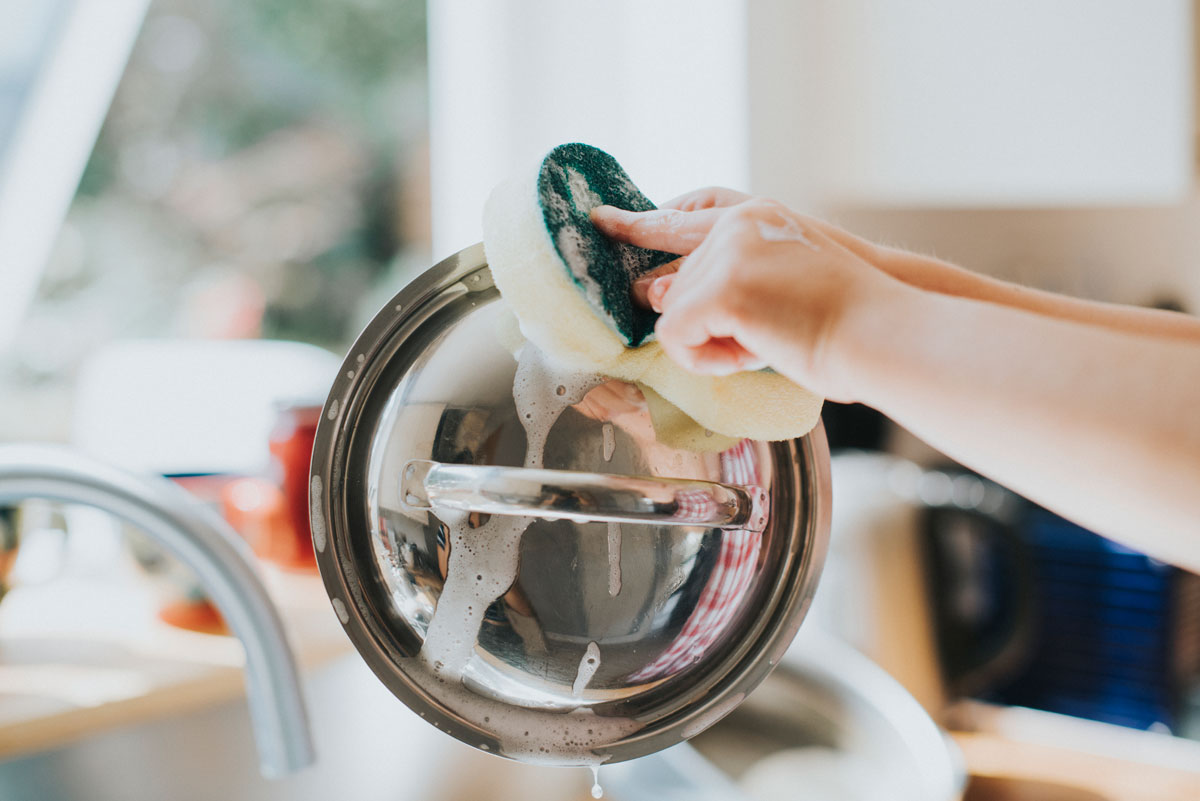
2. Why Hand Washing Can Be Better for Dishwasher-Safe Cookware
Dishwashers are convenient, but the cleaning environment is more demanding than washing a pan in the sink.
During a dishwasher cycle, cookware may be exposed to strong detergent, high temperatures, prolonged moisture, and contact with other items. Over time, these conditions can affect the appearance or finish of some cookware.
That’s why Magefesa recommends hand washing for many products even when dishwasher cleaning is permitted.
For everyday hand washing:
- Allow the cookware to cool sufficiently before cleaning.
- Use warm water and mild dish soap.
- Clean with a soft sponge or cloth.
- Rinse thoroughly.
- Dry the cookware before storing it.
This also gives you more control over how coated or polished surfaces are treated.
3. How to Load Cookware Into the Dishwasher Properly
If you’ve confirmed that your cookware is dishwasher-safe, loading it correctly can help prevent unnecessary wear.
Remove large pieces of food before loading the cookware, then position pots and pans so that water can reach the surfaces that need cleaning.
Avoid overcrowding. Cookware shouldn’t repeatedly knock against other pots, pans, cutlery, or dishwasher racks during the cycle. Repeated contact can eventually mark polished surfaces or affect some finishes.
Large cookware should also be positioned so it doesn’t obstruct the dishwasher’s spray arms.
If a pan has a long handle, check that it doesn’t interfere with moving parts when the racks are pushed into position.
Don’t leave heavily soiled cookware sitting in a closed dishwasher for unnecessarily long periods before starting the cycle. Food residues, particularly salty or acidic ones, are better removed promptly.
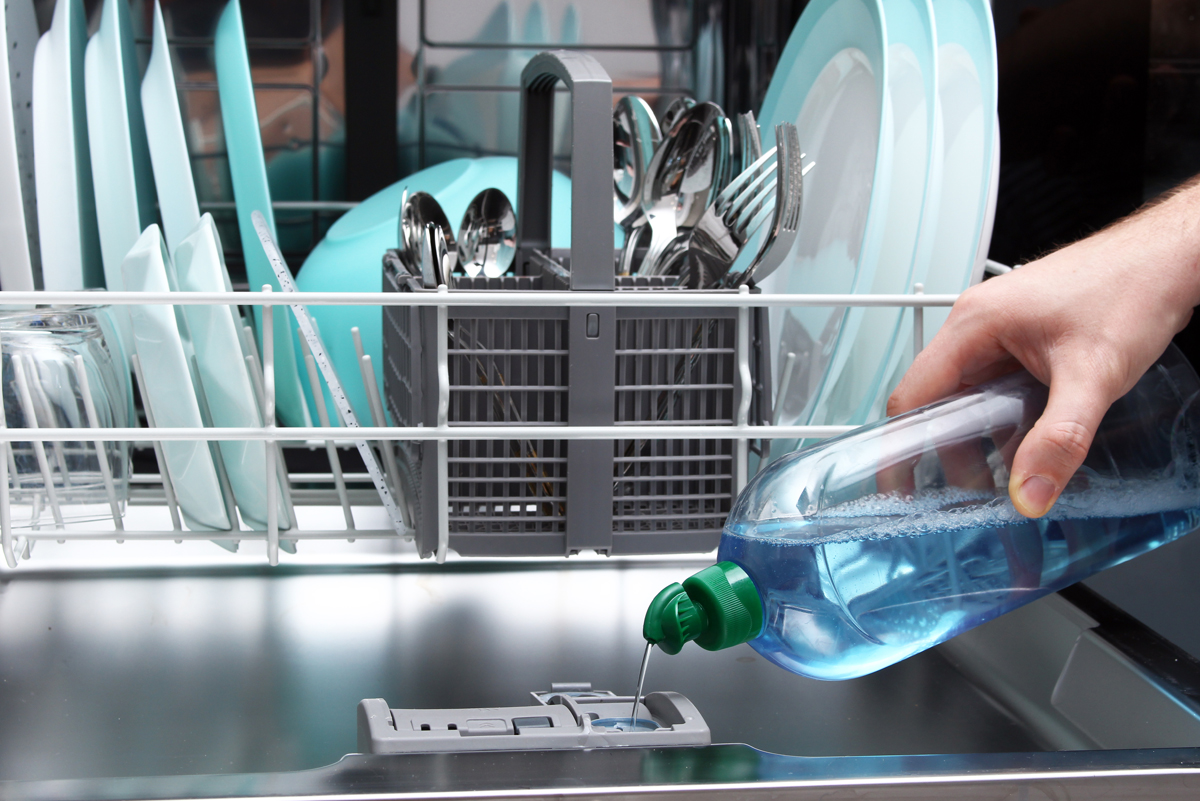
4. Choose Dishwasher Detergent Carefully
Dishwasher detergents are formulated to clean under very different conditions from ordinary hand-washing liquids, and some formulas can be harsher on cookware finishes.
Follow the detergent manufacturer’s dosing instructions rather than simply adding more detergent for heavily soiled cookware. More detergent doesn’t necessarily produce a better result and can contribute to residue if the dishwasher doesn’t rinse properly.
Avoid using additional bleach, chlorine-based products, oven cleaners, or other aggressive cleaning chemicals on cookware unless the manufacturer specifically says they are safe for that product.
This is particularly important with cookware that has a coating, decorative finish, exposed aluminum, or other surfaces that may react poorly to aggressive cleaning products.
If your cookware has special cleaning instructions, those should take priority over general dishwasher advice.
5. What to Do When the Dishwasher Cycle Ends
Once the cycle has finished, remove the cookware rather than leaving it in a warm, humid dishwasher for an unnecessarily long time.
Check for remaining water, particularly around rims, handles, lids, and other areas where moisture can collect. Dry any remaining moisture before storing the cookware.
If dishwasher-safe cookware repeatedly comes out with detergent residue, food particles, or mineral deposits, the cookware itself may not be the problem.
Check your dishwasher according to its manufacturer’s maintenance instructions, paying particular attention to:
- The filter
- Spray arms and spray holes
- Correct loading
- Detergent dosage
- Rinse aid, where appropriate
- Water hardness settings, if available
Mineral-rich water can also leave visible spots or deposits on cookware even when it has been cleaned successfully.
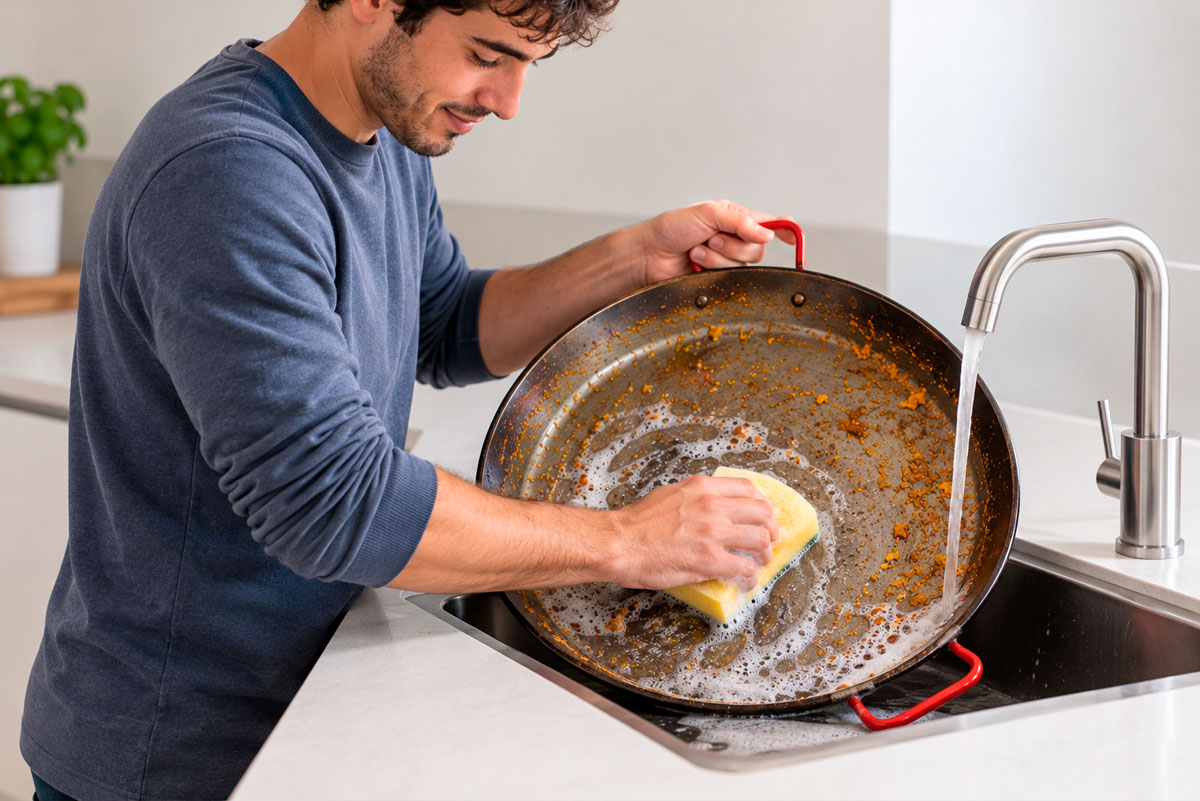
6. When You Should Choose Hand Washing
Some cookware simply shouldn’t go in the dishwasher, while other pieces will benefit from hand washing even when machine cleaning is technically permitted.
Choose hand washing when:
- The manufacturer specifies hand wash only.
- You’re cleaning traditional seasoned cast iron.
- You’re cleaning seasoned carbon steel.
- You’re unsure whether the cookware is dishwasher-safe.
- The cookware includes handles, knobs, coatings, or other components that aren’t dishwasher-safe.
- You want to minimize wear on a polished or decorative finish.
- The product’s care instructions recommend hand washing to preserve its appearance.
Coated cookware deserves particular attention. A nonstick pan may be labeled dishwasher-safe, for example, while hand washing may still be recommended to help preserve the coating and finish over time.
The same principle applies across your kitchen: check the instructions for the individual product rather than relying solely on its cookware material.
Frequently Asked Questions about Dishwasher-Safe Cooking
Share