How to Care for Cast Iron Cookware
How to Care for Cast Iron Cookware
Cast iron cookware can last for decades when it’s properly maintained. The basic routine is simple:
Wash it by hand, dry it completely, and apply a very thin layer of cooking oil to help maintain the seasoning and protect the iron from moisture.
The most important thing is to keep cast iron dry. Avoid soaking it in water or putting it in the dishwasher, and pay attention to the seasoning, the protective layer that helps prevent rust and improves the cooking surface over time.
Dry: Remove all moisture immediately.
Oil: Apply a very thin layer of cooking oil.
Protect: Keep the seasoning in good condition and store cookware somewhere dry.
1. Understand Cast Iron Seasoning
Unlike stainless steel or enameled cookware, traditional cast iron relies on seasoning to protect its cooking surface.
Seasoning is created when thin layers of cooking oil are heated until they bond to the iron through a process called polymerization. This creates the characteristic dark surface of seasoned cast iron, helps protect the cookware against rust, and improves food release.
Seasoning isn’t a coating that needs to be completely reapplied after every meal. Regular cooking, particularly with oils and fats, helps maintain and build the surface over time.
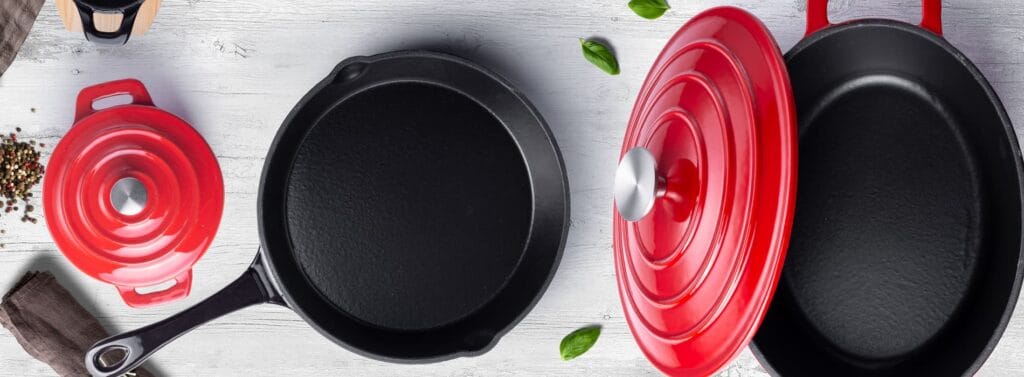
Magefesa’s Ferro cast iron skillets are sold pre-seasoned, so there’s no need to perform a complete oven-seasoning process before you start cooking.
Before the first use, follow the cleaning and preparation instructions supplied with your specific cookware.
2. Cook With Cast Iron Without Damaging the Seasoning
Cast iron heats differently from lightweight cookware. It takes time to heat up but retains heat exceptionally well once hot.
Start over low to medium heat and allow the cookware to preheat gradually. Maximum burner settings are rarely necessary for everyday cooking and can make temperature control more difficult.
Match the burner to the base of the cookware. On a gas stove, keep flames from extending excessively around the sides.
When cooking on glass or ceramic cooktops, lift rather than slide heavy cast iron cookware. This helps protect the cooktop from scratches and impact.
You can use cast iron in the oven as well, provided the specific cookware and all of its components are rated for the temperature you’re using.
What about acidic foods?
Tomatoes, wine, citrus, and other acidic ingredients can be cooked in well-seasoned cast iron, but long cooking times with highly acidic foods can weaken the seasoning, particularly on a newer or lightly seasoned pan.
For a quick tomato sauce or a splash of wine used to deglaze, a well-established seasoning may handle the acidity without trouble. For long-simmered acidic dishes, another cookware material can be a more practical choice.
3. How to Clean Cast Iron After Cooking
The easiest cast iron cleaning routine can be remembered in three words:
Wash. Dry. Oil.
Wash
Let the cookware become safe to handle, then wash it by hand with warm water and a brush, sponge, or suitable pan scraper.
And yes, you can use a small amount of mild dish soap when needed. Modern soap won’t automatically destroy well-established seasoning. Lodge likewise recommends hand washing and states that a small amount of soap is acceptable.
What you should avoid is prolonged soaking. Leaving cast iron submerged in water gives moisture more opportunity to reach exposed iron and encourage rust.
Never put traditional seasoned cast iron in the dishwasher. Dishwasher cleaning can strip seasoning and promote rust.
Dry
Dry cast iron immediately and thoroughly after washing.
A clean towel works well. You can also place the cookware over low heat briefly to help evaporate any remaining moisture, then turn off the heat before oiling.
Don’t simply leave cast iron wet on the draining board.
Oil
Once dry, rub a very thin layer of cooking oil over the surface.
The key word is thin. Wipe away the excess until the cookware doesn’t look or feel heavily coated.
4. How to Remove Stuck-On Food From Cast Iron
A stubborn patch of food doesn’t mean you need to soak the pan overnight or attack it with an aggressive cleaner.
Start with warm water and a pan scraper or nylon scrubbing brush. In many cases, that’s enough to release cooked-on residue without unnecessarily disturbing the seasoning.
For more stubborn food, add a small amount of water to the cookware and let it simmer for a few minutes. The heat and water can help loosen the residue so it’s easier to remove.
Once clean, return to the usual routine:
Dry thoroughly → apply a very thin layer of oil → store somewhere dry.
Salt is also sometimes used as a gentle abrasive for stubborn residue, but don’t make aggressive scrubbing part of your everyday cleaning routine. If normal food repeatedly sticks badly, the issue may be cooking technique or deteriorating seasoning rather than insufficient scrubbing.
5. When and How to Reseason Cast Iron
Everyday oiling and full reseasoning aren’t the same thing.
You don’t need to put your cookware through a complete oven-seasoning process after every use. Reseasoning becomes useful when the existing surface has significantly deteriorated, for example, after removing rust or when bare iron has become exposed.
You may also notice that the surface has become uneven, patchy, or increasingly difficult to cook on despite proper preheating and oil use.
For a complete reseasoning:
- Clean the cookware and remove loose residue or rust.
- Dry it completely.
- Apply an extremely thin, even layer of cooking oil over the iron.
- Wipe away the excess.
- Heat the cookware in the oven according to the manufacturer’s seasoning instructions.
- Allow it to cool before storing.
For general cast iron restoration, Lodge recommends applying a very thin layer of oil and heating the cookware upside down at 450–500°F for one hour, then allowing it to cool.
For Magefesa cookware, however, follow any temperature or seasoning instructions supplied with your specific product if they differ from this general method.
6. How to Prevent and Remove Rust From Cast Iron
Rust is usually a sign that moisture has reached the iron. Prevention therefore comes down to three things: dry thoroughly, maintain the seasoning, and store the cookware somewhere dry.
If you’re stacking cast iron with other cookware, make sure every piece is completely dry first. A pan protector or clean towel between pieces can help prevent unnecessary rubbing and allow you to store heavy cookware more carefully.
If your cast iron has a lid, avoid trapping moisture inside during long-term storage.
What if cast iron already has rust?
A small amount of surface rust doesn’t necessarily mean the cookware is ruined.
For light rust, scrub the affected area until the rust is removed, then wash and dry the cookware thoroughly before applying oil.
More substantial rust may require a metal scouring pad or steel wool to expose clean iron. Once the rust has been removed, wash and dry the cookware and perform a full reseasoning process to rebuild the protective surface. Lodge recommends this same general restoration sequence for rusty cast iron.
This is an important distinction:
For everyday cleaning: avoid aggressive metal scrubbing that unnecessarily removes seasoning.
For rust restoration: abrasive scrubbing may be necessary because the damaged seasoning and rust need to be removed before the surface can be rebuilt.
Frequently Asked Questions about Cast Iron Cookware
Share