How to Choose the Right Pressure Cooker for your Needs
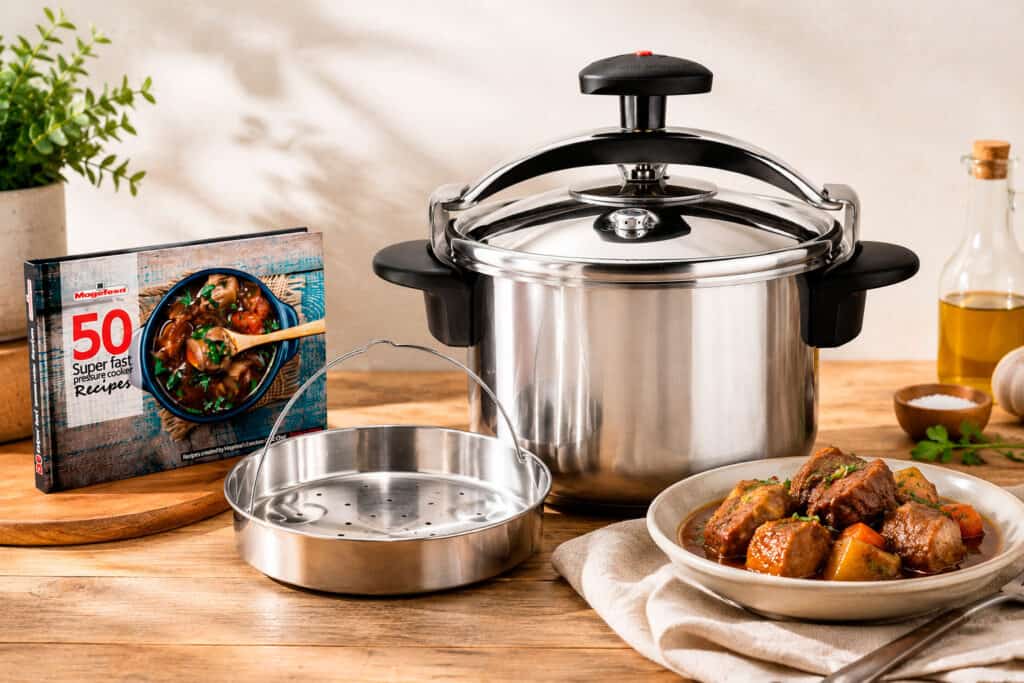
How to Choose the Right Pressure Cooker for Your Needs
Choosing the right pressure cooker starts with a few practical questions:
How many people do you usually cook for? What foods do you prepare most often? What type of stovetop do you have? And which features will actually make pressure cooking easier for you?
Capacity is usually the best place to start, but it shouldn’t be the only deciding factor. Material, stovetop compatibility, pressure settings, and ease of use can make one pressure cooker much better suited to your kitchen than another.
Pressure Cooker Buying Guide at a Glance
| Consider | What to look for |
|---|---|
| Capacity | Enough room for your usual portions without overfilling |
| Cooking habits | Smaller for everyday meals; larger for batch cooking and big households |
| Pressure settings | One setting for simplicity; multiple settings for greater cooking control |
| Stovetop | Check gas, electric, ceramic, and especially induction compatibility |
| Material | Stainless steel or aluminum, depending on your priorities |
| Ease of use | A locking and opening system you find intuitive |
| Safety | Built-in pressure regulation and safety mechanisms |
1. Start With How You Plan to Use Your Pressure Cooker
Before comparing models, think about how often you plan to use your pressure cooker and what you usually cook. This will help you decide which capacity and features are actually useful in your kitchen.
If you mainly prepare everyday meals for one or two people, a smaller pressure cooker may be the most practical choice. If you regularly cook for a family, prepare large batches, or make foods such as beans, soups, stocks, and stews, you’ll probably appreciate a larger capacity.
Also consider how much versatility you need. A straightforward model may be ideal for familiar pressure-cooker recipes, while multiple pressure settings or a two-pot set can give you more flexibility when you cook a wider variety of foods and portion sizes.
2. Choose the Right Pressure Cooker Size
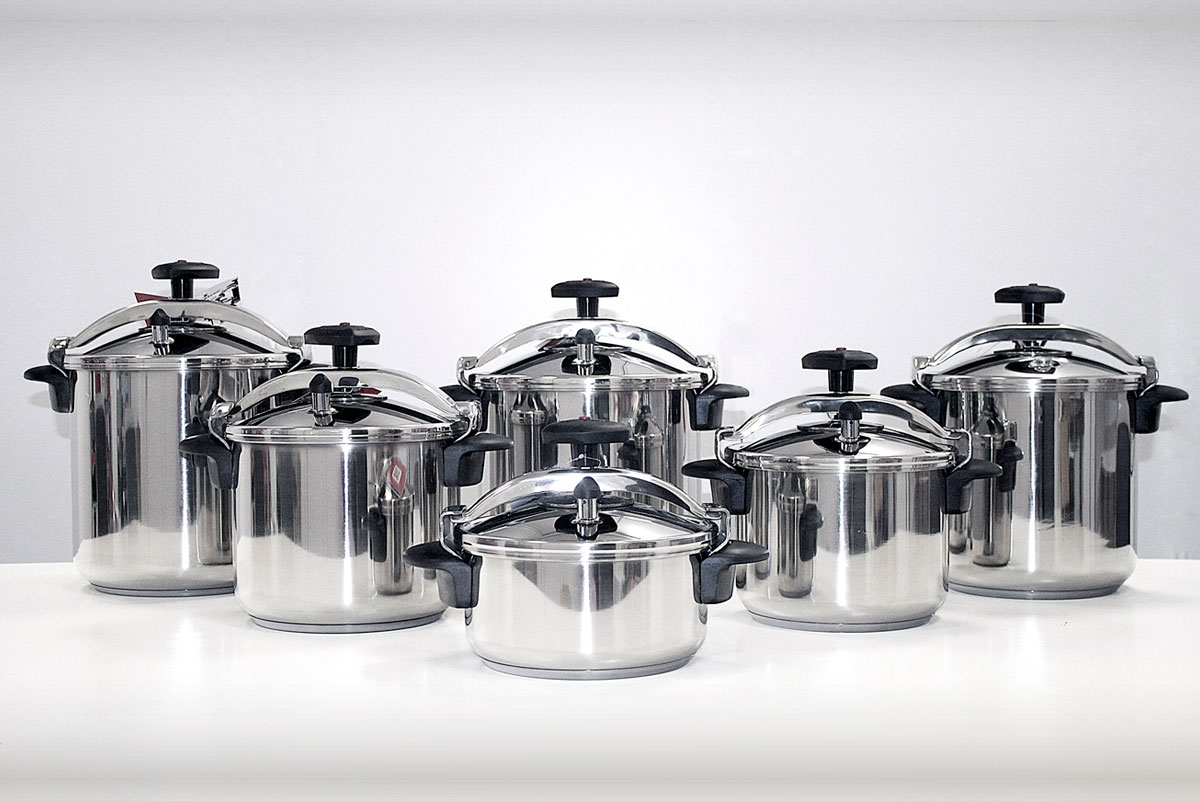
Pressure cooker capacity is one of the most important considerations because it determines how much food you can prepare comfortably.
For one or two people, a smaller cooker may be enough for everyday meals. Larger households, batch cooks, and anyone who regularly makes stocks, soups, beans, or larger cuts of meat will benefit from additional capacity.
As a general starting point:
| Household / Cooking Style | Capacity to Consider |
|---|---|
| 1–2 people | Around 3–4 qt. |
| 2–4 people | Around 4–6 qt. |
| 4–6 people | Around 6–8 qt. |
| Large families / batch cooking | 8 qt. and above |
These are guidelines rather than strict rules. What you cook matters just as much as how many people you cook for.
A couple may prefer a larger pressure cooker if they regularly prepare several portions at once, while a family that mainly uses pressure cooking for side dishes may be comfortable with a smaller model.
Remember that the stated capacity of a pressure cooker is not the amount of food you should put into it. Pressure cookers need empty space for steam and pressure to develop, and some foods require additional room. Always follow the maximum-fill instructions supplied with your specific model.
Magefesa Pressure Cooker Sizes by Household
Which Magefesa pressure cooker size is right for you?
Compare the available capacities below to narrow down your options. Household sizes are approximate, so choose based on both the number of people you cook for and the portions you normally prepare.
| Magefesa model | Available capacities | Approx. household size | Good for |
|---|---|---|---|
| EasyClick | 4.2 + 6.5 qt. set, 6.5 qt., 8.5 qt. | 1–6 people | Flexible everyday cooking, families, and batch cooking |
| Favorit | 6.3, 8.4, 10 qt. | 2–6+ people | Everyday family cooking and larger portions |
| Activa2 | 5.2, 7.9 qt. | 2–6 people | Everyday meals, family cooking, and batch cooking |
| Dynamic | 6.3 qt. | 2–4 people | Everyday family meals |
| Prisma Set | 4 + 6 qt. | 1–4 people | Flexible cooking with two pot sizes |
| Favorit Six Set | 3.2 + 6.3 qt. | 1–4 people | Small meals and family-size cooking |
| Nova Set | 4.2 + 6.3 qt. | 1–4 people | Flexible everyday cooking with two pot sizes |
| Inoxtar | 6 qt. | 2–4 people | Everyday family cooking in stainless steel |
| Versatile | 6 qt. | 2–4 people | Everyday cooking with a practical opening system |
| Star | 4.2, 6.5, 8, 10.5, 12.5, 15 qt. | 1–10+ people | Everything from small households to large-batch cooking |
| Avant | 4.2, 6.5, 8.5 qt. | 1–6 people | Lightweight everyday and family cooking |
| Chef | 15, 22 qt. | 10+ people / large groups | Large families, entertaining, and high-volume cooking |
| Alustar Inducta | 31, 42 qt. | Large groups | Extra-large batches and high-volume cooking |
3. Match the Pressure Cooker to What You Cook
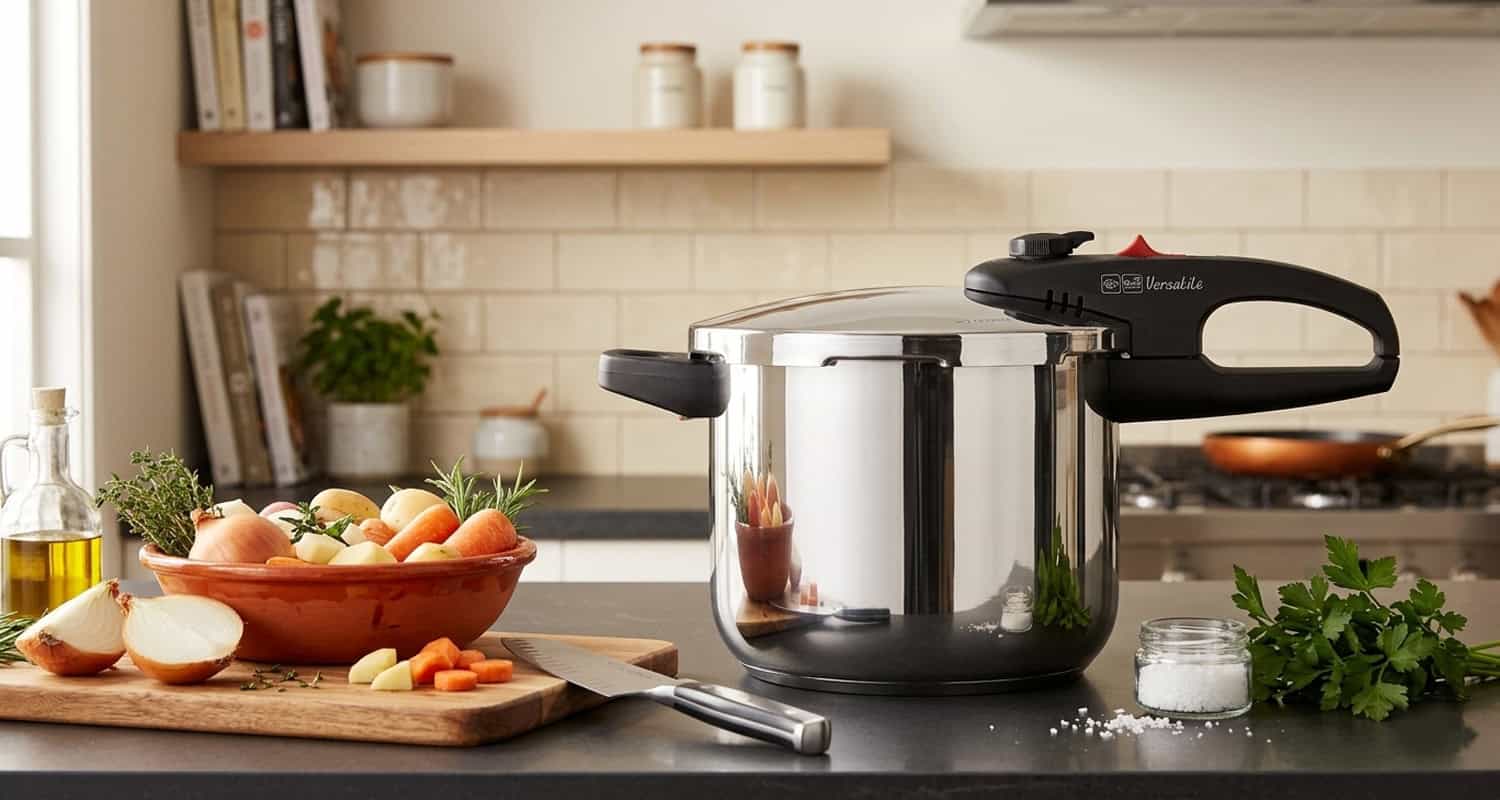
The foods you prepare most often can help determine which pressure cooker features are worth having.
Pressure cooking works particularly well for foods that normally require long cooking times, such as dried beans, chickpeas, stews, stocks, and tougher cuts of meat.
It’s also useful for vegetables and other quicker-cooking ingredients, but these can benefit from more precise control because a few extra minutes may significantly change their texture.
This is where pressure settings become important.
A straightforward cooker with one working pressure can be a practical choice if you tend to prepare similar dishes. A model offering more than one pressure setting provides additional control when you regularly switch between delicate ingredients and foods that require longer cooking.
Does higher pressure mean faster cooking?
In general, increasing pressure raises the temperature inside the cooker, allowing food to cook more quickly. But the highest setting isn’t automatically the right setting for every ingredient.
The goal isn’t simply to cook everything as fast as possible. It’s to use the appropriate pressure and cooking time for the food you’re preparing.
4. Check Your Stovetop Compatibility
Before comparing special features, make sure the pressure cooker works with your stovetop.
This is particularly important if you cook on induction.
Gas and electric compatibility doesn’t automatically mean that a pressure cooker is induction-compatible. The construction of the base determines whether it can work with an induction cooktop.
For example, the Magefesa Star Stainless Steel Pressure Cooker has a full induction base and is designed for gas, electric, ceramic, and induction stovetops.
Always check the specifications of the individual model before purchasing.
| Your stovetop | What to check |
|---|---|
| Gas | Base compatibility and correct burner size |
| Electric | Flat, stable base suitable for electric heat |
| Ceramic | Manufacturer’s compatibility specifications |
| Induction | Explicit induction compatibility |
5. Consider Material, Pressure Settings, and Ease of Use
Once you’ve narrowed down the capacity and stovetop compatibility, look at how the pressure cooker is constructed and operated.
Stainless Steel vs. Aluminum Pressure Cookers
Both materials can make effective pressure cookers, but they have different characteristics.
| Stainless Steel | Aluminum | |
|---|---|---|
| Weight | Heavier | Lighter |
| Durability | Highly durable | Durable but generally softer than stainless steel |
| Care | Resistant and easy to maintain | Benefits from material-specific care |
| Induction | Can be compatible when designed with an induction base | Check the individual model |
| Handling | More substantial | Easier to lift and move |
Material alone shouldn’t determine your choice. Base construction, weight, stovetop compatibility, and how you intend to use the cooker matter more than simply choosing stainless steel or aluminum.
One or Multiple Pressure Settings?
A single-pressure model keeps operation straightforward. Multiple pressure settings give you more flexibility for ingredients with different cooking requirements.
Think about what you’ll actually cook rather than assuming that more settings automatically make a better pressure cooker.
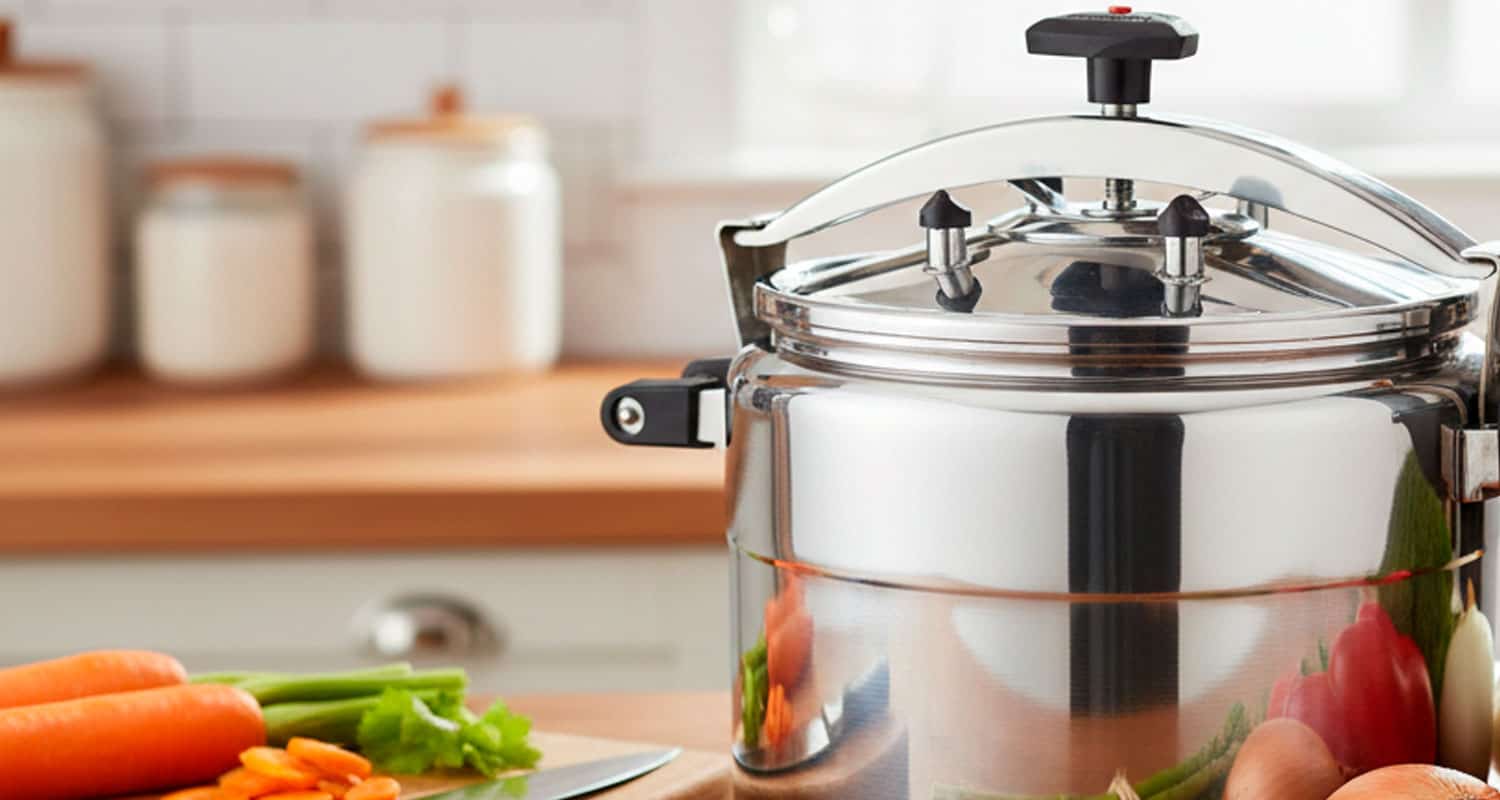
Look at the Opening and Locking System
This is easy to overlook when shopping online, but you’ll interact with the lid every time you use the cooker.
Look for a mechanism that’s straightforward to understand, particularly if this will be your first pressure cooker. Controls and pressure indicators should also be easy to identify.
Check the Safety Systems
Modern stovetop pressure cookers incorporate mechanisms designed to regulate pressure and prevent unsafe opening while the cooker is pressurized.
The exact systems vary by model, so check the individual product specifications and read the instruction manual before first use, even if you’ve used another pressure cooker before.
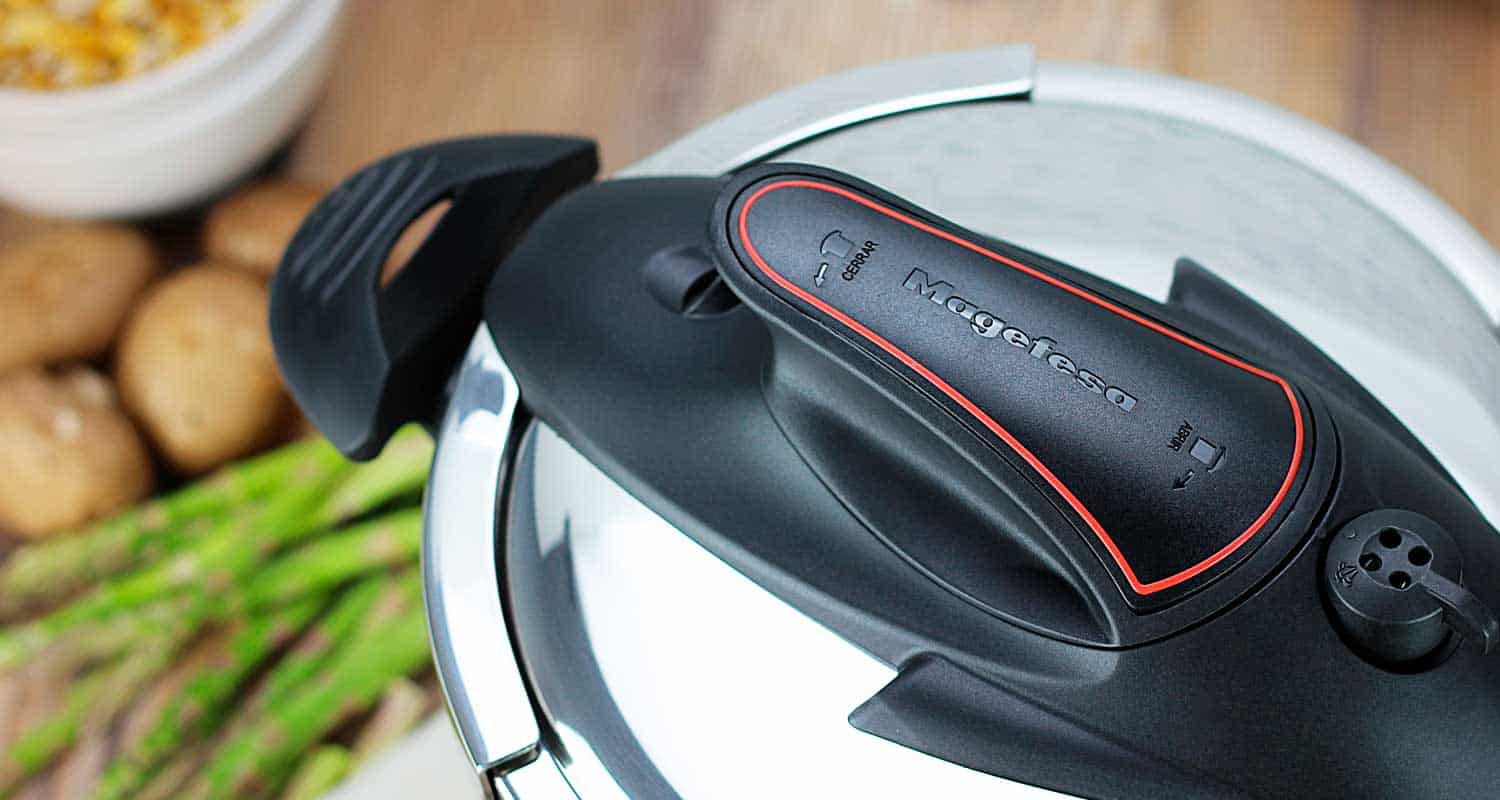
6. Which Magefesa Pressure Cooker Is Right for Your Kitchen?
Once you know the capacity, material, stovetop compatibility, and features you need, you can compare those requirements with the current Magefesa pressure cooker range.
Rather than choosing by model name alone, use the specifications to narrow down your options.
For example, a smaller-capacity cooker can make sense for everyday meals, while a larger model provides additional room for family cooking, soups, stocks, and batch preparation.
If flexibility is your priority, a set containing two pot sizes can be particularly useful. You can use the smaller pot for everyday portions and the larger one when cooking for more people without having to own two complete pressure cookers.
Frequently Asked Questions about Pressure Cookers
Share