Why invest in quality kitchen tools for better cooking

Most home cooks assume a cheap pan and a bargain knife are all they need to get dinner on the table. But the truth is, the tools you cook with shape every result you produce, from the texture of a sear to the safety of every slice. Quality kitchen tools are not a luxury reserved for professional chefs. They are a practical investment that pays back in better meals, fewer accidents, and real savings over time. This guide breaks down exactly what makes a kitchen tool worth the investment, how the numbers compare over years of use, and which essentials deserve your attention first.
Table of Contents
- Why quality matters: Performance, durability, and safety
- The true cost: Quality tools vs. cheap replacements
- Must-have essentials: Choose your foundation wisely
- Maximizing longevity: Care tips for quality kitchen tools
- A chef’s take: Why less is more when choosing tools
- Gear up your kitchen for lasting performance
- Frequently asked questions
Key Takeaways
| Point | Details |
|---|---|
| Quality lasts decades | Investing in well-made kitchen tools means you avoid frequent replacements and enjoy consistent performance for years. |
| Better performance and safety | High-quality tools work more efficiently and reduce injury risk compared to cheap, dull alternatives. |
| Choose wisely, maintain simply | Focus on a few essential tools and practice simple care steps for the best long-term value. |
| Real savings over time | The upfront cost of quality is offset by fewer replacements and less wasted time in the kitchen. |
Why quality matters: Performance, durability, and safety
Having set the context, let’s investigate why investing in quality matters so much in three ways: performance, durability, and safety. These are not marketing buzzwords. They are the real reasons why serious home cooks reach for the same trusted tools year after year.
Performance is where you feel the difference immediately. A well-made chef’s knife glides through an onion cleanly. A heavy-bottomed pan distributes heat evenly so your proteins sear instead of steam. Quality knives hold edges longer, require less sharpening, and perform better in tests than budget alternatives. That means less frustration, more control, and food that actually looks and tastes the way you intended.
Durability is where quality tools earn their reputation over time. Cast iron skillets and stainless-steel pans are built from materials that simply outlast their cheaper counterparts. The advantages of cast iron cookware go far beyond heat retention. A well-seasoned cast iron skillet can serve your family for generations without warping, chipping, or losing its cooking surface. That kind of longevity is rare in any product category.
Safety is the benefit that often goes unmentioned. A dull, cheap knife is far more dangerous than a sharp, quality one. Dull blades require more force, which means more slips. Quality knives cut cleanly and predictably, reducing the chance of accidents and preserving the texture of delicate ingredients like fresh herbs and fish.
“The magic of a great meal starts with the tools you use. When your knife is sharp and your pan is true, cooking feels effortless.”
Here is a quick look at what sets quality tools apart:
- Precision: Quality blades and cookware deliver consistent, repeatable results every time you cook.
- Material integrity: High-grade stainless steel, cast iron, and forged metals resist warping, staining, and corrosion.
- Ergonomics: Well-designed handles reduce hand fatigue during long prep sessions.
- Heat management: Quality pans heat evenly, eliminating hot spots that burn food unevenly.
Browse the must-have kitchen tools that bring these benefits together in one curated place. The difference between a frustrating cooking session and a joyful one often comes down to the tools in your hands.
The true cost: Quality tools vs. cheap replacements
Understanding these benefits, let’s see how quality tools impact your budget and daily life over time. The upfront price tag on a quality pan can feel steep. But when you look at the full picture, the math tells a very different story.
| Tool type | Upfront cost | Replacement cycle | 10-year total cost |
|---|---|---|---|
| Budget non-stick pan | $15 to $25 | Every 1 to 2 years | $75 to $250 |
| Quality tri-ply stainless pan | $80 to $150 | 20 to 30 years | $80 to $150 |
| Budget chef’s knife | $10 to $20 | Every 2 to 3 years | $40 to $100 |
| Quality forged chef’s knife | $60 to $120 | 10 to 20+ years | $60 to $120 |
Cast iron pans last generations, and tri-ply stainless lasts decades, easily outlasting multiple rounds of cheap replacements. That means the “expensive” option is often the affordable one when you stretch the timeline.
Beyond dollars, consider the hidden costs of buying cheap:
- Wasted time: Cheap pans with hot spots force you to babysit every dish, constantly moving food to avoid burning.
- Inferior results: Warped pans and dull knives produce uneven cooking and crushed ingredients instead of clean cuts.
- Risk of injury: Dull knives and flimsy handles increase the chance of slips and accidents in the kitchen.
- Environmental waste: Replacing tools every year or two generates unnecessary waste and packaging.
Pro Tip: Instead of buying a full cookware set with pieces you may never use, invest in two or three core items you reach for every single day. Quality over quantity always wins in the kitchen.
For practical guidance on keeping your investments in top shape, the cookware maintenance tips on our site walk you through everything step by step. And if you are still figuring out which types of pots and pans belong in your kitchen, exploring essential cookware types is a great place to start.

Must-have essentials: Choose your foundation wisely
Now that cost and benefit are clear, which tools merit your investment? Not every kitchen gadget deserves a spot in your cabinet. The tools that deliver the highest return are the ones you use every single day.
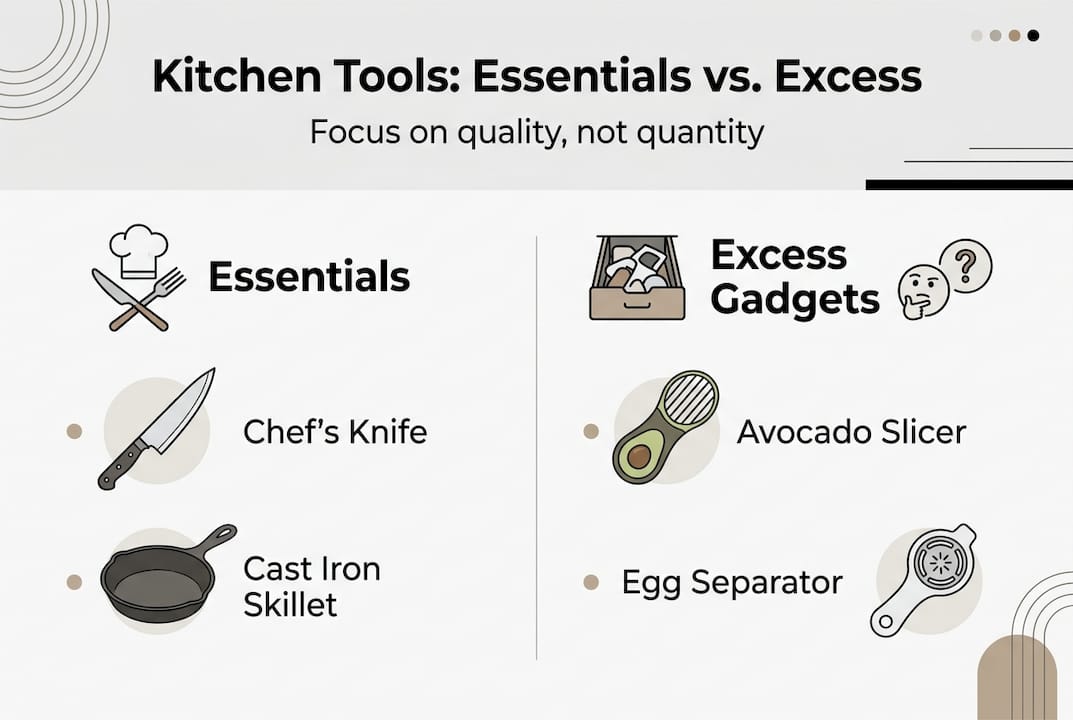
For home cooks, invest in essentials like a chef’s knife, cast iron skillet, and tri-ply skillet, and skip the bloated sets that come with pieces you will never touch. Here is a breakdown of the core three:
| Tool | Expected lifespan | Performance impact | Care level |
|---|---|---|---|
| Chef’s knife (forged) | 10 to 20+ years | Very high: used in 80%+ of prep tasks | Medium: hone regularly, hand wash |
| Cast iron skillet | Generations | Very high: searing, baking, stovetop to oven | Low: season occasionally, dry thoroughly |
| Tri-ply stainless pan | 20 to 30 years | High: sauces, sautéing, deglazing | Low: hand wash, avoid harsh abrasives |
These three tools cover the vast majority of everyday cooking tasks. They work across heat sources, last for decades with basic care, and reward you with better results than any gadget collection ever could.
Here is what you can skip:
- Oversized knife block sets with 12 pieces when you only need 2 or 3.
- Single-use gadgets like avocado slicers, strawberry hullers, or electric egg cookers.
- Trendy cookware made from materials with short lifespans or limited compatibility with your stove.
Pro Tip: Before buying any new kitchen tool, ask yourself how many times per week you will realistically use it. If the answer is less than three, it probably does not earn a place in your kitchen.
The essential kitchen gear collection at Magefesa USA is built around this exact philosophy. And if you want to understand why cast iron belongs in every serious kitchen, the story of timeless cast iron cookware is worth your time.
Maximizing longevity: Care tips for quality kitchen tools
Investing in quality pays off only if you maintain your tools. Here is how to do it quickly and correctly, without turning kitchen care into a chore.

The good news is that proper maintenance, including honing, seasoning, and hand washing, maximizes longevity far beyond what even the most careful treatment can do for cheap tools. Quality materials respond well to care. Budget materials degrade regardless.
Here are the key steps for each essential tool:
- Chef’s knife: Hone your knife with a honing steel before each use to realign the edge. Sharpen it with a whetstone or professional service two to three times per year. Always hand wash and dry immediately. Never put it in the dishwasher.
- Cast iron skillet: After each use, rinse with hot water and a stiff brush. Dry it completely on the stove over low heat. Apply a thin layer of oil and wipe clean before storing. Re-season in the oven a few times per year if the surface looks dull.
- Tri-ply stainless pan: Hand wash with warm soapy water after each use. For stubborn residue, simmer water in the pan to loosen it. Avoid steel wool, which scratches the surface. Dry immediately to prevent water spots.
Pro Tip: The biggest mistake home cooks make is putting quality pans in the dishwasher. The harsh detergents and high heat strip seasoning, dull finishes, and weaken handles over time. Two minutes of hand washing protects years of investment.
“A well-cared-for knife and a properly seasoned cast iron skillet are like old friends in the kitchen. They get better with time.”
For a deeper look at keeping your cookware in peak condition, the cookware maintenance advice section covers every scenario. If you own stainless steel pieces, the stainless steel care tips page offers specific guidance for keeping that surface gleaming and performing beautifully.
A chef’s take: Why less is more when choosing tools
After learning the practical side, let’s look at why experts rarely reach for the full gadget drawer. Here is a perspective that might surprise you: the most skilled cooks we know own fewer tools than you would expect.
Years of experience in the kitchen reveal a consistent truth. The real magic happens with a sharp chef’s knife, a reliable skillet, and a good saucepan. That is it. Everything else is optional. When you fill your kitchen with gadgets, you spend more time managing clutter than actually cooking. Gadget overload distracts from the skill-building that makes you a better cook.
Chasing the next trending tool is tempting. But skill grows through repetition with a small set of trusted tools, not through accumulating novelties. The cook who has used the same cast iron skillet for fifteen years will outperform the one who owns every specialty pan but has never mastered any of them.
We encourage you to think of your kitchen tools the way a craftsperson thinks of their instruments. A few excellent pieces, deeply understood and well maintained, will always outperform a drawer full of mediocre ones. Explore core cookware every chef needs and build your kitchen around what truly serves you.
Gear up your kitchen for lasting performance
Ready to make your kitchen more efficient? Here is how Magefesa USA can help you get started.
At Magefesa USA, we have spent decades curating kitchen tools that are built to last, perform beautifully, and bring genuine joy to everyday cooking. Every dish on the table tells a story, and we want yours to be one of confidence and flavor.
Start by exploring our shop top kitchen tools collection, where every piece is chosen with durability and performance in mind. Browse our must-have essentials collection to build a focused, powerful kitchen foundation. And once your tools arrive, our cookware care guide ensures they serve you for years to come. Upgrade wisely, cook joyfully, and let your tools work as hard as you do.
FAQs
What are the top three quality kitchen tools every home cook should own?
A chef’s knife, a cast iron skillet, and a tri-ply stainless-steel pan are considered foundational for most home cooking needs. These three essentials cover the vast majority of everyday tasks without the clutter of unnecessary extras.
How long do quality kitchen tools really last?
With proper care, quality cast iron and stainless cookware can last decades, sometimes being passed down through generations. Cast iron pans last generations, making them one of the best long-term investments in your kitchen.
Can quality knives improve kitchen safety?
Yes, sharp quality knives are safer because they cut cleanly and predictably, reducing the risk of slips compared to dull, cheap knives. Dull knives cause slips and crushing, while sharp ones give you full control over every cut.
Is it difficult to maintain quality kitchen tools?
No, most tools require only basic care routines like hand washing, regular honing, and occasional seasoning to maximize their lifespan. Proper maintenance takes just minutes and protects years of investment in your cookware and cutlery.

