
How to Make Crispy Roasted Potatoes in the Oven
How to Make Crispy Roasted Potatoes in the Oven
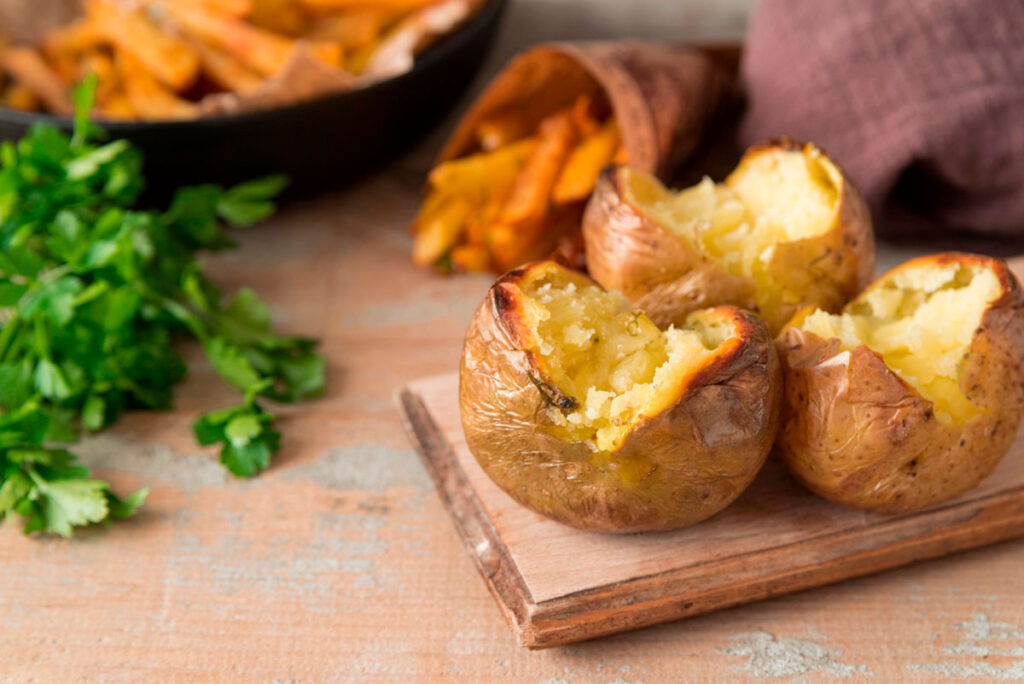
The secret to perfectly roasted potatoes is simple: parboil them first, rough up the edges, and roast them in a hot pan with enough space to brown. The result is a golden, crispy exterior with a soft, fluffy center.
You don’t need complicated ingredients or special techniques. Just the right potatoes, a little patience, and a few important details.
Crispy Roasted Potatoes at a Glance
| Prep time | 15 minutes |
| Parboiling time | 8–10 minutes |
| Roasting time | 40–50 minutes |
| Oven temperature | 425°F (220°C) |
| Servings | 4 |
| Best potatoes | Russet or Yukon Gold |
Ingredient | Quantity | Notes |
|---|---|---|
Russet or Yukon Gold potatoes | 2 lb (900 g) | Peel if desired and cut into evenly sized chunks |
Olive oil | 3 tablespoons | For coating the potatoes before roasting |
Salt | To taste | For seasoning the boiling water and finished potatoes |
Black pepper | To taste | Freshly ground, for extra flavor |
Fresh rosemary or thyme | 1–2 sprigs (optional) | Adds an aromatic touch |
Garlic | 2–3 cloves (optional) | Lightly crushed; add toward the end of roasting |
1. Choose the Best Potatoes for Roasting
Not all potatoes roast the same way. Their starch content affects how crispy they become and how fluffy they feel inside.
For the best results, choose a variety with enough starch to develop a crisp exterior.
| Potato variety | Texture after roasting | Best for |
|---|---|---|
| Russet | Very fluffy inside, crispy outside | Maximum crispiness |
| Yukon Gold | Creamy center, golden crust | Rich flavor and balanced texture |
| Red potatoes | Firmer, waxier texture | Roasting with skins on |
Our recommendation: Russet potatoes are an excellent choice if you want an especially fluffy interior and crunchy edges. Yukon Gold potatoes are ideal if you prefer a creamier center.
Whichever variety you choose, cut the potatoes into evenly sized pieces, approximately 1½–2 inches (4–5 cm), so they cook at the same rate.
2. Parboil the Potatoes Before Roasting
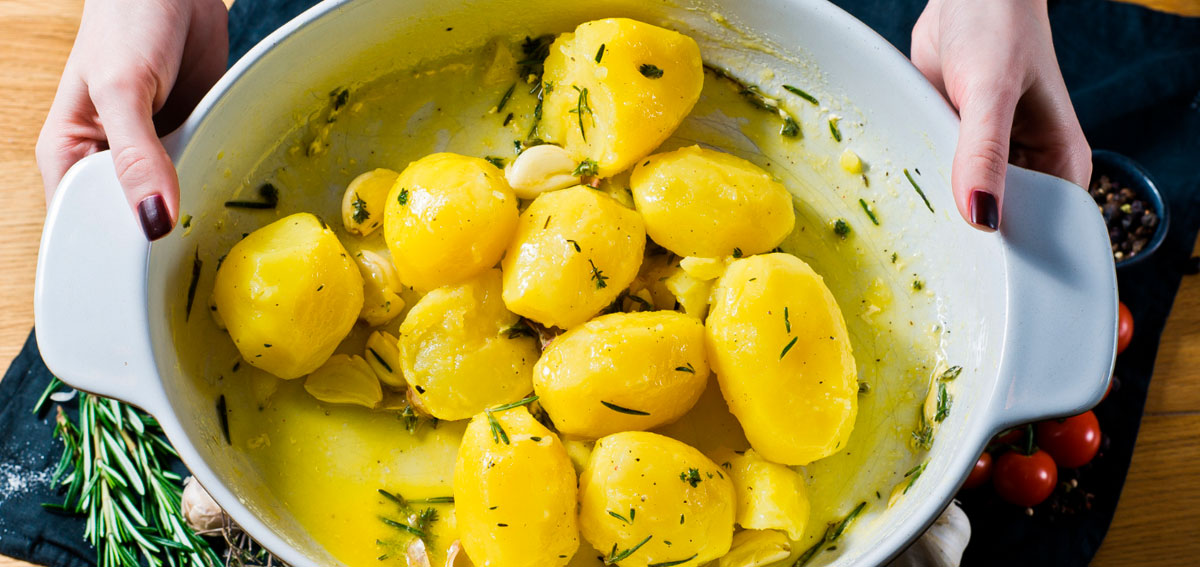
One of the most effective ways to make roasted potatoes crispy is to partially boil them before they go into the oven.
Parboiling softens the outer layer of the potato, making it easier to create the rough, starchy surface that turns beautifully crisp during roasting.
Here’s how to do it:
Peel the potatoes, if desired, and cut them into evenly sized chunks.
Place them in a saucepan and cover with cold water.
Add a generous pinch of salt and bring to a boil.
Simmer for approximately 8–10 minutes, until the edges begin to soften but the centers are still firm.
Drain thoroughly and leave the potatoes in the colander for a minute or two to release excess steam.
The trick that makes the difference
Once drained, gently shake the potatoes in the colander or covered saucepan.
This creates a slightly rough, fluffy coating on the outside of each piece. Those irregular edges provide more surface area for the oil to coat and become deliciously crisp in the oven.
Be gentle: the potatoes should look a little scuffed, not fall apart.
3. Use the Right Oil, Roasting Pan, and Oven Temperature
For crispy roasted potatoes, heat and moisture control are just as important as the potatoes themselves.
Preheat your oven to 425°F (220°C).
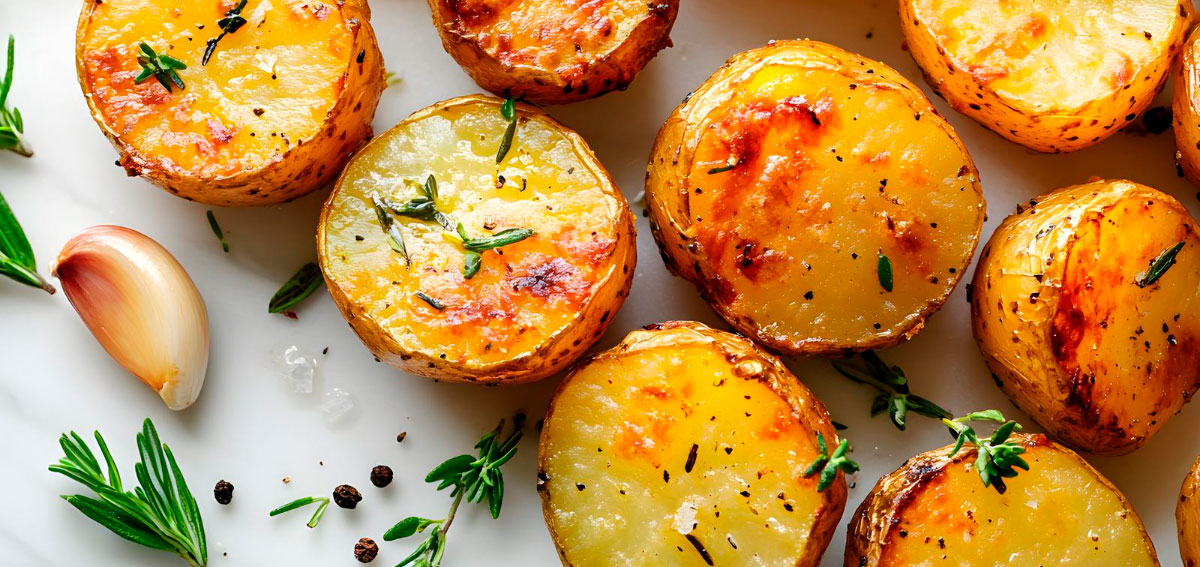
Olive oil works well for roasting at this temperature. It helps the potatoes develop a golden crust and adds flavor. Use enough to coat every piece lightly without leaving a pool of oil in the pan.
Why the Roasting Pan Matters
The material of your roasting pan can influence how well the potatoes brown.
Cast iron is particularly useful because it retains heat effectively, helping maintain a hot cooking surface as the potatoes roast.
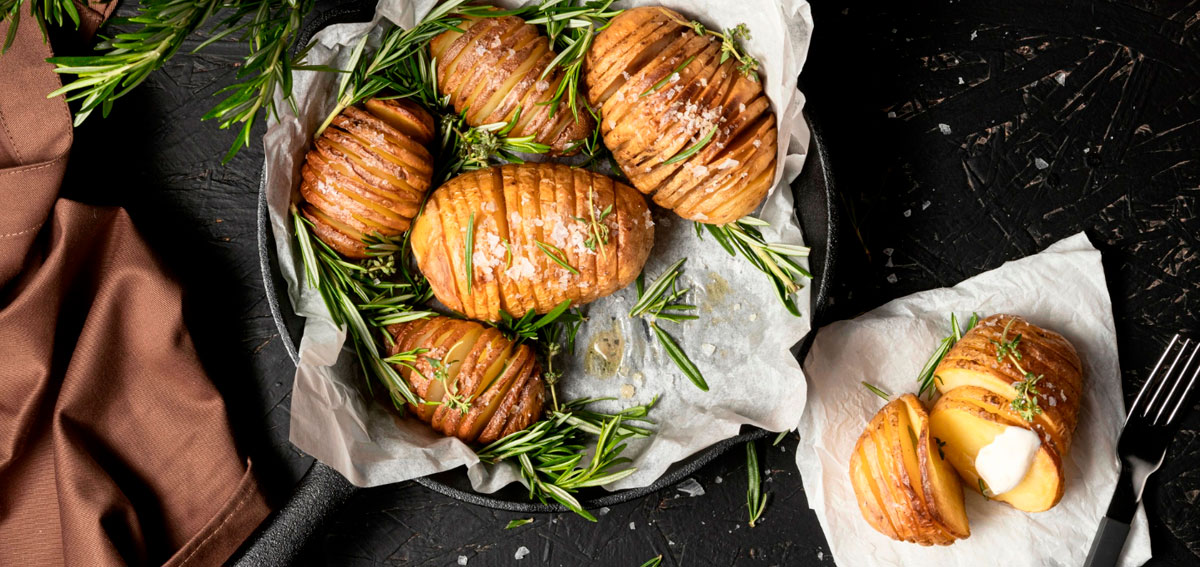
The Magefesa Ferro Cast Iron Baker 13″ is made from cast iron with an enameled exterior. Its heat-retaining properties make it a practical choice for roasting potatoes until golden and crispy.
Arrange the potatoes in a single layer, leaving a little space between the pieces. Overcrowding traps moisture and encourages steaming instead of browning.
Avoid piling them on top of one another.
4. Roast Until Golden and Crispy
Once the potatoes are parboiled and their edges are slightly roughened, they’re ready for the oven.
Follow these steps:
Preheat the oven to 425°F (220°C).
Add the drained potatoes to your roasting pan and toss with olive oil until evenly coated.
Spread them into a single layer, with some of the cut sides touching the pan.
Roast for 20–25 minutes without disturbing them.
Turn the potatoes carefully to expose another side.
Continue roasting for another 20–25 minutes, until deeply golden and crisp.
Depending on the size of the pieces, your oven, and the roasting pan, they may need a few additional minutes.
How Do You Know They’re Ready?
Look for three things:
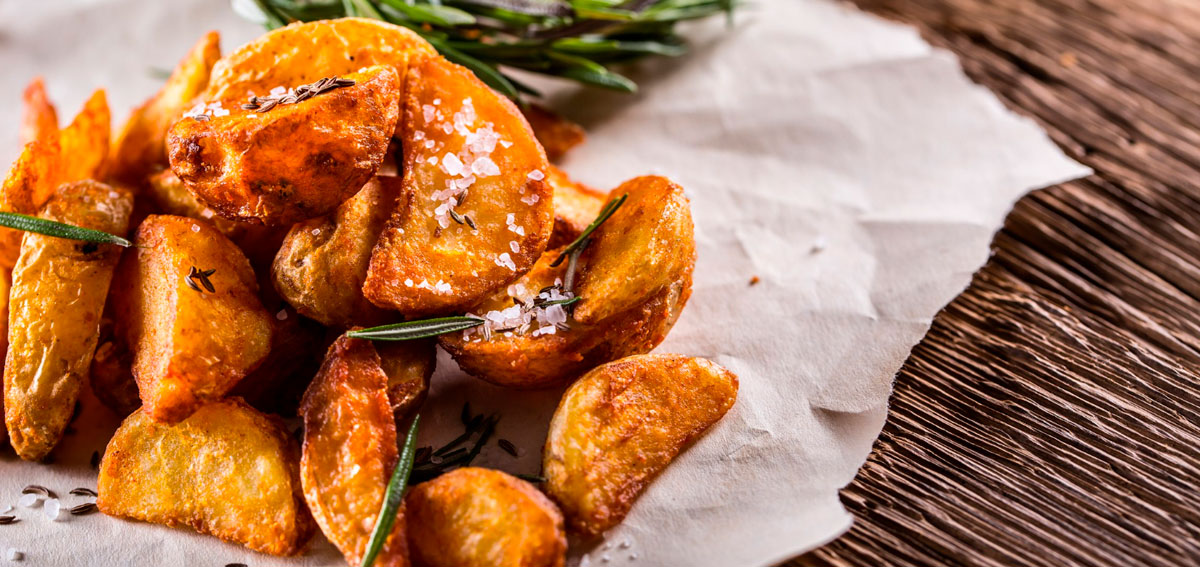
Golden-brown edges: The outside should have a well-developed crust.
A tender center: A fork or knife should slide easily through the middle.
A crisp surface: The potatoes should feel firm and lightly crunchy on the outside.
Season with salt and freshly ground black pepper. Add chopped rosemary or thyme if desired, then serve while hot.
For extra garlic flavor, add lightly crushed garlic cloves toward the end of roasting rather than at the beginning, when they could burn.
5. Common Mistakes That Make Roasted Potatoes Soggy
Even a simple recipe can go wrong if a few important details are overlooked.
| Common mistake | Why it happens | How to fix it |
|---|---|---|
| Potatoes aren’t crispy | Too much surface moisture | Drain well and let steam escape before roasting |
| Uneven cooking | Pieces are different sizes | Cut into similar-sized chunks |
| Potatoes stick to the pan | Insufficient oil or browning time | Coat evenly and let a crust form before turning |
| Soft, pale potatoes | Overcrowded roasting pan | Leave space between pieces |
| Burned outside, hard inside | Pieces are too large or weren’t parboiled enough | Cut evenly and check tenderness before roasting |
| Potatoes fall apart | Excessive parboiling | Simmer only until the edges begin to soften |
One Last Tip for Extra-Crispy Potatoes
If your potatoes are golden but not quite as crispy as you’d like, give them another 5 minutes in the oven, checking frequently.
A little extra roasting time can improve the crust, but don’t leave them unattended: the difference between beautifully browned and burned can be just a few minutes.
Frequently Asked Questions about Roasted Potatoes
Share