
How to Choose the Best Thanksgiving Turkey
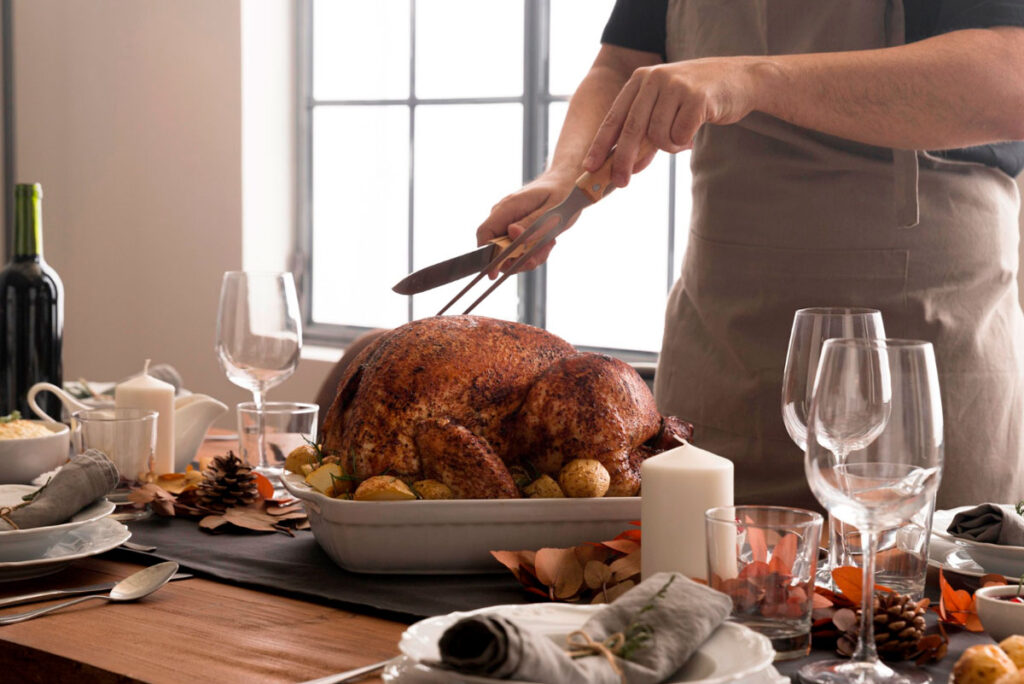
How to Choose the Best Thanksgiving Turkey
Choosing the right Thanksgiving turkey comes down to three things: how many people you’re feeding, whether you want a fresh or frozen bird, and how you plan to cook it.
For a whole turkey, allow approximately 1 to 1½ pounds per person, including bones. Choose the higher amount if you want plenty of leftovers. A frozen turkey is a convenient option when shopping ahead, while a fresh turkey eliminates the need for several days of thawing.
Here’s how to choose a turkey that fits your guest list, refrigerator, oven, and Thanksgiving menu.
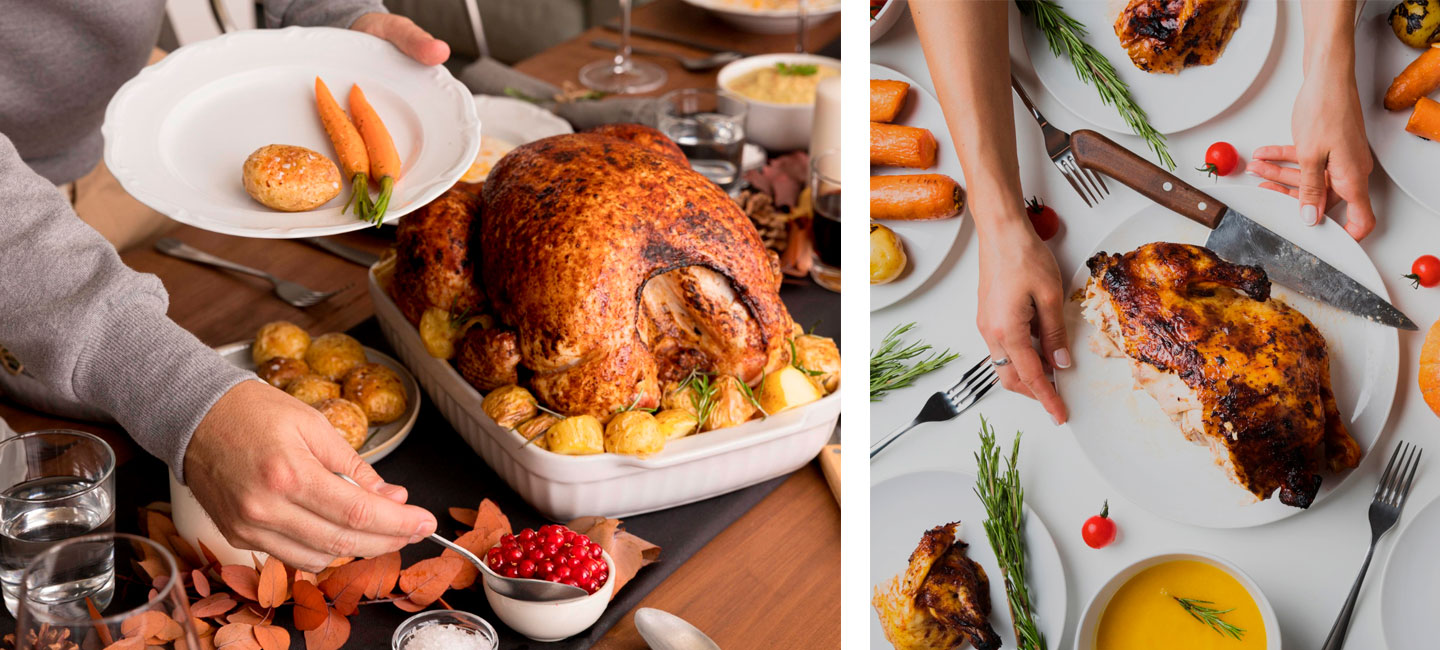
1. How Much Turkey Do You Need Per Person?
Start with your guest count. A whole turkey includes bones and other parts that won’t become servings of meat, so its purchased weight needs to be considerably higher than the amount of meat you expect to serve.
As a general rule:
-
1 pound per person: A reasonable starting point when serving several substantial side dishes.
-
1½ pounds per person: A better choice if you want generous portions and leftovers.
Thanksgiving Turkey Size Chart
| Number of guests | Turkey size | With generous leftovers |
|---|---|---|
| 4 | 4–6 lb | 6–8 lb |
| 6 | 6–9 lb | 9–10 lb |
| 8 | 8–12 lb | 12–14 lb |
| 10 | 10–15 lb | 15–17 lb |
| 12 | 12–18 lb | 18–20 lb |
These are planning estimates for whole turkeys, not exact serving guarantees. Appetite, the number of side dishes, and how much leftover meat you want will all affect your choice.
2. Fresh vs. Frozen Turkey: Which Should You Buy?
Both fresh and frozen turkeys can produce an excellent Thanksgiving dinner. The difference is mainly convenience, storage, and how far ahead you need to plan.
| Fresh turkey | Frozen turkey | |
|---|---|---|
| Best for | Shopping close to Thanksgiving | Buying ahead |
| Thawing required | No | Yes, unless cooked from frozen |
| Storage | Refrigerate promptly | Keep frozen until thawing |
| Price | Often more expensive | Often more economical |
| Availability | May require advance ordering | Usually widely available |
| Flavor and texture | Depends on quality and preparation | Can be equally good when properly thawed and cooked |
When to choose a fresh turkey
A fresh turkey makes sense if you have limited refrigerator space for a lengthy thaw or prefer to buy your bird shortly before cooking.
Purchase it 1–2 days before Thanksgiving, unless the package provides a different safe storage date supported by the producer’s handling instructions.
Keep it refrigerated at 40°F (4°C) or below, in a tray or container that catches any leaking juices.
When to choose a frozen turkey
A frozen turkey is practical if you want to shop well in advance or take advantage of seasonal prices.
The important consideration is thawing time. A large frozen turkey can require nearly a week in the refrigerator before it’s ready to cook.
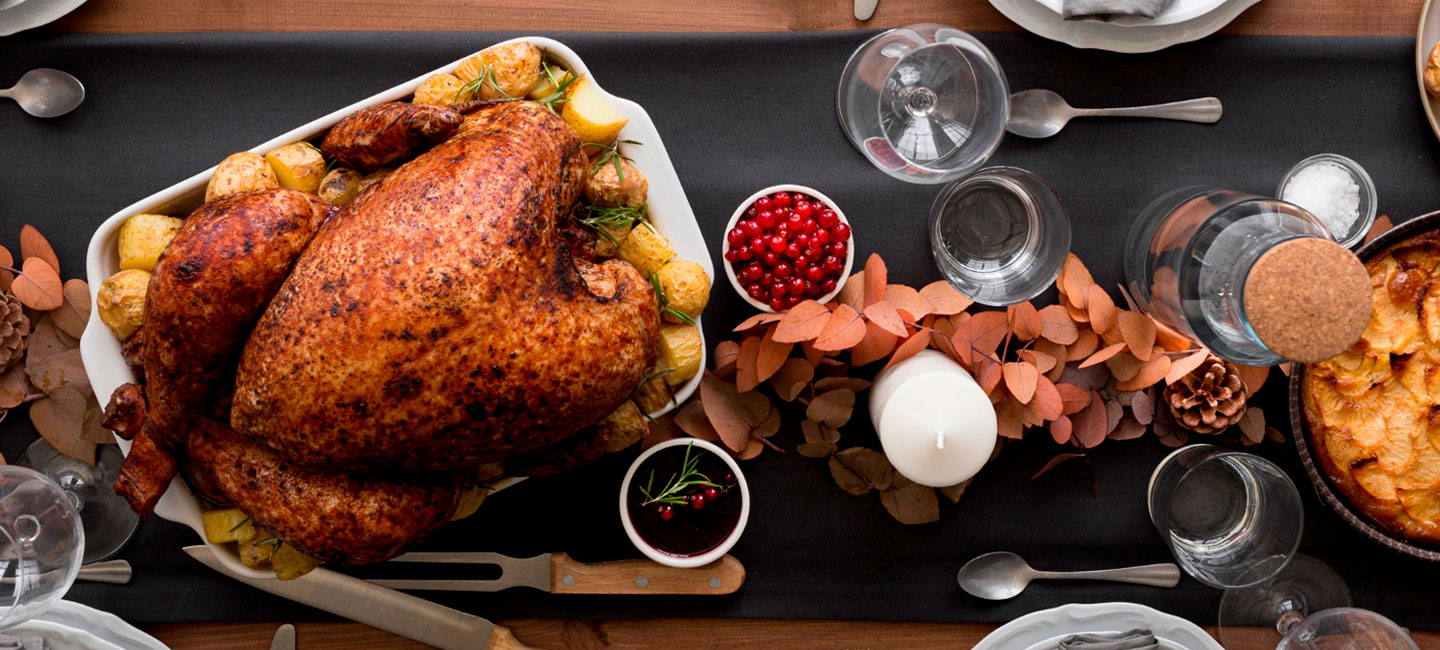
3. Whole Turkey, Turkey Breast, and Other Options
A whole turkey is the traditional Thanksgiving centerpiece, but it isn’t necessarily the most practical choice for every household.
| Turkey cut | Best for | Main advantage |
|---|---|---|
| Whole turkey | Family gatherings and mixed preferences | Provides white and dark meat |
| Bone-in turkey breast | Smaller gatherings that prefer white meat | Easier to manage than a whole bird |
| Boneless turkey breast | Small dinners and easier carving | Convenient portions with less waste |
| Turkey thighs or legs | Guests who prefer dark meat | Can be cooked separately |
For a gathering of two to four people, a turkey breast may be all you need, especially if you’re preparing several side dishes.
As a starting point, allow around ½ pound of boneless turkey breast per person, or approximately ¾ pound for bone-in breast. Increase these amounts if you want leftovers.
What do turkey labels mean?
You may also encounter labels that describe how a turkey was raised or processed.
-
Natural: Under USDA labeling rules, this generally means minimally processed with no artificial ingredients, rather than a guarantee about how the bird was raised.
-
Self-basting: The turkey has been treated with a solution that may contain broth, fat, seasonings, or other permitted ingredients.
-
Pre-brined: The turkey has already been treated with a salt solution. Check the ingredients before adding more salt.
-
Kosher: The bird has been processed according to kosher requirements, which can include salting.
-
Organic: The turkey must meet USDA organic production and certification requirements.
4. When Should You Buy and Thaw Your Turkey?
If you’re buying frozen, work backward from Thanksgiving Day to determine when to move your turkey into the refrigerator.
The USDA recommends allowing approximately 24 hours for every 4–5 pounds of turkey when thawing at 40°F (4°C) or below.
Turkey Thawing Time Chart
| Turkey weight | Refrigerator thawing time |
|---|---|
| 4–12 lb | 1–3 days |
| 12–16 lb | 3–4 days |
| 16–20 lb | 4–5 days |
| 20–24 lb | 5–6 days |
Keep the turkey in its original packaging and place it on a tray on the bottom shelf of your refrigerator.
Once completely thawed in the refrigerator, it can remain refrigerated for another 1–2 days before cooking.
For detailed safety guidance, consult the CDC’s recommendations for preparing your holiday turkey.
What if you forgot to thaw the turkey?
Cold-water thawing is a safe alternative when done correctly.
Keep the turkey in leakproof packaging, submerge it in cold water, and change the water every 30 minutes. Allow approximately 30 minutes per pound and cook the turkey immediately after thawing.
Food safety reminder: Never thaw a turkey on the kitchen counter or leave it at room temperature overnight. The outside can reach unsafe temperatures while the center remains frozen.
When cooking, use a food thermometer to confirm that the thickest part of the breast, innermost thigh, and innermost wing reach 165°F (74°C). If you cook stuffing inside the turkey, its center must also reach 165°F.
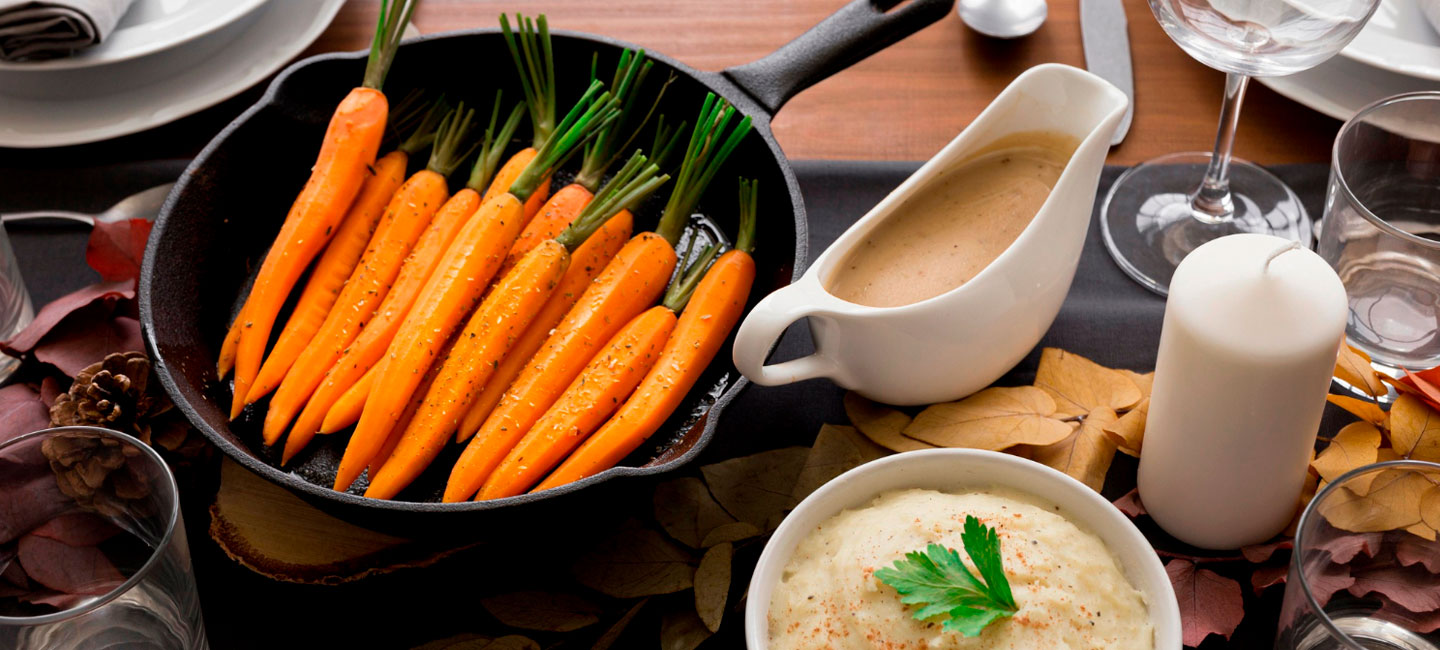
5. Complete Your Thanksgiving Menu: Recipes and Cookware
For a traditional holiday centerpiece, try our Herb Roasted Turkey. It’s a natural next step after selecting your bird and planning your Thanksgiving dinner.
Pair your roasted turkey with homemade gravy, creamy mashed potatoes, and seasonal vegetables for a complete holiday meal.
Thanksgiving Sauces and Side Dishes
These Magefesa recipes offer a combination of traditional flavors and alternatives to the usual holiday sides.
| Recipe | Why it works with turkey |
|---|---|
| Gravy Sauce | A savory sauce that adds moisture and richness to sliced turkey |
| Blueberry Sauce | A sweet-tart alternative to cranberry sauce, with orange and balsamic vinegar |
| Mashed Potatoes | A creamy, comforting side dish made with bacon, cheese, and warm milk |
| Warm Green Bean and Asparagus Salad | A lighter vegetable side with pumpkin seeds and a tangy dressing |
For more inspiration, explore the Magefesa recipe collection or our ideas for adding a Spanish touch to Thanksgiving.
Useful Cookware for Cooking and Serving Thanksgiving Dinner
The right cookware won’t replace good planning, but it can make preparing multiple dishes considerably easier.
For serving sauces and individual sides
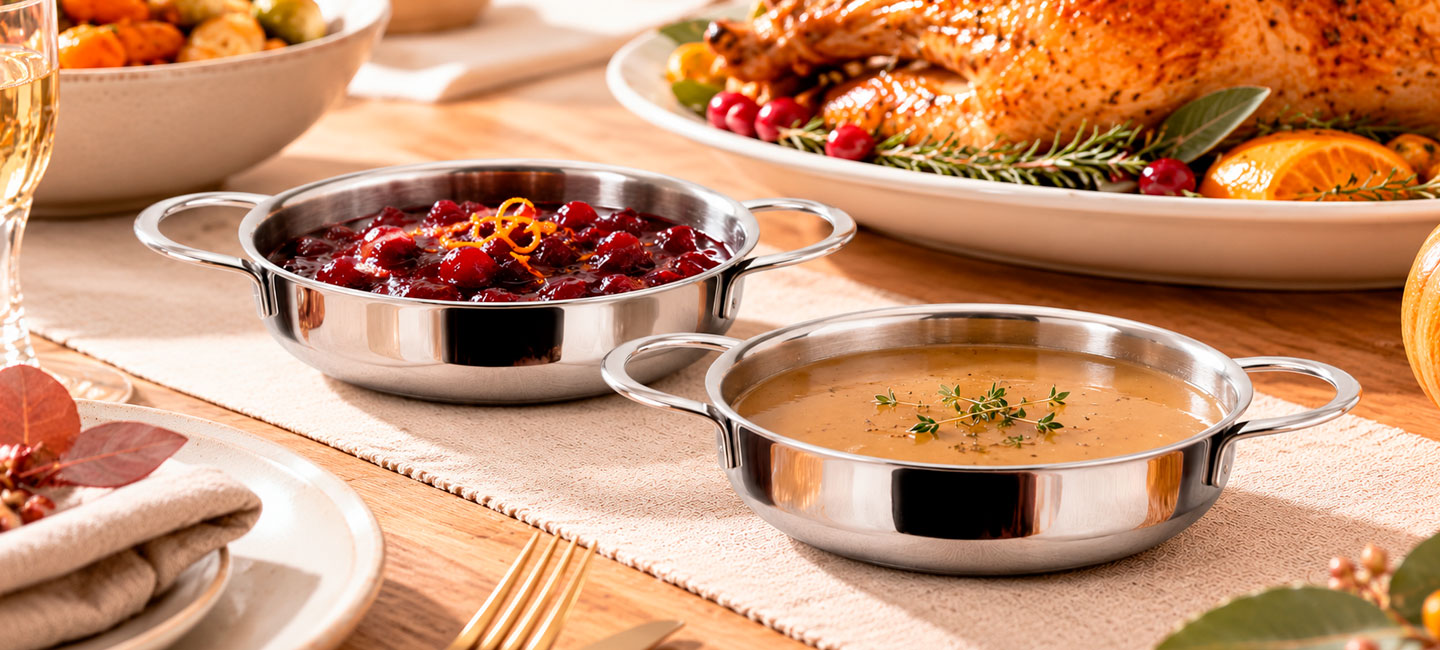
The Magefesa Prisma Mini Casserole Set includes two small stainless steel serving dishes, measuring approximately 5.5 and 6 inches in diameter.
Their compact size makes them useful for presenting small portions of gravy, warm vegetables, or individual side dishes directly at the table. For pouring thin gravy neatly, a dedicated gravy boat may be more convenient.
For preparing gravy and warm sauces
The Magefesa Ideal 2 Qt. Milk Server can also function as a small saucepan. Its pouring lip is useful for transferring warm sauces or broth with less mess.
For preparing side dishes
The Magefesa Star Stainless Steel Pressure Cooker can help prepare potatoes, vegetables, or stock while your oven is occupied with the turkey. Always follow the pressure cooker’s instructions for liquid quantities, fill limits, and pressure release.
These pieces are useful beyond Thanksgiving, particularly for family meals where several dishes need to be prepared or served at once.
Frequently Asked Questions about Thanksgiving Turkey
Share