How to Cut and Fry Potatoes: 8 Cuts & Frying Tips
How to Cut and Fry Potatoes
The secret to crispy fried potatoes starts with the cut. Thin potato strips cook quickly and become crunchy, while thicker fries need more time to develop a tender center and golden exterior.
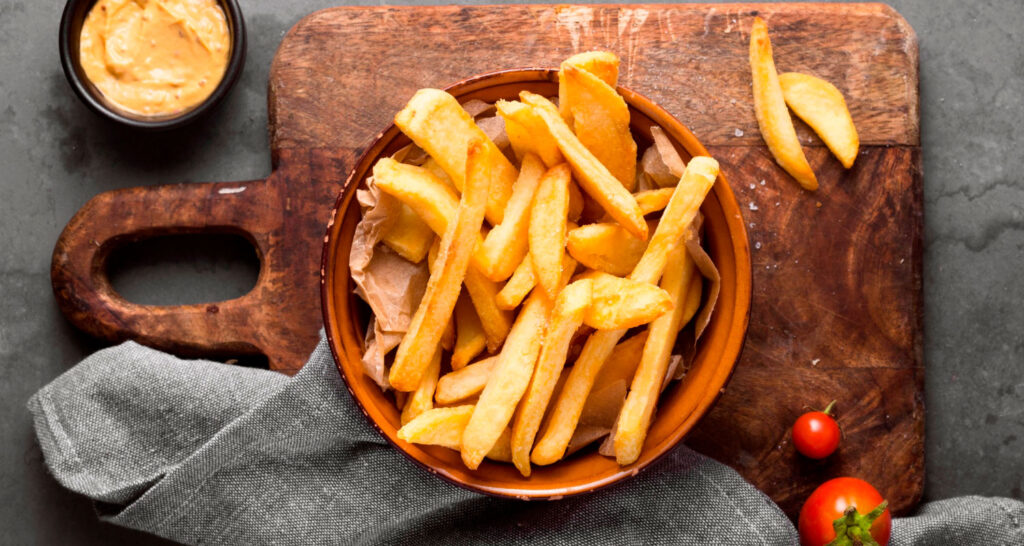
Choosing the right frying method matters just as much. Delicate cuts, such as shoestring fries and potato chips, are usually fried once. Thicker cuts, including classic French fries and Pont-Neuf potatoes, benefit from double frying.
Here are eight potato cuts, how to prepare them, and the best ways to fry each one.
How to Prepare Potatoes for Frying
Before heating the oil, a few preparation steps will make your fries more consistent.
-
Choose the right potatoes. Russet potatoes are ideal for crispy fries with fluffy interiors. Yukon Gold potatoes produce a creamier, slightly denser texture.
-
Cut evenly. Uniform pieces cook at similar rates, preventing some fries from burning while others remain undercooked.
-
Rinse or soak when appropriate. Cold water removes loose surface starch and helps prevent thin potato pieces from sticking together.
-
Dry thoroughly. Moisture causes hot oil to splatter. Drain the potatoes and pat them completely dry before frying.
Potato preparation at a glance
| Step | Why it matters |
|---|---|
| Choose Russet potatoes | Fluffy interior and crisp exterior |
| Cut uniformly | Even cooking |
| Rinse or soak | Removes excess surface starch |
| Dry completely | Reduces splattering |
| Monitor oil temperature | More consistent frying |
8 Different Potato Cuts for Frying
The thickness and shape of each cut influence its texture, cooking time, and ideal use.
Here are eight popular potato cuts and how to fry them.
|
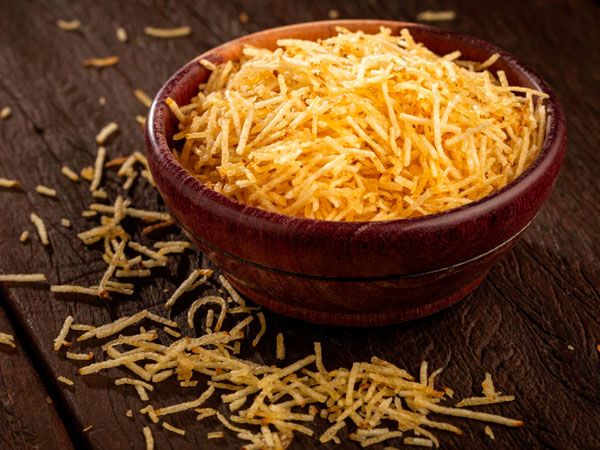
1. Straw Potatoes (Pommes Paille)Extremely thin strips, around 1/16–1/8 inch thick, that become delicate and crunchy. Frying: 350–365°F, single fry until golden. Best for: Garnishing meat, fish, and eggs. |
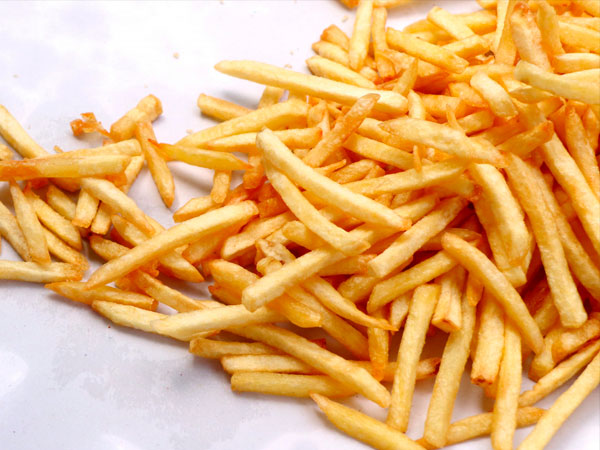
2. Matchstick Potatoes (Pommes Allumettes)Slightly thicker than straw potatoes, usually about 1/8 inch wide, with a crisp exterior. Frying: 350–365°F, single fry until crisp. Best for: Burgers, sandwiches, and grilled dishes. |
|
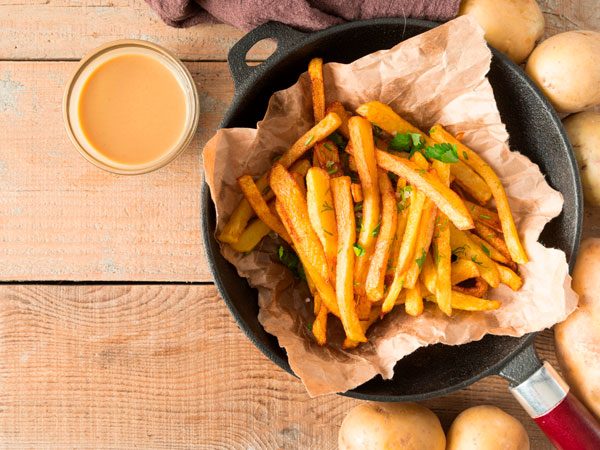
3. Potato Sticks (Classic French Fries)Familiar potato sticks about 1/4–3/8 inch thick, with a fluffy center and crispy exterior. Frying: Double fry at 300–325°F, then 350–375°F. Best for: Burgers, steak, and everyday side dishes. |
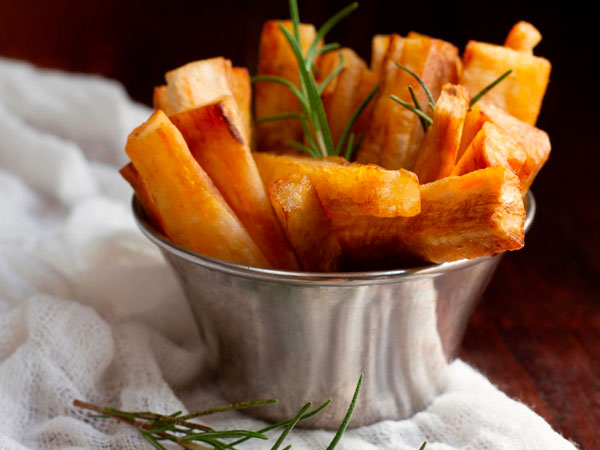
4. Spanish-Style Fries (Patatas Fritas)Medium-thick batons, often with a tender interior and lightly golden edges. Frying: Gentle frying in olive oil or double frying for extra crispness. Best for: Fried eggs, steak, and Spanish dishes. |
|
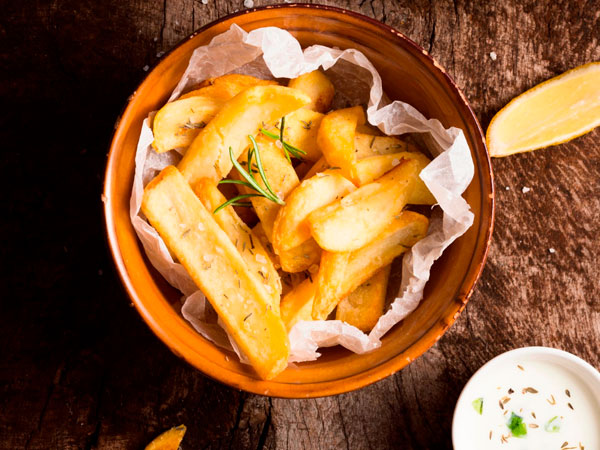
5. Pont-Neuf PotatoesThick rectangular potato batons, traditionally about 3/4 inch wide and 3 inches long. Frying: Double fry for a tender center and golden crust. Best for: Steak and grilled meats. |
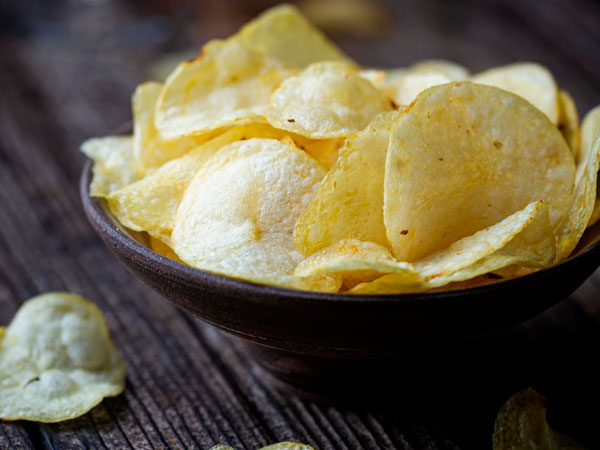
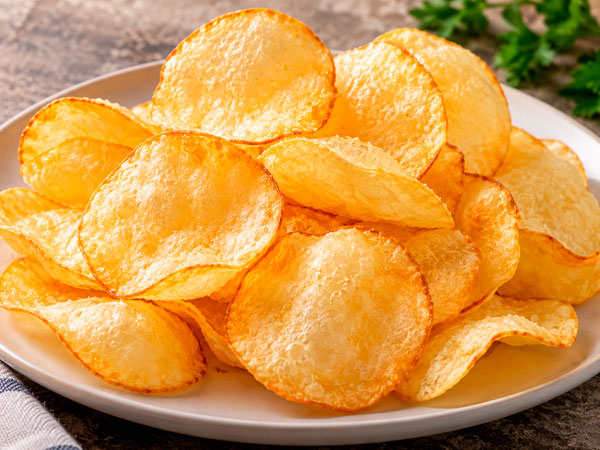
6. Potato ChipsVery thin, round slices, approximately 1/16 inch thick. A mandoline helps create uniform slices. Frying: 325–350°F, single fry until lightly golden. Best for: Snacking and crunchy side dishes. |
|
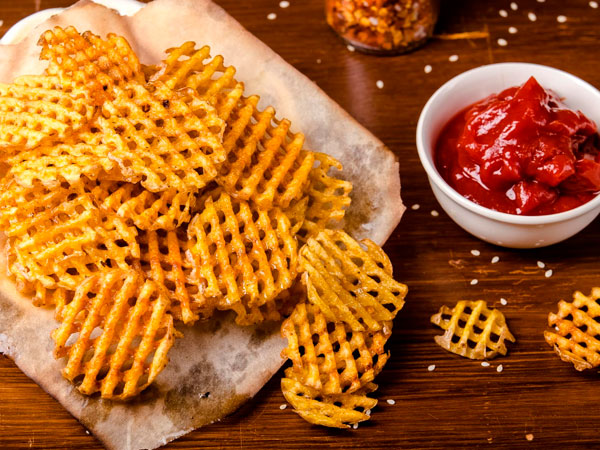
7. Waffle-Cut Potato Chips (Gaufrettes)Thin potato slices with a lattice pattern, made using a crinkle-cut mandoline and rotating the potato between cuts. Frying: 325–350°F, single fry until crisp. Best for: Dips, appetizers, and snacks. |
8. Soufflé Potatoes (Pommes Soufflées)Thin, uniform slices, around 1/8 inch thick, that puff into delicate hollow pillows when fried correctly. Frying: Specialized two-stage frying, approximately 300–325°F followed by 375°F. Best for: Elegant garnishes and special occasions.
|
Soufflé potatoes are among the most technically demanding fried potato preparations. Thin, uniform slices puff into hollow, pillow-shaped pieces when fried correctly.
The traditional technique uses two oil temperatures, beginning around 300–325°F and finishing around 375°F.
Precise thickness, potato variety, moisture, and temperature control are essential. Unlike ordinary French fries, successful puffing is not guaranteed simply by frying twice.
Potato cuts and frying methods at a glance
| Potato cut | Approximate thickness | Best method |
|---|---|---|
| Straw | 1/16–1/8 in | Single fry |
| Matchstick | 1/8 in | Single fry |
| Classic French fries | 1/4–3/8 in | Double fry |
| Spanish-style fries | 1/4–1/2 in | Gentle or double fry |
| Pont-Neuf | 3/4 in | Double fry |
| Potato chips | 1/16 in | Single fry |
| Waffle-cut chips | Thin, ridged slices | Single fry |
| Soufflé potatoes | About 1/8 in | Specialized double fry |
Measurements and temperatures are approximate. Cooking time varies with potato variety, moisture content, and batch size.
Single Frying vs. Double Frying
Both methods can produce excellent fried potatoes. The difference is how the interior and exterior cook.
|
Single-Stage FryingBest for thin cuts such as straw potatoes, |
Double FryingBest for thicker fries. A gentle first fry |
How to Double-Fry Potatoes
-
First fry: Heat the oil to 300–325°F. Add dry potato sticks in small batches and cook until tender but still pale.
-
Rest: Transfer the potatoes to a wire rack and let them cool for several minutes, allowing surface moisture to dissipate.
-
Second fry: Increase the oil temperature to 350–375°F. Return the potatoes to the oil and fry until golden and crisp.
-
Season: Drain briefly, add salt while hot, and serve immediately.
The first fry softens and cooks the potato. During the second fry, moisture escapes from the surface more rapidly, helping form the crisp exterior.
How to Get Crispy Potatoes Without Making Them Greasy
Good fried potatoes depend on controlling moisture, temperature, and batch size.
Use an appropriate oil. Refined peanut, canola, or sunflower oil work well for frying because they tolerate typical frying temperatures and have relatively neutral flavors.
Monitor the temperature. A frying thermometer helps you avoid oil that is too cool or excessively hot. Remember that the temperature drops when potatoes are added.
Fry in small batches. Overcrowding the pan lowers the oil temperature, leading to uneven cooking and greasy fries.
Choose the right cookware. A stable, heavy-bottomed pot with deep sides is preferable for deep frying. Never fill it more than halfway with oil, and keep the pan uncovered while frying.
For shallow-frying smaller batches, an uncoated stainless steel skillet, such as the Magefesa Essencial Inox Skillet, can be a practical option. Its stainless steel construction is suitable for stovetop cooking, although a deeper pot is the safer choice when using larger quantities of oil.
Drain properly. Place cooked potatoes on a wire rack or paper towels to remove excess surface oil. Season immediately before serving.
Kitchen tip
During the first stage of double frying, focus on tenderness rather than color. The potatoes should be cooked through but remain pale. The second fry is when they become golden and crisp.
Common Potato Frying Mistakes
Even properly cut potatoes can turn out soggy or unevenly cooked if the frying conditions aren’t right.
| Problem | Likely cause | Solution |
|---|---|---|
| Soggy fries | Oil too cool or overcrowding | Fry smaller batches and check temperature |
| Dark outside, raw center | Oil too hot for thick cuts | Use a lower-temperature first fry |
| Potatoes stick together | Loose starch or overcrowding | Rinse, dry, and separate pieces |
| Excessive splattering | Wet potatoes | Dry thoroughly before frying |
| Uneven browning | Inconsistent thickness | Cut pieces uniformly |
| Bitter or overly dark chips | Excessive frying time or temperature | Remove when lightly golden |
Thin chips continue to darken slightly after leaving the oil, so remove them when they are lightly golden rather than deeply browned.
For thicker fries, aim for a crisp exterior and a fully cooked, tender center. With uniform cuts, properly dried potatoes, and controlled oil temperature, homemade fries can be golden, crunchy, and satisfying without feeling excessively greasy.
Frequently Asked Questions about Aluminum Cookware
Share