3 Mediterranean-Inspired Baking Recipes to Make at Home

Mediterranean Baking Recipes
Mediterranean-inspired baking often starts with ingredients you may already have in the kitchen: olive oil, lemons and oranges, almonds, yogurt, honey, and fresh fruit. Used thoughtfully, they make desserts that are aromatic and satisfying without relying on heavy frostings or elaborate decoration.
These three recipes take a different approach to those flavors: a tender lemon and yogurt cake, an orange-almond cake, and simple honey-baked pears. None requires complicated pastry techniques, and all three are easy enough to make at home.
What Gives Mediterranean Baking Its Character?
There is no single Mediterranean baking tradition. The region encompasses many countries and distinct culinary cultures, but several ingredients appear repeatedly in its sweets.
Olive oil can replace butter in many cakes, giving the crumb moisture and a subtle fruity flavor. Citrus zest brings more concentrated aroma than juice alone, while almonds add richness and a slightly denser, tender texture. Yogurt, honey, fresh and dried fruits, and floral ingredients such as orange blossom water are also common across different Mediterranean baking traditions.
The key is restraint. A strongly peppery olive oil, for example, can overpower a delicate lemon cake. And when using citrus, finely grated zest provides plenty of fragrance without adding enough liquid to upset the structure of the batter.
Here are three ways to put those ingredients to work.

Lemon, Yogurt and Olive Oil Cake
This is an unfussy cake with a soft crumb and a clean lemon flavor. Yogurt contributes tenderness, while olive oil keeps the cake moist even after it has cooled.
8–10 servings
15 minutes
35–40 minutes
Ingredients
- 1 1/2 cups (180 g) all-purpose flour
- 1 1/2 teaspoons baking powder
- 1/4 teaspoon fine salt
- 3 large eggs
- 3/4 cup (150 g) granulated sugar
- Finely grated zest of 1 large lemon
- 2 tablespoons fresh lemon juice
- 1/2 cup (120 ml) mild extra-virgin olive oil
- 1/2 cup (120 g) plain Greek yogurt
- Powdered sugar, optional, for serving
Directions
- Heat the oven to 350°F (175°C). Grease an 8-inch round cake pan and line the bottom with parchment paper.
- Combine the flour, baking powder, and salt in a bowl.
- In a second bowl, rub the lemon zest into the sugar with your fingertips for about 30 seconds. This helps release the aromatic oils from the peel.
- Add the eggs and whisk until thoroughly combined and slightly pale. Whisk in the olive oil, yogurt, and lemon juice.
- Add the dry ingredients and fold just until no dry streaks of flour remain. Avoid continuing to mix once the batter is homogeneous.
- Transfer to the prepared pan and bake for 35–40 minutes, or until the center springs back lightly and a tester inserted near the center comes out clean or with a few moist crumbs.
- Cool for 10 minutes before removing from the pan. Let cool completely and dust lightly with powdered sugar, if desired.
💡 A useful detailChoose a fruity, relatively mild olive oil rather than an intensely bitter or peppery one. The oil should complement the lemon, not cover it.
⚠️ The mistake to avoidOvermixing after adding the flour. Excess mixing encourages gluten development and can turn a tender cake into a firmer one.
A stainless-steel balloon whisk such as the Magefesa Messier Balloon Whisk is useful here for combining the eggs, yogurt, sugar, and oil smoothly before the flour is folded in.

Orange and Almond Cake
Ground almonds change the character of this cake: the crumb is slightly denser and moister than a conventional sponge, while orange zest keeps the flavor fresh.
8–10 servings
15 minutes
35–40 minutes
Ingredients
- 1 cup (100 g) almond flour or finely ground almonds
- 3/4 cup (90 g) all-purpose flour
- 1 1/2 teaspoons baking powder
- 1/4 teaspoon fine salt
- 3 large eggs
- 2/3 cup (135 g) granulated sugar
- Finely grated zest of 1 large orange
- 1/3 cup (80 ml) fresh orange juice
- 1/2 cup (120 ml) mild extra-virgin olive oil
- 1 teaspoon vanilla extract
- 1/3 cup (30 g) sliced almonds
Directions:
- Heat the oven to 350°F (175°C). Grease and line an 8-inch round baking pan.
- Combine the almond flour, all-purpose flour, baking powder, and salt.
- In a separate bowl, rub the orange zest into the sugar. Whisk in the eggs, followed by the olive oil, orange juice, and vanilla.
- Fold the dry ingredients into the wet mixture just until combined.
- Pour the batter into the prepared pan and scatter the sliced almonds over the surface.
- Bake for 35–45 minutes. Begin checking around the 35-minute mark; the cake is ready when the center is set and a tester comes out without wet batter.
- Let the cake rest for about 15 minutes before removing it from the pan.
The almond flour means this cake can appear moist even when fully baked, so don’t wait for the interior to become completely dry before taking it out of the oven.
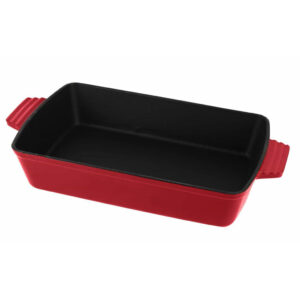
For a more rustic presentation, this type of cake can also be baked in oven-safe cast iron, provided the dimensions are appropriate for the quantity of batter. The Magefesa Ferro Cast Iron Baker 13″ is made from enameled cast iron and designed for even heat distribution and heat retention; Magefesa lists it as suitable for oven use.
When adapting a cake to a wider baking vessel, remember that batter depth changes baking time. A shallower layer generally cooks faster, so begin checking earlier rather than relying exclusively on the time given for an 8-inch cake pan.
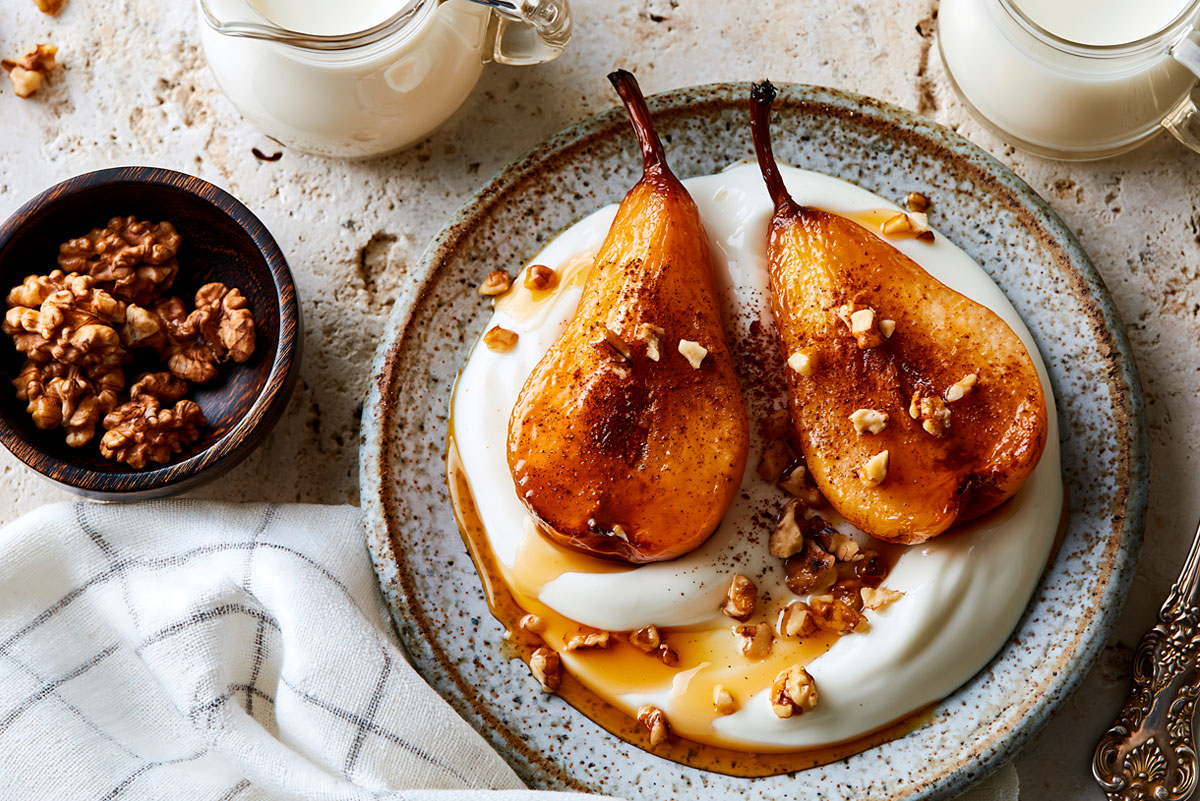
Honey-Baked Pears with Lemon and Almonds
Not every baked dessert needs flour, eggs, or a cake pan. Pears become tender and concentrated in the oven, while honey, lemon, and toasted almonds provide sweetness, acidity, and crunch.
This is also the most forgiving of the three recipes.
4 servings
10 minutes
30–40 minutes
Ingredients
- 4 ripe but firm pears
- 2 tablespoons honey, plus more to serve if desired
- 2 tablespoons fresh lemon juice
- Finely grated zest of 1/2 lemon
- 2 tablespoons extra-virgin olive oil
- 1/2 teaspoon ground cinnamon
- Pinch of fine salt
- 1/3 cup (30 g) sliced almonds
- Plain Greek yogurt, optional, for serving
Directions:
- Heat the oven to 375°F (190°C).
- Halve the pears lengthwise and scoop out the cores with a teaspoon or melon baller.
- Arrange the pears cut side up in an oven-safe baking dish.
- Stir together the honey, lemon juice, lemon zest, olive oil, cinnamon, and salt. Spoon the mixture over the pears.
- Bake for 20 minutes, then spoon some of the juices from the bottom of the dish back over the fruit.
- Continue baking for another 10–20 minutes, depending on the ripeness and variety of the pears. They should be tender when pierced with a knife but still hold their shape.
- Meanwhile, toast the sliced almonds in a dry skillet over medium-low heat, stirring frequently, until lightly golden.
- Serve the pears warm with their baking juices and the toasted almonds. Add a spoonful of plain Greek yogurt if you want a creamy contrast.
The Magefesa Ferro Cast Iron Baker 13″ is particularly well suited to this kind of dessert because it can go directly into the oven and retains heat well.
⚠️ The mistake to avoidStarting with very soft pears. They can collapse before the cooking juices have had time to concentrate. Choose fruit that is ripe enough to smell fragrant but still feels firm around the neck.
Simple Ways to Bring Mediterranean Flavors Into Your Baking
You don’t need a specialized recipe every time you want these flavors in a dessert. A few techniques can be applied to many familiar cakes and baked fruits.
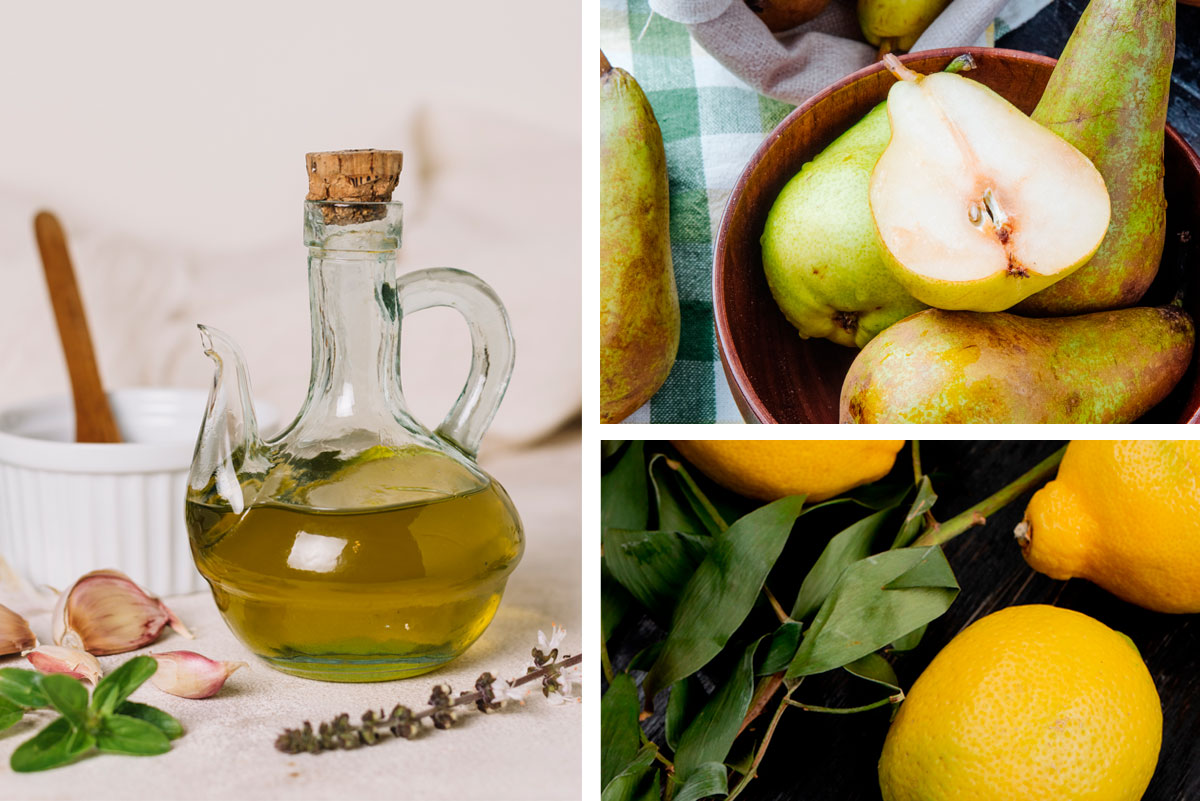
Make the most of citrus Use citrus zest for aroma and juice for acidity; they are not interchangeable. Rub freshly grated zest into sugar before mixing a cake to release more of its aromatic oils.
Choose your olive oil by flavorWhen baking with olive oil, consider the flavor of the oil as carefully as you would its quantity. Mild, fruity oils tend to work well with lemon, orange, yogurt, vanilla, and almonds. More assertive oils can be delicious with chocolate or spice, but may dominate a delicate cake.
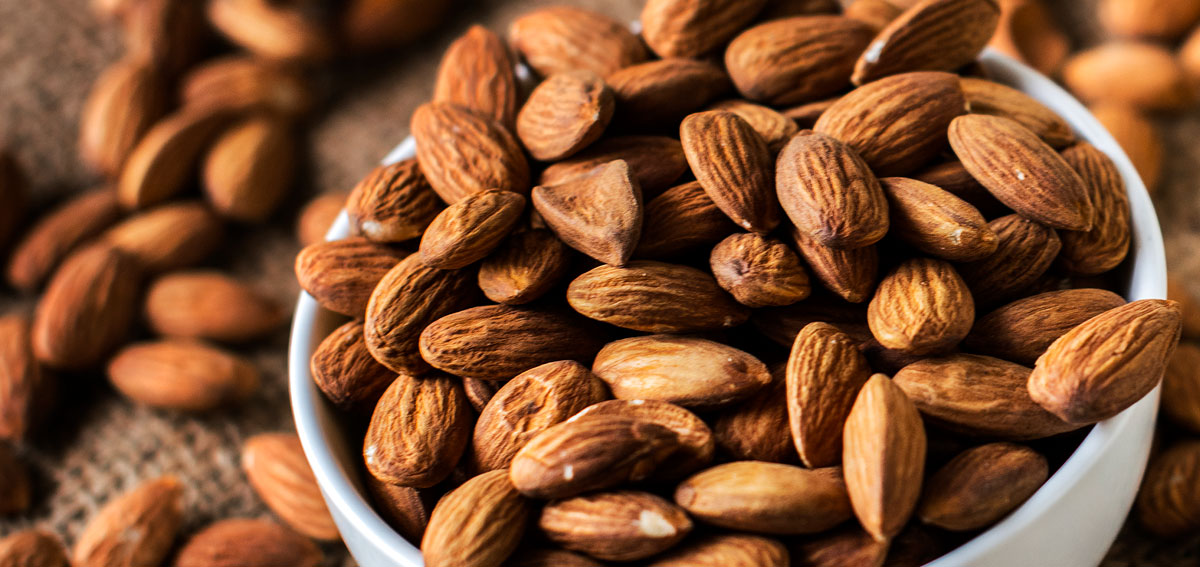
Use almonds two waysGround almonds contribute richness and tenderness inside a cake, while sliced or chopped toasted almonds add contrast at the end.
Let fruit do the work Pears, apples, figs, peaches, apricots, and citrus can become a complete dessert with little more than gentle heat, honey, nuts, yogurt, or spices.
Keep it simpleThe Mediterranean character of a dessert doesn’t come from adding as many regional ingredients as possible. It comes from allowing a few good ingredients to remain recognizable.


Frequently Asked Questions about Mediterranean Baking
Share