
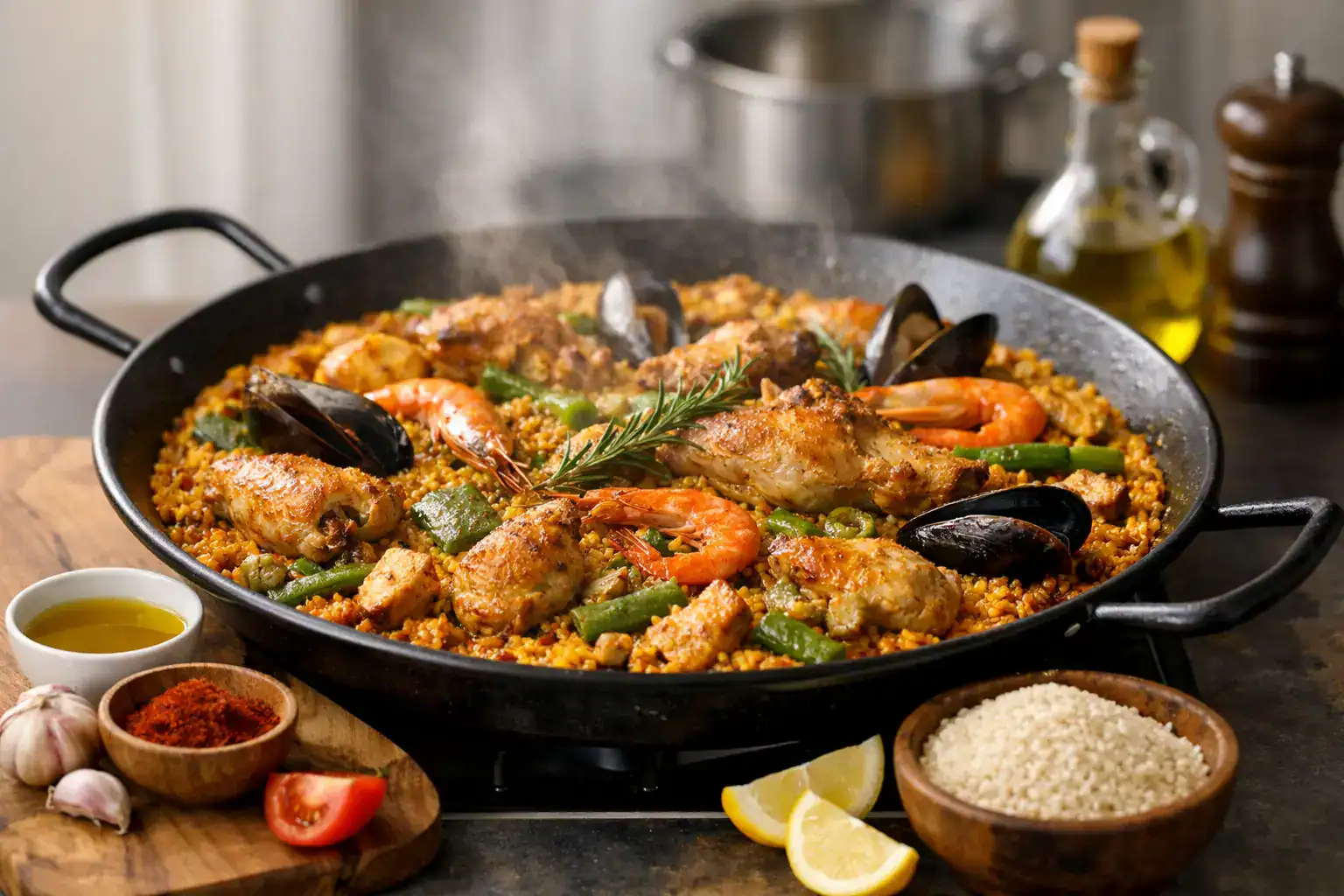
How to Cook an excellent Valencian Paella at Home
If you want to learn how to cook Valencian paella the right way, the biggest shift is simple: think of it as a rice dish with discipline, not a catch-all skillet dinner.
Authentic Valencian paella is traditional, specific, and wonderfully straightforward once you respect its structure. It is not overloaded with seafood, heavy sauces, or extra seasoning blends. At its core, it is about proper rice, measured liquid, steady heat, and letting the bottom develop that prized toasted layer known as socarrat.
Quick Answer: How Do You Cook Valencian Paella?
Authentic Valencian paella is cooked in a wide, shallow paella pan using chicken, rabbit, flat green beans, garrofón, tomato, olive oil, saffron, paprika, water, salt, and short-grain rice such as Bomba or Calasparra. After adding the rice, it should cook without stirring so the grains stay separate and the traditional socarrat can form.
Valencian Paella at a Glance
| Prep Time | 20 minutes |
|---|---|
| Cook Time | 45–60 minutes |
| Servings | 4–6 |
| Difficulty | Intermediate |
| Best Rice | Bomba or Calasparra |
| Best Pan | Wide, shallow paella pan |
What Makes Valencian Paella Different?
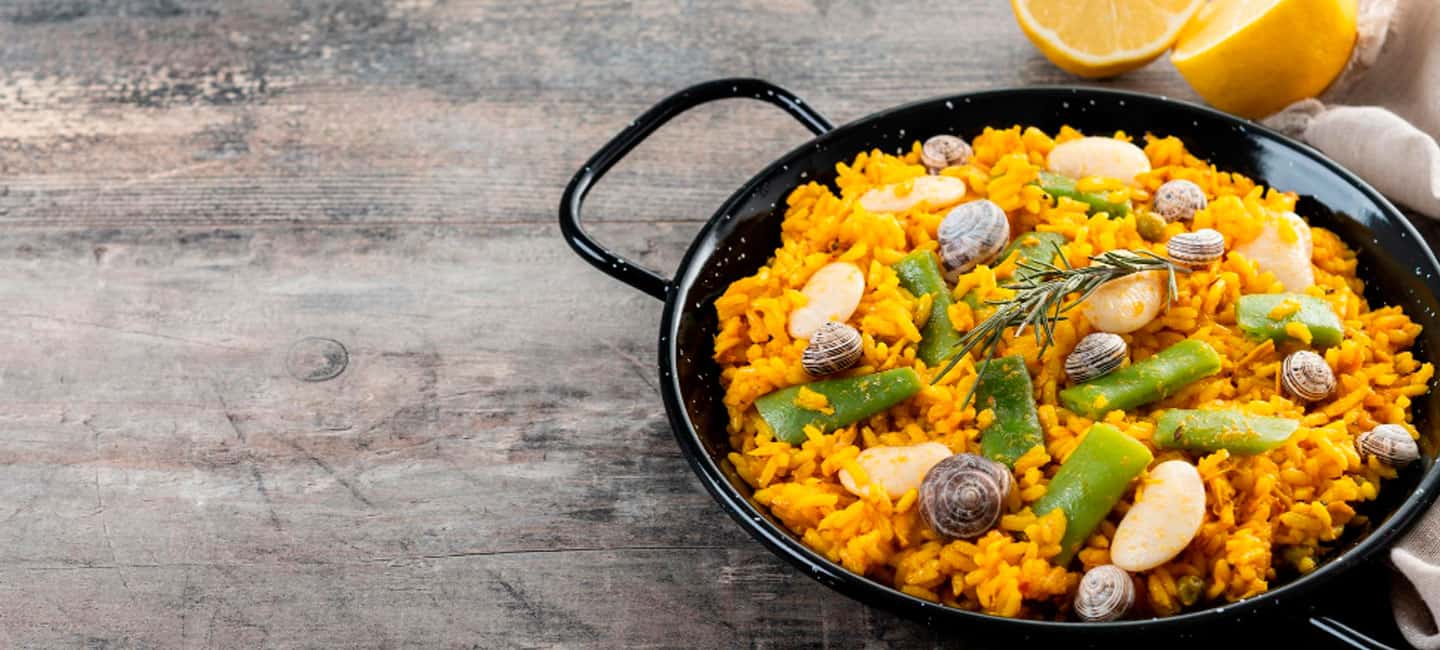
If you have seen many versions of paella in the United States, this is where expectations need a quick reset. Authentic Valencian paella is traditionally made with chicken, rabbit, flat green beans, garrofón or large white beans, tomato, olive oil, water, saffron, paprika, salt, and rice. Some regional cooks also add rosemary or snails.
What it does not need is chorizo, peas, seafood, or a crowded mix of proteins. That matters because the dish is built for balance. Each ingredient has a role, and the rice is meant to absorb a clean, savory flavor from the meat, vegetables, saffron, and cooking liquid.
For more cultural context on the traditional dish, visit the Museo de la Paella Valenciana.
Traditional Valencian Paella Ingredients
- Chicken
- Rabbit
- Flat green beans
- Garrofón or large white beans
- Tomato
- Olive oil
- Sweet paprika
- Saffron
- Short-grain rice
- Water and salt
Ingredients to Avoid
- Chorizo
- Peas
- Cream
- Heavy sauces
- Too many mixed proteins
The Right Equipment for Valencian Paella
The pan is not a detail. It is part of the recipe.
A proper paella pan is wide, shallow, and designed to spread the rice in a thin, even layer. This shape allows liquid to reduce at the right pace and helps the rice cook uniformly. A deep skillet or Dutch oven may still make tasty rice, but it will not cook like Valencian paella because the depth changes evaporation, texture, and the chance of forming socarrat.
For traditional results, use a dedicated paella pan. A carbon steel paella pan is a great choice for high heat and traditional cooking, while an enameled steel paella pan is easier to maintain and clean.
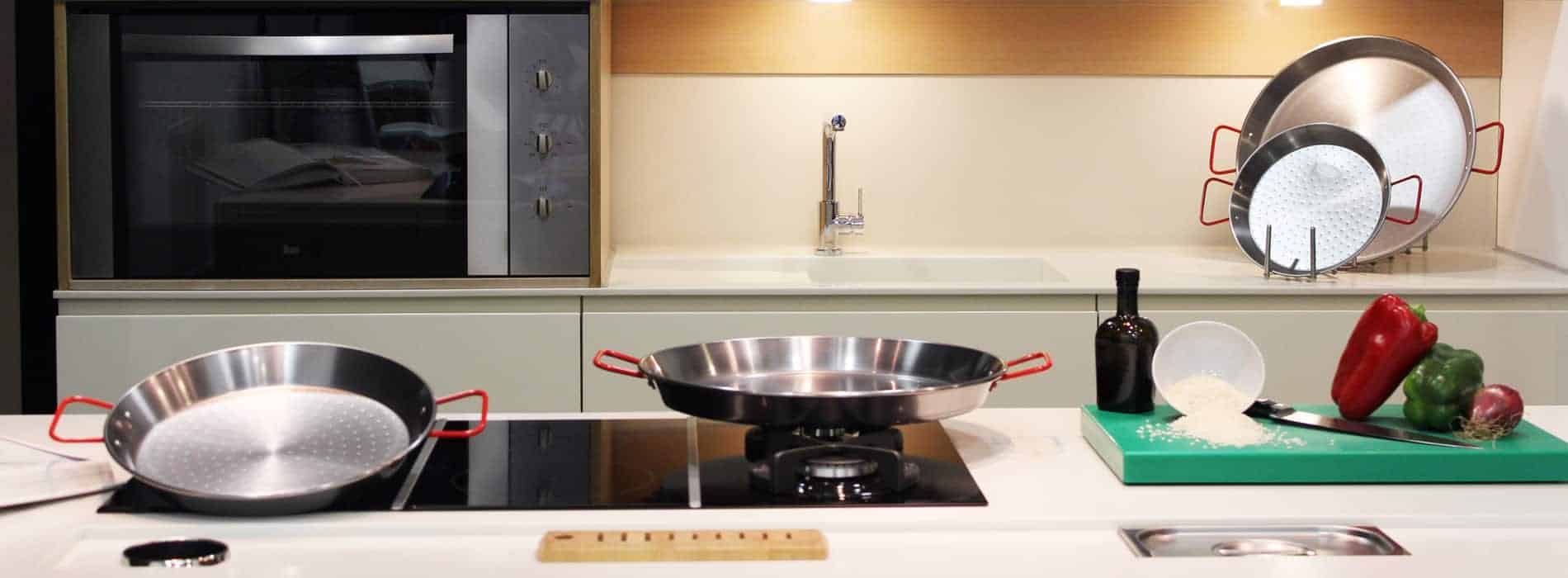
Why a Paella Pan Matters
- It keeps the rice layer thin.
- It helps liquid evaporate evenly.
- It gives the rice better texture.
- It makes it easier to develop socarrat.
- It brings the dish closer to traditional preparation.
If you are cooking outdoors or preparing paella for a larger group, a paella pan burner can give you more even heat. For extra stability, especially with larger pans, consider using a reinforced burner tripod.
Ingredients You’ll Need
Meat
- Bone-in chicken
- Rabbit, if available
Vegetables
- Flat green beans
- Garrofón or large white beans
- Grated tomato
Seasonings
- Olive oil
- Sweet paprika
- Saffron
- Salt
Rice
- Bomba rice
- Calasparra rice
- Other short-grain Spanish paella rice
Best Rice for Valencian Paella
The rice choice matters more than many first-time cooks expect. Valencian paella should be tender but distinct, with grains that hold their shape. Short-grain Spanish rice such as Bomba or Calasparra is ideal because it absorbs flavor while keeping a firm texture.
Long-grain rice does not absorb liquid in the same way and usually stays too separate. Arborio is not a good substitute either because it releases more starch and can push the texture toward creamy, which is not the goal. Paella is not risotto. The rice should absorb the cooking liquid without becoming soft or sticky.
Watch Valencian Paella Being Cooked
Before following the step-by-step process, watch this Magefesa USA video to see how a paella pan helps the rice cook evenly and develop the right texture.
How to Cook Valencian Paella in 10 Easy Steps
Step 1: Brown the Meat
Start by seasoning the chicken and rabbit with salt. Add olive oil to your paella pan over medium to medium-high heat and brown the meat well. This stage should take time. Pale meat means less flavor in the cooking liquid, and the finished rice will reflect that.
Step 2: Cook the Vegetables
Add the flat green beans and sauté until they soften slightly and pick up a little color. The vegetables should begin to release flavor into the oil and combine with the browned meat.
Step 3: Add Tomato and Paprika
Stir in the grated tomato and cook it down until the moisture reduces. Then add a small amount of sweet paprika and stir briefly. Paprika can burn quickly, so this should be a short step, not a long one.
Step 4: Build the Broth
Add water directly to the pan. Traditional paella often starts with water rather than prepared stock because the broth is built in the pan from the browned meat and vegetables. Bring it to a simmer, add the white beans, and let the liquid cook long enough to develop flavor.
Add saffron and adjust the salt here. The liquid should taste pleasantly seasoned before the rice goes in.
Step 5: Add the Rice
Once the broth is ready, add the rice and distribute it evenly across the pan. This is the point where many home cooks need restraint. After the rice is spread, do not keep stirring.
Step 6: Let the Rice Cook Undisturbed
Unlike risotto, paella is meant to cook without stirring so the grains stay separate and the bottom can begin to caramelize. For the first several minutes, keep the heat at a lively simmer so the rice starts absorbing liquid evenly.
Step 7: Create the Socarrat
In the last minute or two, raise the heat just enough to encourage socarrat. Listen closely. A gentle crackling sound is a good sign. A sharp burning smell is not. The goal is a toasted bottom layer, not scorched rice.
Step 8: Let the Paella Rest
Once the rice is done, remove the pan from the heat and let it rest for about five minutes before serving. This helps the texture settle and makes the paella easier to serve directly from the pan.
Step 9: Serve from the Pan
Serve Valencian paella directly from the pan so everyone can enjoy the contrast between the tender top-layer rice and the toasted socarrat at the bottom.
Step 10: Enjoy It Fresh
Valencian paella is best enjoyed immediately after resting, while the rice is still tender, distinct, and full of flavor.
Common Mistakes When Cooking Valencian Paella
Using Too Much Liquid
Too much liquid is one of the most common problems. If the rice sits in broth too long, it softens unevenly and the bottom never develops properly. The exact ratio depends on the rice variety, pan size, and heat source, so practicing with the same pan more than once helps.
Overcrowding the Pan
Valencian paella is not supposed to be thick. The rice layer should stay relatively shallow so it cooks evenly. If you want to feed more people, use a larger pan rather than doubling ingredients in the same one.
Stirring the Rice
Stirring feels natural, especially if you are used to other stovetop rice dishes, but it changes the texture. Once the rice is spread, let the pan do its work.
Using the Wrong Heat
Too low, and the rice can turn flat and soggy. Too high, and the bottom scorches before the top is ready. Outdoor cooking with a dedicated burner often gives better control for larger pans.
Indoor vs. Outdoor Paella Cooking
| Indoor Cooking | Outdoor Cooking |
|---|---|
| Best for smaller batches | Best for larger groups |
| Works with smaller paella pans | Works well with larger paella pans |
| Household stove heat can be uneven | A paella burner gives better heat coverage |
| Good for everyday cooking | Ideal for entertaining |
If you are cooking Valencian paella indoors, keep the batch size realistic. A smaller pan is easier to manage on a household range, and better heat contact usually means better results.
Outdoors, you get more flexibility with larger pans and more even heat, especially when using a paella burner. This is often the best route for entertaining because the dish is social by nature.
How to Know When Valencian Paella Is Done
The rice should be tender but not mushy, and the surface should look mostly dry. You should not see soupy liquid sitting between the grains. The bottom may have socarrat, but the whole pan should not taste burnt.
- The rice is tender but still distinct.
- The surface looks mostly dry.
- There is no soupy liquid between the grains.
- The bottom has a light toasted layer.
- The paella has rested for about five minutes.
If the rice is still firm and the liquid is disappearing too fast, add a little hot water around the pan’s edges. Do this sparingly. Small corrections are part of cooking, but flooding the pan at the end usually hurts the texture.
Serving Valencian Paella
Paella does not need much around it. A simple salad, some bread, and a relaxed table are enough. The dish is the centerpiece. Serve it directly from the pan and let people enjoy the mix of top-layer rice and those prized toasted bits near the bottom.
- Serve directly from the paella pan.
- Let it rest before serving.
- Add lemon wedges on the side, but use them lightly.
- Pair with a simple salad or bread.
- Enjoy immediately while the rice texture is at its best.
Frequently Asked Questions
What is the best pan for Valencian paella?
The best pan is wide and shallow, allowing the rice to cook in a thin, even layer. A traditional paella pan helps with evaporation, texture, and the formation of socarrat.
Can I make Valencian paella without rabbit?
Rabbit is traditional, but many home cooks make a simplified version with chicken only. The flavor will be slightly different, but the cooking technique remains the same.
What rice is best for Valencian paella?
Bomba and Calasparra are two of the best choices because they absorb flavor while keeping their shape. Avoid long-grain rice and Arborio rice.
Why should you not stir paella?
Paella should not be stirred after the rice is added because stirring releases starch and changes the texture. Leaving the rice undisturbed helps the grains stay separate and allows socarrat to form.
What is socarrat?
Socarrat is the toasted layer of rice that forms at the bottom of the pan. It is one of the most prized parts of a well-cooked paella.
Can I cook Valencian paella indoors?
Yes. Indoor paella is possible, especially with a smaller pan that matches your burner size. For larger pans, outdoor cooking with a dedicated burner usually gives better heat control.
Final Tips for Cooking Authentic Valencian Paella
If you are making Valencian paella for the first time, aim for progress, not perfection. Learning how to cook Valencian paella is partly about ingredients and technique, and partly about repetition with reliable cookware that holds up meal after meal.
A good pan, steady heat, and a little patience go much further than overcomplicating the recipe. Cook it once for practice. Cook it again for family. By the third time, the sound of the rice, the look of the liquid, and the timing of the finish will start to feel familiar.
Ready to bring authentic Spanish cooking to your kitchen? Explore Magefesa’s paella pans, including carbon steel and enameled steel options, and choose the right pan for your next paella.

