Why Kitchenware Durability Matters for Home Cooks
Finding kitchenware that truly lasts can feel like searching for a needle in a haystack. Many home cooks in North America are frustrated by promises of durability that rarely stand up to real-world use, with safety and quality concerns lurking behind misleading claims. This guide examines the myths, materials, and construction secrets behind kitchenware longevity, offering practical insights so you invest in cookware that performs reliably and stays out of the landfill.
Table of Contents
- Defining Durable Kitchenware And Common Myths
- Key Materials And Construction Explained
- Long-Term Cost Savings And Value
- Safety, Health, And Cooking Performance
- Choosing Reliable Kitchenware For Your Needs
Key Takeaways
| Point | Details |
|---|---|
| Durability is Multifaceted | Understanding kitchenware longevity involves material quality, construction, and performance consistency, not just lifespan. |
| Costs Extend Beyond Purchase Price | Consider total cost of ownership, including durability and maintenance, when evaluating kitchenware. |
| Health and Safety Are Critical | Be aware of cookware materials to minimize health risks, such as metal leaching and harmful coatings. |
| Choose Based on Specific Needs | Match kitchenware selection to your cooking style, frequency, and stove compatibility for optimal performance. |
Defining Durable Kitchenware and Common Myths
Durability in kitchenware is more complex than many home cooks realize. When discussing kitchenware longevity, consumers often encounter misleading information and persistent myths that can lead to poor purchasing decisions. Consumer Reports highlights significant challenges in identifying truly durable kitchen equipment, particularly regarding safety and material quality.
Understanding what makes kitchenware genuinely durable requires examining several critical factors:
- Material composition and quality
- Manufacturing process and construction
- Resistance to thermal stress
- Ability to maintain performance over multiple cooking cycles
- Ease of maintenance and cleaning
Contrary to popular belief, durability isn’t just about how long something lasts, but how consistently it performs under various cooking conditions. Reusable does not automatically mean sustainable. University of Michigan researchers suggest that some reusable items might never reach an environmental break-even point due to resource-intensive cleaning requirements.
Common myths about kitchenware durability can mislead consumers into making poor investments. For instance, many people believe that expensive automatically means durable, or that all non-stick surfaces are created equal. In reality, durability depends on precise material science, manufacturing techniques, and proper maintenance.
Pro tip: Invest time in understanding your specific cooking needs and research materials that match those requirements before purchasing new kitchenware.
Key Materials and Construction Explained
Understanding the materials and construction of kitchenware is crucial for home cooks seeking long-lasting, high-performance tools. Consumer Reports provides comprehensive insights into the intricate world of cookware materials, highlighting how different construction techniques dramatically impact cooking performance and durability.
Kitchenware materials can be broadly categorized into several key types:
- Stainless Steel: Known for durability and even heat distribution
- Cast Iron: Exceptional heat retention and natural non-stick properties
- Carbon Steel: Lightweight with excellent heat conductivity
- Ceramic-Coated: Non-stick surface with reduced chemical concerns
- Aluminum: Lightweight and rapid heat conduction
The construction quality determines a piece’s overall performance and longevity. Professional-grade kitchenware typically features multi-layered construction, with each layer serving a specific purpose. For instance, some high-end pots combine aluminum’s heat conductivity with stainless steel’s durability, creating a superior cooking surface that distributes heat evenly and resists warping.

Advanced manufacturing techniques play a critical role in kitchenware durability. Cookware engineering standards demonstrate that precise design tolerances, material selection, and finishing processes significantly impact a product’s performance. Factors like wall thickness, handle attachment, and surface treatments can make the difference between cookware that lasts a few years and pieces that become cherished kitchen companions for decades.
Pro tip: Invest in multi-layered cookware with reputable manufacturing standards, and always match your cookware material to your specific cooking style and stovetop.
Here’s a quick comparison of popular kitchenware materials and what sets them apart:
| Material | Heat Distribution | Maintenance Level | Typical Lifespan |
|---|---|---|---|
| Stainless Steel | Even and stable | Low, dishwasher safe | 10-20 years |
| Cast Iron | Excellent retention | Moderate, needs seasoning | Decades with care |
| Carbon Steel | Fast and responsive | Moderate, rust prone | 10-15 years |
| Ceramic-Coated | Fair, can be uneven | Low, hand wash best | 2-5 years |
| Aluminum | Very rapid | Low, can warp | 3-7 years |
Long-Term Cost Savings and Value
The US Environmental Protection Agency highlights the critical importance of durable goods in reducing overall consumer spending and environmental waste. Understanding the long-term financial implications of kitchenware investments can transform how home cooks approach their kitchen equipment purchases.
The true value of kitchenware extends far beyond its initial price tag. Consider these key factors that contribute to long-term cost savings:
- Initial purchase price
- Durability and expected lifespan
- Maintenance and replacement costs
- Energy efficiency during cooking
- Potential health and safety implications
Total cost of ownership represents a more comprehensive approach to evaluating kitchenware investments. A $200 pan that lasts 15 years ultimately costs less than buying $50 pans every two to three years. This calculation goes beyond simple price comparison, factoring in performance, maintenance, and potential replacement expenses.
Environmental considerations also play a significant role in long-term value. Durable kitchenware reduces waste, minimizes manufacturing demands, and ultimately contributes to more sustainable consumption patterns. By investing in high-quality pieces that withstand years of use, home cooks can simultaneously save money and reduce their environmental footprint.
Pro tip: Calculate your kitchenware’s true cost by dividing its price by expected years of use, not just comparing upfront expenses.
Review how key durability factors impact both costs and health:
| Factor | Financial Impact | Health Impact |
|---|---|---|
| Material Quality | Reduces replacement spending | Lowers toxics, improves safety |
| Construction Design | Longer lifespan, less waste | Promotes even heating |
| Maintenance Needs | Fewer repairs, saves money | Prevents contamination |
| Coating Stability | Extends product life | Minimizes chemical leaching |
Safety, Health, and Cooking Performance
Medical experts warn about potential health risks associated with kitchenware materials, highlighting the critical connection between cooking equipment and personal wellness. Understanding the intricate relationship between cookware materials, cooking performance, and health is essential for home cooks seeking to protect their family’s well-being.
Key health considerations in kitchenware selection include:
- Metal leaching potential
- Heat distribution characteristics
- Non-toxic surface coatings
- Potential iron supplementation
- Chemical stability under high temperatures
Different cookware materials present unique health implications. Cast iron, for instance, can naturally supplement dietary iron intake, while some non-stick surfaces may release harmful chemicals when overheated. Stainless steel and ceramic-coated options often provide the safest cooking environments with minimal health risks.
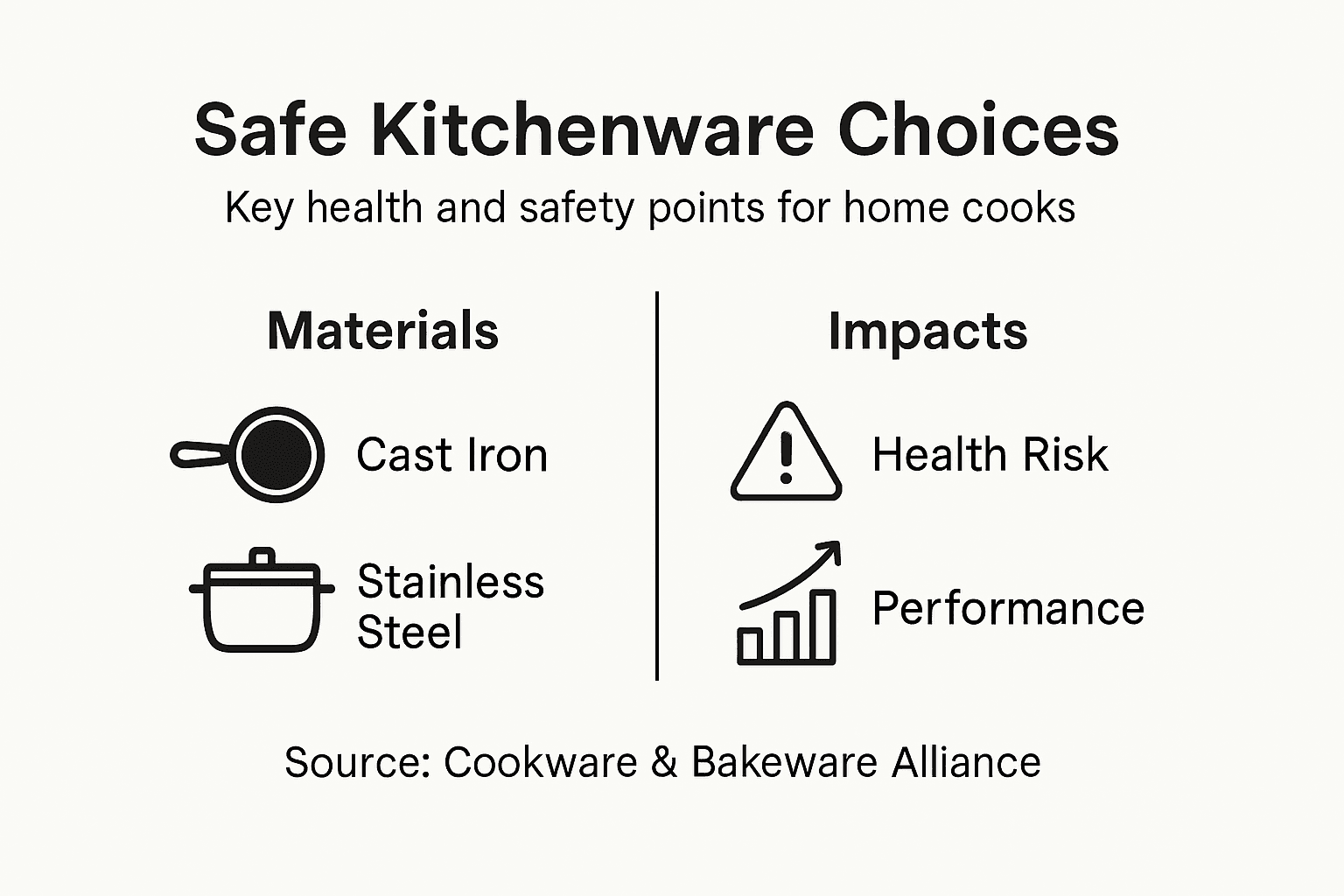
The National Fire Protection Association emphasizes kitchen safety guidelines that extend beyond material selection. Proper cookware maintenance, understanding heat resistance, and selecting appropriate cooking techniques can significantly reduce potential safety hazards. Cooking performance isn’t just about culinary skill—it’s also about selecting equipment that minimizes risks and supports healthy meal preparation.
Pro tip: Regularly inspect your cookware for signs of wear, replacing pieces with damaged coatings to maintain a safe cooking environment.
Choosing Reliable Kitchenware for Your Needs
Consumer Reports provides comprehensive guidance on selecting kitchenware that matches individual cooking styles and kitchen requirements. Understanding how to match your specific cooking needs with the right equipment is crucial for long-term satisfaction and performance.
Key considerations when selecting reliable kitchenware include:
- Cooking frequency and style
- Stove compatibility
- Budget constraints
- Storage space limitations
- Personal cooking skills and techniques
The selection process involves more than just choosing an attractive set. Professional-grade kitchenware requires careful evaluation of material properties, heat distribution characteristics, and long-term durability. Different cooking techniques demand specific material properties – for instance, searing requires high-heat tolerant surfaces, while delicate sauces need precise temperature control.
Industry standards from the Cookware & Bakeware Alliance emphasize the importance of understanding engineered durability and performance testing. Home cooks should consider not just immediate performance, but how cookware will maintain its quality through hundreds of cooking cycles. This means examining construction details like handle stability, weight distribution, and coating integrity.
Pro tip: Test potential cookware pieces by handling them in-store, checking weight balance and examining construction details before making a final purchase.
Upgrade Your Kitchenware to Last a Lifetime
The article highlights how understanding kitchenware durability can save you money and protect your health by choosing the right materials and construction for your cooking needs. If you want to avoid common pitfalls like frequent replacements or unsafe coatings, investing in high-quality, long-lasting cookware is essential. At Magefesa USA, we specialize in durable kitchenware crafted to meet the demands of both casual home cooks and professional chefs. Our selection includes premium stainless steel cookware, cast iron skillets, and innovative pressure cookers designed to deliver exceptional performance and reliability.

Don’t settle for kitchen tools that wear out quickly. Visit Magefesa USA to explore our curated collection of trustworthy products that combine safety, longevity, and cooking excellence. Learn more about our durable cookware options and elevate your culinary experience today by browsing our full range of kitchenware. Take control of your kitchen’s quality and enjoy cooking with cookware built to last.
Frequently Asked Questions
What factors contribute to kitchenware durability?
Durability in kitchenware is influenced by material composition, manufacturing processes, resistance to thermal stress, and ease of maintenance, among other factors.
How does the total cost of ownership affect kitchenware decisions?
Total cost of ownership takes into account not just the initial purchase price, but also the durability, expected lifespan, and maintenance costs, leading to better long-term value.
What are the health implications when selecting kitchenware materials?
Choosing cookware materials with low metal leaching potential and stable non-toxic surface coatings can reduce health risks associated with cooking.
Why is understanding cooking needs important when selecting kitchenware?
Understanding personal cooking needs ensures that the selected kitchenware matches specific techniques and styles, leading to better performance and satisfaction.
Recommended
- Step by Step Cookware Maintenance for Lasting Quality
- Cast Iron Cookware: The Marvels of this timeless product
- Must-Have Kitchen Essentials: To reach your full culinary potential Top 5 Cooking categories
- Amazing Kitchen Products That Shine: Gifts for Your Loved ones Top 5 pro
- Beste duurzame rietjes 2025 – Expert Vergelijking | Earth Saver Straws

