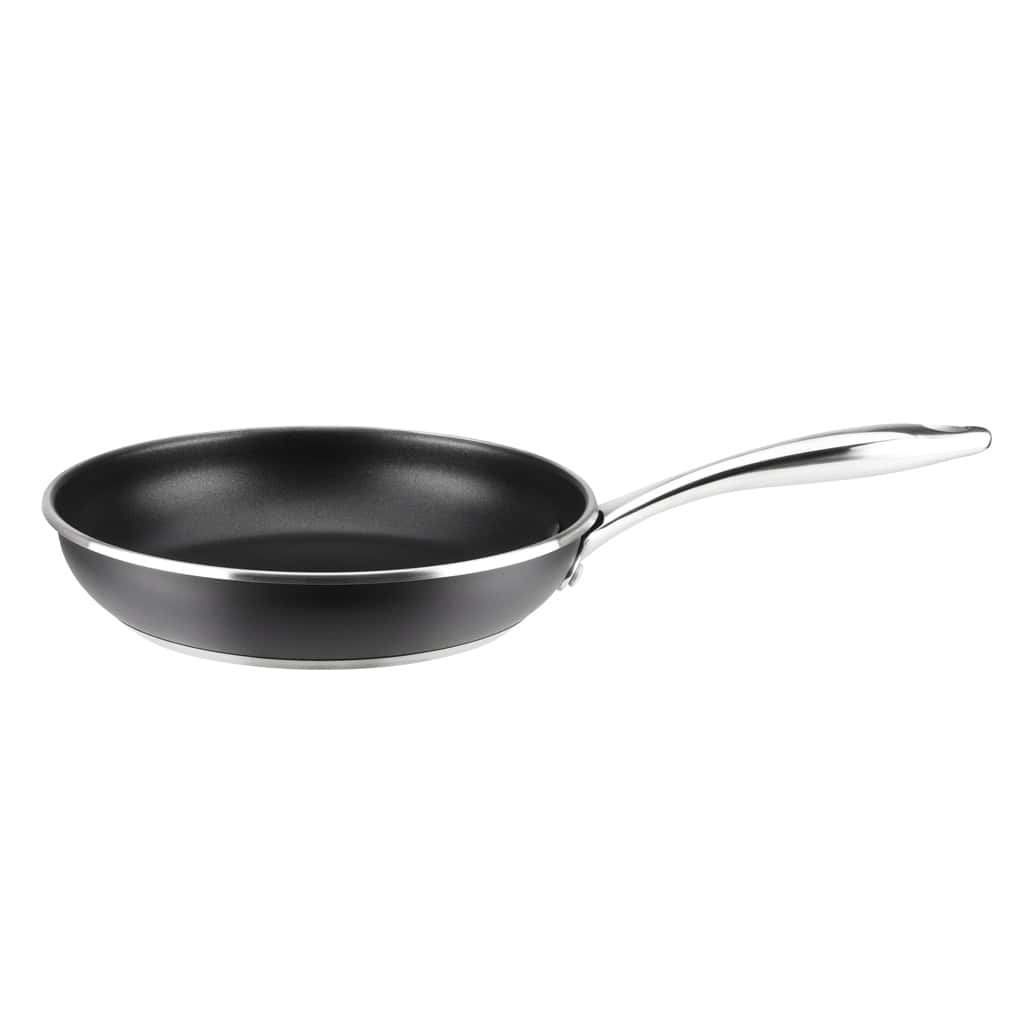
The frypan is a versatile kitchen essential, perfect for frying, stir-frying, sautéing, poaching, and much more – adaptable to any recipe.
Our wide range of frypans combines attractive design with exceptional practicality. Featuring ergonomic Bakelite or steel handles and premium non-stick coatings, they have become a go-to favorite in kitchens everywhere for everyday cooking.

Traditional nonstick coating care
Follow next simple tricks on uses, cleaning and maintenance to extend the life of MAGEFESA traditional nonstick cookware:
Before first use
- Remove the label stickers before first use. Label stickers can be easily removed from your cookware. Use a non-metallic utensil to lift one of the corners and scrape away any remaining sticker. Rubbing alcohol is also good to remove any residue from the label.
- Wash the unit before use with warm water, mild soap and use a non-abrasive cleaning pad or sponge.
- In the case of frying pans and sauté pans, heat oil over low heat for a couple of minutes, remove the oil and wash it again.
- In the case of pots, fill water of its capacity and boil for about 20 or 30 minutes, remove the liquid and wash again.
- Rinse thoroughly and dry with a cloth or paper towel to prevent limescale formation and obtain shiny surface.
While cooking
- Do not preheat pans empty. Always heat them with some oil, water, stock or food to avoid overheating.
- Choose the stovetop not exceeding the base of the pan.
- Cook over medium-low heat to prevent oil from degrading due to overheating.
- Do not use metal utensils with nonstick coating, as it may get scratched and will lose its nonstick features slowly. Always use wooden, silicone or polyethylene utensils. This way, the nonstick coating will last longer. Never chop or cut food directly on your nonstick pots or frying pans.
Cleaning and maintenance
Although MAGEFESA nonstick products are dishwasher safe, we recommend hand washing:
-
- Some dishwashing detergents may contain highly corrosive chemicals and due to the great variety of detergents commercialized in the market, we cannot guarantee that any of them may damage our cookware.
- Vibrations and friction that occur during the dishwashing process may eventually damage the nonstick coating of your cookware.
- Hand washing preferably.
- After use, wash the piece with warm water, mild soap and a soft sponge.
- Avoid subjecting kitchenware to sudden changes in temperature. Immersion of a hot pan in cold water causes a rapid contraction of metal. Although nonstick materials are elastic, this fact eventually can cause blisters or bulges.
- Store your cookware carefully and avoid direct contact with sharp utensils that may damage the nonstick coating.