How to Use a Pressure Cooker Steamer Basket
How to Use a Pressure Cooker Steamer Basket
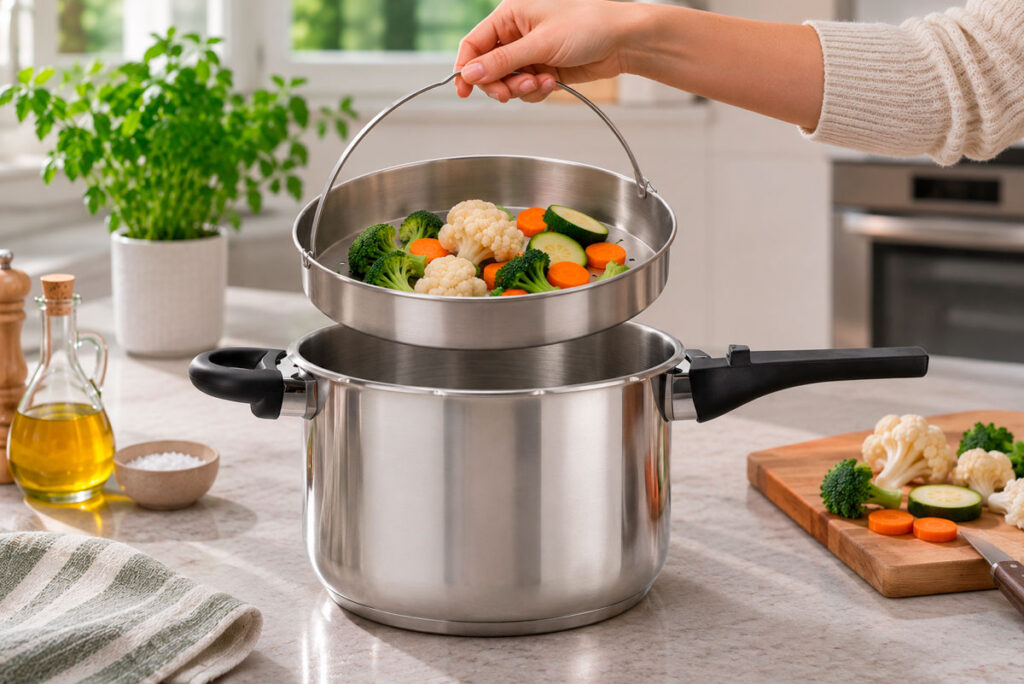
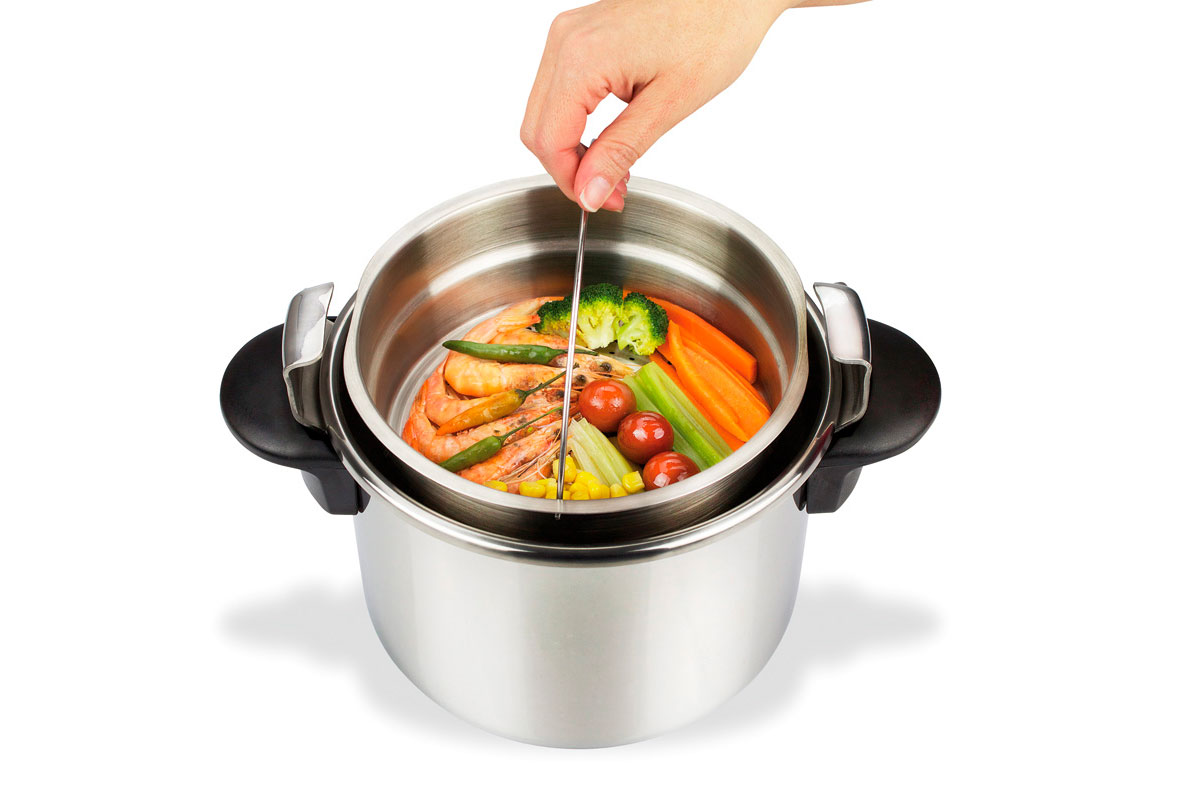
A pressure cooker steamer basket lets you cook vegetables, fish, seafood, and other foods without submerging them in water. By keeping ingredients above the cooking liquid, the basket allows steam to circulate while helping food retain its shape and texture.
Using one is simple: add the required liquid, position the basket, arrange your food, and cook at the recommended pressure.
Here’s what you need to know to get consistent results.
What Is a Pressure Cooker Steamer Basket?
A steamer basket is a perforated insert designed to hold food above the cooking liquid inside a pressure cooker.
As the liquid heats, steam builds pressure and cooks the ingredients without immersing them in water.
This makes steaming particularly useful for vegetables, fish, and other foods that can become waterlogged or fall apart when boiled.
| Component | Purpose |
|---|---|
| Steamer basket | Holds food while allowing steam to circulate |
| Trivet or support | Keeps the basket elevated above the cooking liquid |
| Water or broth | Generates the steam needed for pressure cooking |
Some pressure cookers include a steamer basket and support, while others require compatible accessories.
How to Use a Steamer Basket in a Pressure Cooker
Follow these six steps to steam food safely in a stovetop pressure cooker.
| Step | What to do |
|---|---|
| 1. Add liquid | Pour the minimum amount of water or broth specified in your pressure cooker’s manual into the pot. |
| 2. Position the basket | Place the trivet and steamer basket inside the cooker, keeping the food above the liquid. |
| 3. Add the ingredients | Arrange food evenly without overcrowding the basket. |
| 4. Secure the lid | Check the gasket and pressure-control components before closing the cooker. |
| 5. Cook under pressure | Heat until the cooker reaches the recommended pressure, then start timing. |
| 6. Release pressure | Follow the appropriate pressure-release method and open only when fully depressurized. |
For delicate foods, the pressure-release method matters almost as much as the cooking time. Vegetables can continue softening while pressure drops naturally, so follow a tested recipe and your cooker’s instructions.
How Much Water Do You Need for Steaming?
The amount of water depends on your pressure cooker model, its capacity, and the cooking time.
There is no single measurement that works for every pressure cooker. Always follow the minimum liquid requirement in the manufacturer’s instructions.
| Situation | Recommendation |
|---|---|
| Short steaming time | Use at least the manufacturer’s minimum required liquid |
| Longer cooking time | Check whether additional liquid is needed |
| Steaming vegetables or fish | Keep the ingredients above the water level |
| Using broth instead of water | Choose a suitable broth and follow the same minimum liquid requirements |
| Cooking large quantities | Respect the cooker’s maximum fill limits |
Safety Reminder: Never use less liquid than your pressure cooker requires. Insufficient liquid can cause the cooker to run dry.
What Foods Can You Steam in a Pressure Cooker?
Steamer baskets are particularly useful for ingredients that benefit from moist heat without direct contact with water.
| Food | Preparation tip | What to watch for |
|---|---|---|
| Broccoli and cauliflower | Cut into evenly sized florets | Overcooking and soft texture |
| Carrots and potatoes | Cut into similar-sized pieces | Uneven cooking |
| Green beans | Trim and spread loosely | Loss of firmness |
| Fish fillets | Lightly oil the basket | Sticking and overcooking |
| Seafood | Use an appropriate tested recipe | Tough or rubbery texture |
| Chicken | Arrange pieces without overcrowding | Uneven cooking and undercooking |
| Dumplings | Use a compatible basket or liner | Sticking and tearing |
Cooking times depend on the food’s thickness, size, pressure level, and the cooker itself.
For poultry, use a food thermometer to confirm a safe internal temperature of 165°F (74°C).
Tips for Better Pressure Cooker Steaming Results
A few practical habits can make a noticeable difference when steaming under pressure.
| Common mistake | How to avoid it |
|---|---|
| Overcooking delicate vegetables | Follow a tested cooking time and use the recommended pressure-release method |
| Overcrowding the basket | Leave enough space for steam to circulate |
| Using too little water | Follow the manufacturer’s minimum liquid requirement |
| Choosing the wrong pressure | Match the pressure setting to the ingredient and recipe |
| Food sticking to the basket | Lightly grease the basket when cooking delicate ingredients |
| Mixing foods with different cooking times | Cook them separately when necessary |
Three small details that improve results
1. Don’t assume lower pressure is always better.
Some delicate foods benefit from lower pressure, but the correct setting depends on the recipe and pressure cooker model.
2. Remember that food continues cooking during pressure release.
A natural release can soften vegetables further, even after the heat has been turned off.
3. Use the basket to make serving easier.
A removable basket allows you to lift cooked vegetables or fish out of the pot without draining the cooking liquid.
This helps prevent sticking and makes removal easier.
Other Uses for a Pressure Cooker Steamer Basket
A steamer basket can do more than cook vegetables above water.
| Additional use | Why it’s useful |
|---|---|
| Separating ingredients | Keeps certain foods apart from the main cooking liquid |
| Cooking vegetables above broth | Allows vegetables to cook without becoming submerged |
| Lifting food out of the pot | Makes removing cooked ingredients easier |
| Supporting approved cooking setups | Some cooker-compatible accessories allow food to cook in separate heat-safe containers |
Always confirm that the basket, support, and any additional containers are suitable for your pressure cooker.
Not every steamer basket is designed to support bowls, molds, or other cookware.
Choosing a Pressure Cooker for Steaming
If you plan to steam food regularly, consider a pressure cooker that includes a compatible basket.
The Magefesa Dynamic 6.3-Quart Fast Pressure Cooker comes with a stainless steel steamer basket, making it a practical option for preparing steamed vegetables, fish, and other ingredients without purchasing a separate insert.
The most important things to remember are to keep food above the liquid, use the correct pressure and cooking time, and follow your pressure cooker’s safety instructions.
Share