

Pressure Cooker Safety Guide for Home Cooks

Finding the right balance between convenience and safety can challenge even experienced home cooks in North America. Pressure cookers bring quick meals and tender flavors, but the smallest overlooked detail can turn culinary excitement into risk. With guidance backed by the U.S. Consumer Product Safety Commission and practical inspection steps, you will discover how to spot problems, assemble parts securely, and cook confidently using proper pressure cooker safety practices every time.
Table of Contents
- Step 1: Inspect Your Pressure Cooker Before Use
- Step 2: Assemble Safety Components Correctly
- Step 3: Operate Your Pressure Cooker Safely
- Step 4: Release Pressure And Check Completion
Quick Summary
| Key Point | Explanation |
|---|---|
| 1. Inspect your pressure cooker before use | Check the rubber gasket, lid mechanism, and valves to ensure safety. Replace damaged parts before cooking to prevent accidents. |
| 2. Assemble safety components correctly | Properly install all parts per manufacturer guidelines to prevent steam leaks and ensure safe operation. Double-check each step. |
| 3. Operate your pressure cooker safely | Always add minimum liquid and never exceed the maximum fill line. Secure the lid properly to maintain pressure during cooking. |
| 4. Release pressure and check food completion | Allow natural pressure release for safety, ensuring the pressure indicator shows zero before opening the lid to check food quality. |
Step 1: Inspect your pressure cooker before use
Before you heat up that pressure cooker, take five minutes to check its condition. A quick inspection catches problems before they become dangerous, protecting you and your kitchen from potential accidents.
Start by examining the rubber gasket (also called the sealing ring). Remove it from the lid if possible and look for cracks, tears, or hardening. A compromised gasket loses its ability to seal properly, which can cause steam to escape or pressure to build dangerously. Hold it up to light and run your fingers around the entire surface.
Next, check the locking lid mechanism. Place the lid on the cooker and try moving it side to side. It should feel snug and secure, not loose or wobbly. If it rattles or shifts easily, something is wrong with the locking system.
Inspect these critical components:
- Pressure release valve: Look for any blockages, dents, or discoloration. This valve must move freely when you gently push it.
- Float valve: Ensure it moves up and down smoothly without sticking. A stuck float valve prevents proper pressure regulation.
- Safety valve: Check that it’s not cracked or corroded. The safety valve is your backup protection against overpressurization.
- Cooker rim and lid edges: Wipe away food residue with a dry cloth. Debris prevents a proper seal.
- Volume markings: Verify the minimum and maximum fill lines are visible and accurate. Research shows that incorrect volume markings can cause dangerous overfilling.
Look for signs of wear like rust spots, discoloration, or warping on the exterior. These indicate the cooker has been stressed or exposed to moisture damage. Don’t use a cooker with visible rust on pressure-bearing parts.
Here’s a quick reference for common pressure cooker component issues and recommended actions:
| Component | Common Problem | Safety Impact | Recommended Action |
|---|---|---|---|
| Gasket | Cracks or hardening | Steam escapes or buildup | Replace gasket immediately |
| Locking Lid | Feels loose or rattles | Improper pressure sealing | Check alignment, repair or replace |
| Release Valve | Blockage or sticks | Pressure can’t vent | Clean or replace valve |
| Float Valve | Doesn’t move freely | Pressure issues | Clean or replace valve |
| Safety Valve | Cracked/corroded | Fails to release excess pressure | Never use, always replace |
| Rim/Lid Edges | Rust/discoloration | Leaks or poor seal | Remove rust or replace part |
A gasket or valve in poor condition is your clearest warning sign. If anything looks questionable, don’t risk it. Replace the damaged part before cooking.
If you find issues, check whether replacement parts are available for your model. Many quality cookers have affordable spare parts you can swap out rather than replacing the entire unit.
Pro tip: Perform this inspection every single time you use your pressure cooker, not just occasionally. It takes 90 seconds and becomes automatic once you know what to look for.

Step 2: Assemble safety components correctly
Proper assembly of your pressure cooker’s safety parts is where most users make critical mistakes. Get this right, and your cooker works safely every time. Get it wrong, and you risk steam leaks or dangerous pressure buildup.
Start with the sealing ring (gasket). Check your manufacturer’s instructions, as placement varies by model. Most gaskets sit in a groove around the inside of the lid. Slide it in smoothly, making sure it sits evenly all the way around with no twists or bunches. If the gasket feels stiff or resists, that’s normal for new rings. Never force it.
Next, place the lid on the cooker body and align any locking tabs or handles with the base. Lower it gently and turn or push according to your model’s design. You should hear or feel a click when it locks. If the lid feels loose or wiggly, remove it and realign.
Now secure the pressure release valve. This is where many people rush. Screw or push it into place depending on your cooker type, ensuring it’s snug but not overtightened. An overtight valve can jam and prevent proper venting.
Follow these assembly steps in order:
- Insert the gasket evenly in its groove
- Place the lid and align all tabs
- Lock or secure the lid mechanism
- Attach the pressure release valve
- Double-check that all parts move freely
According to manufacturer guidelines for proper assembly of pressure cooker components, even small misalignments can prevent the cooker from pressurizing correctly or cause unexpected steam release. Take your time and verify each step before proceeding.
Once assembled, do a quick test. Try to wiggle the lid gently. It should be completely solid with no movement. Press the pressure valve lightly. It should move freely without resistance. If either feels wrong, disassemble and try again.
Misassembly is one of the easiest mistakes to make and one of the most dangerous. When in doubt, consult your manual or start over from scratch.
Don’t skip this step or do it carelessly. These components work together as a safety system, and each piece matters.
Pro tip: Keep your pressure cooker’s instruction manual within arm’s reach during assembly until you’ve done it correctly five times. After that, it becomes muscle memory.
Step 3: Operate your pressure cooker safely
Once your cooker is assembled and ready, the way you operate it determines whether your cooking experience is safe or risky. Safe operation means following specific steps every single time, no shortcuts allowed.
Start by adding liquid to your pot. Most pressure cookers require a minimum liquid level to generate steam. Check your manual, but typically you need at least one cup of water or broth. Never skip this step. Without sufficient liquid, your cooker cannot build pressure safely, and you risk burning food or damaging the cooker.
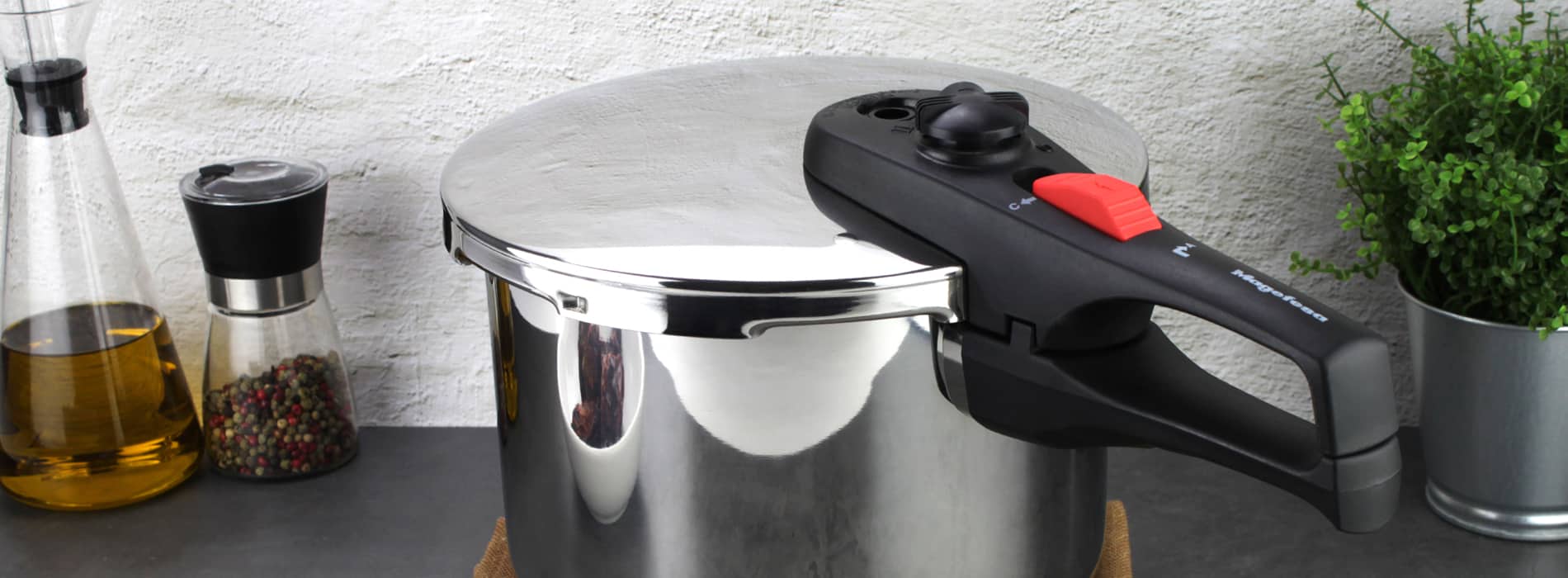
Fill your cooker correctly. The maximum fill line exists for a reason. Never exceed it. Overfilling prevents proper pressure regulation and can force liquid out through the vents. A good rule is filling no more than two-thirds full for most foods, or half full for foods that expand during cooking like beans or grains.
Add your ingredients and close the lid securely. Make sure the locking mechanism clicks into place. You should not be able to wiggle the lid side to side.
Follow these operating steps:
- Add minimum liquid required by your model
- Load ingredients without exceeding the fill line
- Close and lock the lid completely
- Set heat to medium-high for stovetop models
- Wait for the pressure indicator to rise
- Adjust heat once pressure builds to maintain steady pressure
- Start your timer only after full pressure is reached
When monitoring pressure levels and cooking times, never leave a stovetop pressure cooker unattended. Electric models are safer in this regard, but stovetop cookers build pressure quickly and require your attention. Stay in the kitchen.
Once cooking time finishes, allow the pressure to release naturally for five to ten minutes before using the quick-release valve. Forcing the lid open under pressure is extremely dangerous and can cause severe steam burns.
Never force the lid open while pressure remains inside. If you cannot remove the lid easily by hand, pressure is still building. Wait longer.
Let the cooker cool completely before opening and cleaning. Check that all vents are clear of debris before your next use.
Pro tip: Set a timer for your cooking time and place it across the room so you have to walk over to stop it, keeping you aware of when your cooking cycle ends.
Step 4: Release pressure and check completion
This is the moment where patience pays off and rushing creates danger. Releasing pressure correctly ensures your food is cooked safely and you avoid serious steam burns.
When your cooking timer ends, turn off the heat immediately. Your cooker still contains pressurized steam, so do not touch the lid or vents yet. Wait at least five minutes and let the pressure drop naturally.
Watch the pressure indicator on your cooker’s lid. This small stem or gauge shows you whether pressure remains inside. It rises when pressure builds and drops when pressure releases. Never open the lid until this indicator sits completely flat or at the lowest position.
After five to ten minutes of natural cooling, check the indicator again. If it has dropped fully, you can safely proceed. If it still shows pressure, wait another few minutes. There is no rush here.
You have three pressure release options depending on your recipe:
Below is a comparison of pressure release methods and their best uses:
| Release Method | Typical Use | Speed | Safety Tips |
|---|---|---|---|
| Natural Release | Stews, tough meats | Slow | Wait for indicator to drop |
| Quick Release | Vegetables, fragile items | Fast | Stand back, use utensil |
| Cold Water Release | Soups, time-sensitive dishes | Fastest | Keep lid on, avoid burns |
- Natural release: Let pressure drop on its own (best for stews and tough cuts)
- Quick release: Carefully move the pressure release valve to vent position (best for vegetables)
- Cold water release: Run the cooker under cool water to speed cooling (quick but requires care)
If using quick release, position your face away from the valve and use a long utensil to move it, not your fingers. Steam will rush out forcefully, and you do not want that near your face or hands.
Once pressure has fully released and the pressure indicator shows zero, you can safely open the lid. Lift it away from your body so any remaining steam vents away from you, not toward your face.
Now check that your food is fully cooked. Cut into thick pieces to verify they are tender. Undercooked food means you need to close the lid and pressure cook longer. Do not serve undercooked meals.
The pressure indicator is your safety checkpoint. If you cannot open the lid easily, pressure remains inside. Stop and wait.
Let any remaining heat dissipate before removing food from the pot. Your cooker stays hot for several minutes after opening.
Pro tip: Use a wooden spoon to prop open the lid slightly for 30 seconds after opening, allowing lingering steam to escape safely before you lean in to check your food.

Ensure Your Pressure Cooker Safety with Trusted Quality from Magefesa USA
Pressure cooker safety starts with reliable equipment that you can trust every time you cook. This guide highlights common challenges like worn gaskets, misaligned lids, and pressure valve issues that can put you at risk. Avoid stress and potential hazards by choosing high-quality pressure cookers and replacement parts designed for perfect fits and lasting durability. Magefesa USA understands the importance of safety in your kitchen and offers products crafted to meet these critical needs.
Upgrade your cooking with premium pressure cookers and accessories from Magefesa USA. Benefit from our durable designs and secure components that simplify safe assembly, pressure monitoring, and release. Protect your home and elevate your culinary results by browsing our selection today. Take control of your kitchen safety and performance now by visiting Magefesa USA’s pressure cooker solutions. Start cooking with confidence and peace of mind.
FAQs
How can I inspect my pressure cooker for safety before use?
Start by examining the rubber gasket for cracks or hardening, check the locking lid mechanism for snugness, and inspect the pressure release and float valves for any blockages. Take five minutes before each use to ensure all parts are in good condition to protect against accidents.
What are the common signs indicating my pressure cooker needs a new gasket?
Look for visible cracks, tears, or areas where the surface feels hard. If your gasket is damaged, replace it immediately to avoid pressure loss or unsafe cooking conditions.
How should I properly assemble my pressure cooker’s safety components?
Begin by inserting the gasket evenly in its groove, then place and lock the lid securely, followed by attaching the pressure release valve snugly. Always double-check that all parts are correctly aligned and functioning before use to ensure safe operation.
What is the correct amount of liquid to add to my pressure cooker?
Most pressure cookers require at least one cup of liquid to create steam for cooking. Always check your manual for specific requirements to prevent burning food or damaging the cooker.
How can I safely release pressure from my cooker after cooking?
Turn off the heat immediately when the timer ends, then allow the pressure to drop naturally for five to ten minutes before checking the pressure indicator. Wait until it indicates zero pressure before opening the lid to avoid steam burns.
What should I do if my food is undercooked after pressure cooking?
If you find that your food is not fully cooked, securely close the lid again and pressure cook for a few additional minutes. Always check the doneness by cutting into thick pieces before serving to ensure safety.
Recommended
- Pressure Cookers in Summer: Easy Cooking without Heating up the House
- 5 Essential Tips for Selecting the Ideal Pressure Cooker
- Chef 15-22 Qt. Best Safety valve | Magefesa USA
- 50 Super Fast Pressure Cooker Recipes | Cookbook

