

Why Use Multi-Layered Pots for Better Cooking

Why Use Multi-Layered Pots.
Finding reliable cookware can feel overwhelming when every meal counts for your family. Multi-layered pots stand out for American home cooks who crave consistent results without fuss or wasted effort. By blending the strengths of metals like aluminum and stainless steel, these pots offer even heat distribution and unmatched durability, turning everyday recipes into dishes that look and taste restaurant-worthy. Learn how the right construction transforms your cooking and makes cleanup simple.
Table of Contents
- What Are Multi-Layered Pots? Core Definition
- Core Construction And Heat Distribution Benefits
- Types Of Multi-Layered Pots Explained
- Real-Life Cooking Advantages And Use Cases
- Comparing Multi-Layered Vs. Traditional Pots
- Common Mistakes When Choosing Cookware
Key Takeaways
| Point | Details |
|---|---|
| Multi-Layered Construction | Multi-layered pots feature layers of different materials to enhance heat conduction and prevent hot spots in cooking. |
| Even Heat Distribution | The design ensures uniform heat distribution which results in more consistent cooking, reducing the risk of burning or uneven texture in food. |
| Durability and Longevity | Multi-layered pots tend to outlast traditional single-layer pots, offering better resistance to warping and wear over time. |
| Energy Efficiency | These pots heat up faster and retain heat longer, which contributes to lower energy costs during cooking. |
What Are Multi-Layered Pots? Core Definition
Multi-layered pots are cookware pieces constructed from two or more distinct layers of materials bonded together to work as a single unit. Unlike traditional single-layer pots that rely on one metal for all their properties, multi-layered designs combine specific materials chosen for their heat-handling and structural strengths. The most common construction involves stainless steel on the exterior for durability and appearance, aluminum in the middle for superior heat conduction, and sometimes copper layers for additional thermal performance. Composite materials engineered together like this create cookware that performs far better than any single metal could achieve alone.
The genius of multi-layered construction lies in how each layer serves a specific purpose. Aluminum conducts heat roughly 5 times faster than stainless steel, making it the ideal core for rapid, even heating. Stainless steel, while slower to heat, resists corrosion, won’t react with acidic foods like tomato sauce, and maintains its appearance through years of use. Copper layers, when included, offer some of the best thermal performance available but come at higher cost. Think of it like a specialized team where each member brings their strongest skill to the project. The outer stainless steel layer withstands everyday wear and washing. The aluminum core spreads heat uniformly across the pot bottom and up the sides. This layered approach means you get the practical benefits of multiple materials without their individual drawbacks.
What makes multi-layered cookware distinctly effective is how the bonded layers enhance thermal performance during actual cooking. Rather than having hot spots that burn food in some areas while leaving other spots undercooked, multi-layered pots distribute heat evenly from edge to edge. This even distribution means your sauces reduce uniformly, your vegetables cook at consistent rates, and your proteins develop color and texture more predictably. Home cooks immediately notice the difference when they switch to quality multi-layered cookware. Food cooks more evenly, cleanup becomes easier thanks to better heat distribution preventing sticking, and the pots last significantly longer because the materials work together rather than against each other.
Pro tip: When examining multi-layered pots, look for those with aluminum or copper cores that extend all the way up the sides of the pot, not just the bottom. This full-wall construction prevents the common problem of food splattering on unheated stainless steel walls, ensuring faster, more even cooking across your entire vessel.

Core Construction and Heat Distribution Benefits
The way a multi-layered pot is constructed directly determines how effectively it heats your food. Most quality multi-layered pots feature three to five distinct layers, each selected for specific thermal properties. The typical configuration starts with a stainless steel exterior that protects against corrosion and everyday kitchen damage. Next comes the heat-conduction core, usually aluminum or a combination of aluminum and copper, which rapidly absorbs and spreads heat. Finally, an inner layer of stainless steel contacts your food, preventing any reaction with acidic ingredients. Research into transient heat conduction confirms that this layered approach distributes heat far more uniformly than single-material construction, reducing the thermal gradients that cause uneven cooking.
Heat distribution is where multi-layered pots truly outperform standard cookware. When you place a single-layer aluminum pot on the burner, heat concentrates directly under the flame, creating a hot zone that scorches food while outer areas stay cooler. Multi-layered construction solves this problem through engineered thermal transfer. The aluminum core conducts heat rapidly and evenly across the entire bottom surface, while the stainless steel layers moderate the heat transfer rate, preventing sudden temperature spikes. Bonded layers of metals reduce hot spots and enable consistent cooking temperatures throughout the pot. This means your risotto stirs smoothly without clumping, your pasta sauce simmers uniformly without burning on the edges, and your soups maintain stable temperatures for better flavor development.
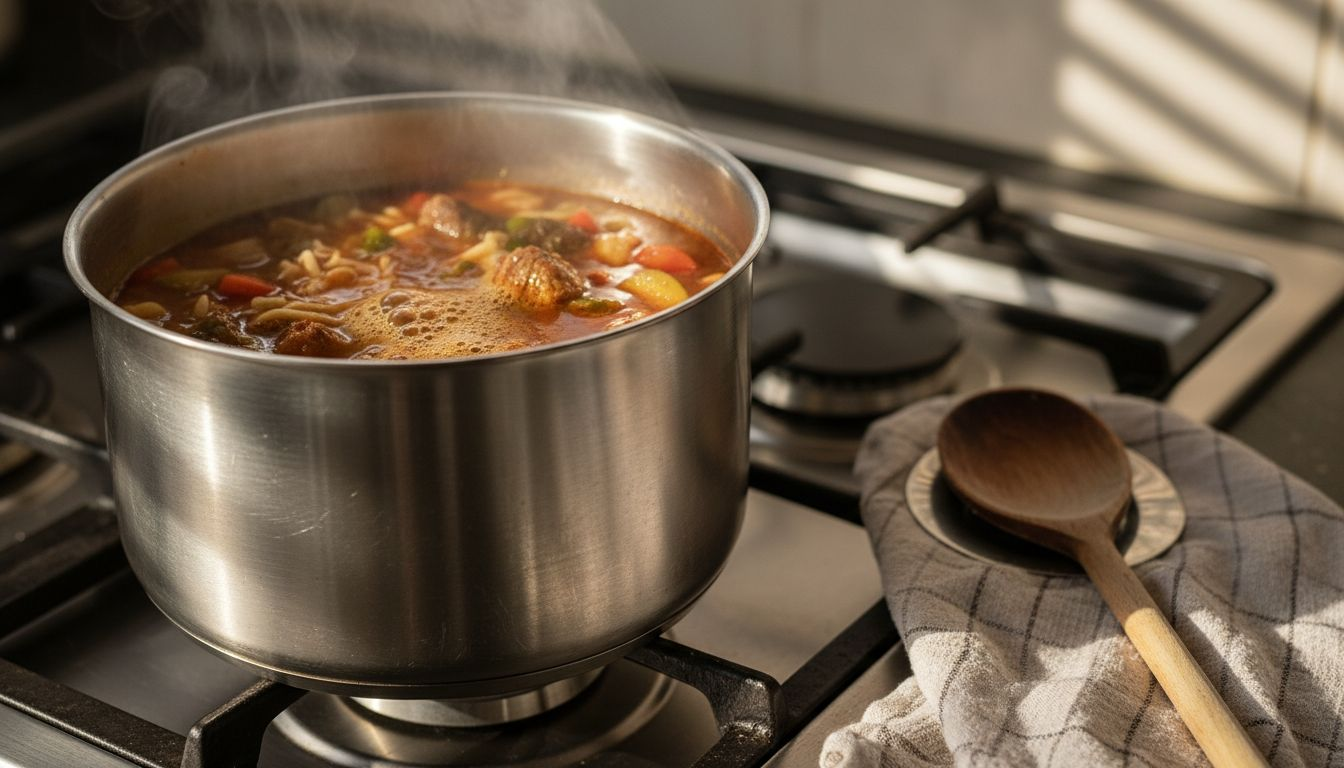
The practical benefits extend beyond just even cooking. Multi-layered construction improves energy efficiency because the layered metals retain heat longer and transfer it more effectively. You reach cooking temperatures faster, use less burner energy, and your food cooks more predictably. The stainless steel exterior also provides structural strength, preventing warping under high heat or the stress of cleaning. Over time, this means your pots stay flat on the burner, maintain consistent contact with heat sources, and perform reliably for years. American home cooks who switch to quality multi-layered cookware often report needing to adjust their techniques because foods cook more quickly and evenly than they expected.
Pro tip: When cooking with multi-layered pots, start at medium heat instead of high. The superior heat distribution means you’ll reach desired temperatures faster than with traditional cookware, and medium heat provides better control and prevents accidental overcooking.
Types of Multi-Layered Pots Explained
Multi-layered pots come in several configurations, each designed for different cooking needs and preferences. The most common type features a three-layer construction: stainless steel exterior, aluminum core, and stainless steel interior. This combination offers the best balance of durability, heat conduction, and food safety for everyday American cooking. A step up involves five-layer construction, which adds additional aluminum or copper layers in the middle to enhance heat distribution even further. Some premium pots feature copper cores instead of aluminum, providing superior thermal conductivity for more precise temperature control. Stainless steel layered over aluminum or copper cores combines durability with excellent heat conduction, making this the most popular choice for home cooks seeking reliable performance without breaking the bank.
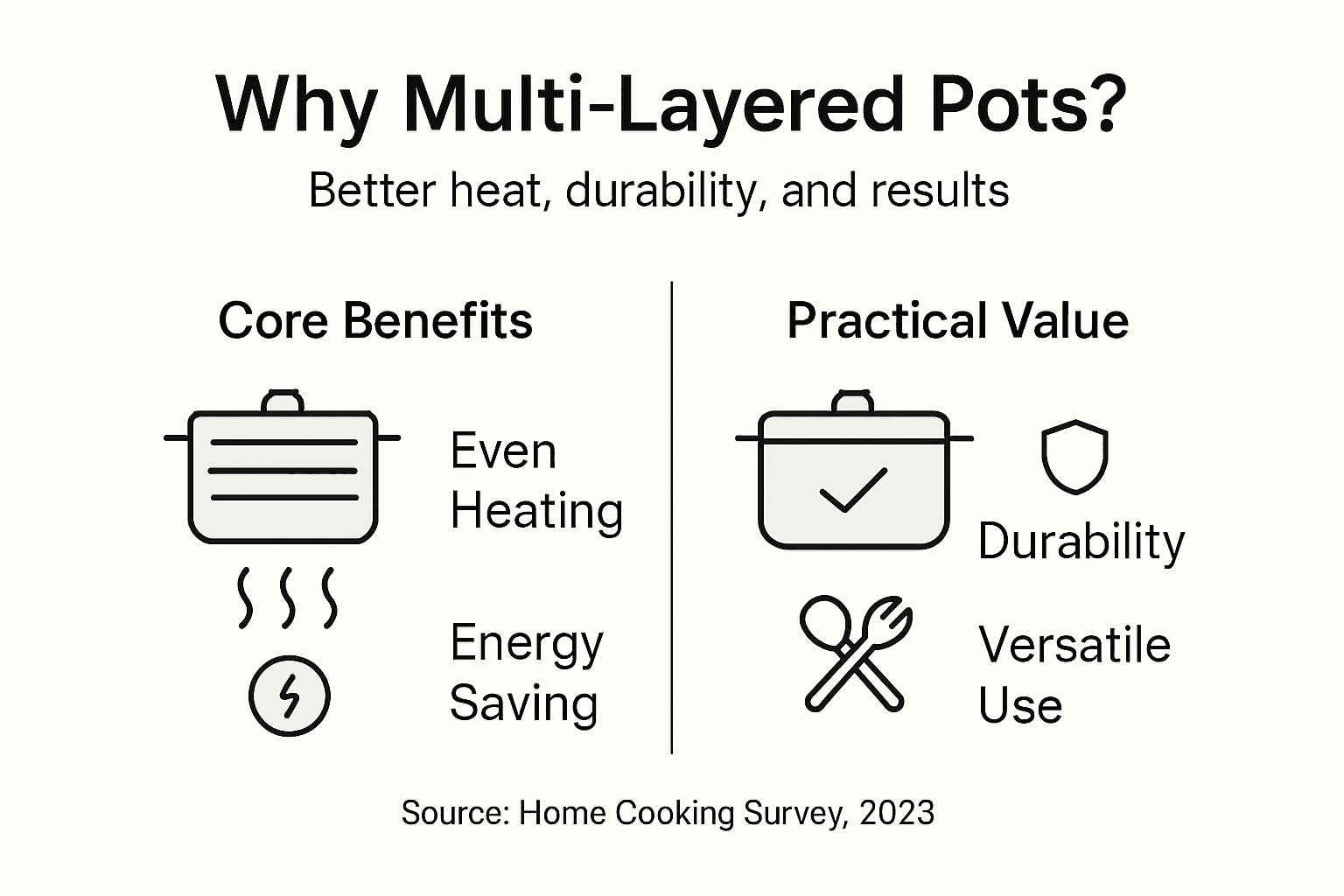
Beyond basic construction, pots vary based on additional features and specialized coatings. Some multi-layered pots include a non-stick interior layer on top of the stainless steel, offering easier cleanup and reduced oil requirements. Others feature graduated thickness in their layers, meaning the bottom is thicker for superior heat retention while the sides are slightly thinner for better heat responsiveness. You’ll also find variations in handle construction, lid materials, and oven-safe temperature ratings. Multi-layer structures leverage each layer’s advantage through bonded materials that work together, allowing manufacturers to optimize cookware for specific purposes. For instance, a pot designed for braising might feature thicker walls and a heavier bottom, while a saucepan prioritizes thinner construction for faster heat response.
When shopping for multi-layered cookware, understanding these variations helps you select the right tool for your cooking style. Budget-conscious cooks often start with three-layer stainless steel pots, which deliver solid performance at reasonable prices. Those who cook frequently or pursue more technical recipes benefit from five-layer or copper-core options that provide superior temperature control. Consider your stovetop type as well. Induction cookers work best with ferromagnetic stainless steel bases that perform optimally with quality multi-layered construction. Gas and electric stovetops work well with any multi-layered design, though thicker constructions provide advantages on high-heat applications. The key is matching the pot type to your actual cooking habits rather than automatically choosing the most expensive option.
Pro tip: Check the product specifications for “ply” or “layer” information before purchasing. A pot labeled as “3-ply” or “5-ply” indicates the number of bonded layers, with more plies generally providing better heat distribution and durability for long-term use.
Here’s a quick comparison of common multi-layered pot configurations to help you choose the best fit:
| Layers & Core Material | Heat Conduction | Durability & Care | Typical Use and Cost |
|---|---|---|---|
| 3-ply (Aluminum core) | Fast, even | Easy, long-lasting | Everyday cooking, affordable |
| 3-ply (Copper core) | Fastest, precise | Needs polishing | Precise control, pricey |
| 5-ply (Al+Cu combos) | Superior, uniform | Very durable | Professional/home chefs, high |
| Nonstick (layered base) | Good, even | Easy clean, medium | Quick meals, mid-range |


Real-Life Cooking Advantages and Use Cases
Multi-layered pots shine in everyday cooking situations where heat control and consistency matter most. Consider making tomato sauce, a task that demands even heat distribution to prevent scorching on the bottom while the sauce thickens. With a single-layer aluminum pot, you battle hot spots that burn the tomatoes near the center while edges remain cooler. Multi-layered construction eliminates this frustration. The sandwich of aluminum between stainless steel layers ensures your sauce reduces uniformly, developing rich flavor without the burnt taste that ruins an entire batch. Faster and more even cooking due to improved heat conduction means you can focus on other prep work instead of constantly stirring to prevent burning.
Another practical advantage emerges when preparing soups and stews. These dishes require sustained, stable temperatures to allow flavors to meld properly and proteins to tenderize. Multi-layered pots maintain consistent temperatures throughout the pot, preventing the edges from cooking faster than the center. This matters when you’re building layers of flavor through slow simmering. Your beef stew develops tender meat and rich broth instead of overcooked edges and undercooked centers. Delicate foods like fish or egg-based sauces also benefit tremendously. Hollandaise sauce, which breaks if temperatures fluctuate, becomes manageable in multi-layered cookware where you can maintain the precise temperature needed. Home cooks preparing anything requiring precise temperature control find multi-layered pots invaluable.
Beyond cooking quality, multi-layered pots deliver real economic and environmental benefits. Enhanced heat distribution properties mean less wasted heat, which translates into reduced cooking times and lower energy consumption. You’re not paying to heat up a single-layer pot for 15 minutes while waiting for the center to reach proper temperature. Multi-layered construction reaches cooking temperature faster, using less gas or electricity. Over a year of regular cooking, this efficiency compounds into meaningful savings on utility bills. The money you save on energy costs often covers the higher initial investment in quality multi-layered cookware within a couple of years. Beyond your wallet, you’re reducing your household carbon footprint with every meal you prepare.
Pro tip: Use lower heat settings with multi-layered pots than you might with traditional cookware. Since heat distributes so efficiently, medium or medium-low heat often accomplishes what required high heat on single-layer pots, giving you better control and saving time.
Comparing Multi-Layered vs. Traditional Pots
Traditional single-layer pots have dominated kitchen cabinets for decades, but they come with inherent limitations that multi-layered construction solves. A traditional aluminum pot conducts heat quickly but reacts with acidic foods, requiring a protective coating. A traditional stainless steel pot resists corrosion beautifully but heats slowly and unevenly, creating frustrating hot spots. Most cooks compensate by stirring constantly, adjusting heat levels, or accepting some burnt food as the cost of cooking. Multi-layered pots eliminate this compromise by combining aluminum’s heat conduction with stainless steel’s durability and food safety. Uniform heat distribution and retention in multi-layered construction directly addresses the hotspot problem that plagues traditional single-metal pots, delivering consistent results every time you cook.
The durability difference becomes obvious over years of use. Traditional pots, especially aluminum ones, tend to warp under high heat or from thermal stress during dishwashing. A warped pot wobbles on the burner, creating uneven contact and making heat distribution even worse. Multi-layered construction prevents this problem through engineered material combinations. The stainless steel exterior resists warping while the internal layers absorb and distribute thermal stress. Multi-layer cookware minimizes warping and increases durability, which means your investment lasts significantly longer. You’re not replacing pots every few years due to warping or damage. Many American home cooks find that quality multi-layered pots outlast three or four sets of traditional cookware, making the higher upfront cost a genuine savings over time.
Practical versatility also distinguishes multi-layered from traditional pots. If you own an induction cooktop, traditional aluminum pots become paperweights since induction requires magnetic materials. Multi-layered pots with stainless steel bases work perfectly on induction, gas, or electric burners. You invest once and cook on any surface without worrying about compatibility. This flexibility matters when moving to a new home or if family members visit with different stovetop types. Traditional pots also perform inconsistently across different heat levels. Multi-layered construction maintains performance whether you’re simmering gently or searing at high heat. The layered design adapts to your cooking needs rather than forcing you to adapt your techniques to the pot’s limitations.
This summary highlights key performance differences between multi-layered and traditional pots:
| Feature | Multi-Layered Pots | Traditional Pots |
|---|---|---|
| Heat Distribution | Even, no hot spots | Uneven, hot spots common |
| Cooking Speed | Faster, efficient | Slower, inconsistent |
| Durability | Resists warping, long lifespan | Prone to warping, short life |
| Induction Compatible | Often, with SS base | Rare, mostly aluminum fails |
| Upfront Investment | Higher, but saves long term | Lower, but frequent replace |
| Maintenance | Easy, keeps shine | May discolor, harder upkeep |
Pro tip: When transitioning from traditional to multi-layered pots, invest in two or three key pieces first rather than replacing your entire collection at once. Start with a 3-quart saucepan and a 10-inch saute pan to experience the difference, then expand your collection based on your cooking preferences.
Common Mistakes When Choosing Cookware
Most American home cooks make predictable errors when selecting cookware, often prioritizing the wrong factors and ending up frustrated within months. The first major mistake is buying cookware based solely on price or appearance without considering how it aligns with your actual cooking habits and cooktop type. Someone cooking on an induction burner might purchase beautiful copper-bottom stainless steel pots, only to discover they won’t work on the cooktop. Others buy enormous cookware sets with twelve pieces when they actually use only three or four regularly, wasting money on duplicates they never touch. Not matching cookware material to your cooking style and cooktop type undermines your kitchen investment before you even cook your first meal. Take time upfront to assess which pieces you actually need and ensure they’re compatible with your specific heat source.
Another critical error involves ignoring health and safety considerations when selecting nonstick cookware. Many home cooks purchase inexpensive nonstick pans without realizing they may contain PFAS, chemicals linked to serious health concerns. Even worse, they then use these pans on high heat or with metal utensils, which damages the nonstick coating and causes those chemicals to leach into food. Using nonstick pans on high heat degrades coatings and creates the exact problem the coating was designed to prevent. If a nonstick pan shows visible scratches, flaking, or peeling, replace it immediately rather than continuing to cook with damaged surfaces. Quality stainless steel multi-layered pots like those in the Magefesa Dux 7-Piece Best Stainless Steel Cookware Set eliminate this health concern entirely while delivering superior cooking performance.
Many home cooks also fail to consider durability and maintenance requirements before purchasing. Buying the cheapest cookware available feels economical until it warps after a year, forcing replacement. Thin aluminum pots dent easily and conduct heat unevenly. Low-quality stainless steel discolors and loses its shine. Multi-layered construction costs more upfront but resists warping, maintains appearance, and actually costs less over time when you factor in replacement frequency. Understanding heat conduction properties matters equally. A pot that heats unevenly will frustrate you daily, yet many shoppers overlook this critical factor. Take five minutes to research how different materials conduct and retain heat before committing to your purchase.
Pro tip: Before buying any cookware set, list the specific pieces you actually cook with regularly. Most home cooks use only three to five key pieces, so purchase those individually in high quality rather than buying a complete set with pieces gathering dust in your cabinet.
Elevate Your Cooking with Premium Multi-Layered Cookware from Magefesa USA
If you struggle with uneven heat, warping pots, or inconsistent cooking results, upgrading to multi-layered cookware is the solution you need. This article highlights how combining materials like stainless steel and aluminum evenly distributes heat and enhances durability. Say goodbye to hot spots and burnt sauces with cookware engineered for professional-level performance and long-lasting use.

Discover the difference quality makes with Magefesa USA’s selection of durable multi-layered pots and cookware crafted to improve every meal. Whether you are a casual cook or a culinary enthusiast, choosing the right cookware supports precise temperature control and energy efficiency. Start with trusted essentials like our stainless steel multi-ply sets and explore how smart design transforms your kitchen experience. Shop now at Magefesa USA and take the first step toward consistently better cooking results.
Frequently Asked Questions
What are multi-layered pots?
Multi-layered pots are cookware made from two or more distinct layers of materials, typically combining a durable stainless steel exterior with an aluminum core for better heat conduction. This design eliminates hot spots and ensures even cooking.
How do multi-layered pots improve cooking performance?
Multi-layered pots distribute heat evenly across the entire surface, preventing hot spots that can burn food. This ensures consistent cooking temperatures, resulting in better texture and flavor in dishes like sauces and soups.
Are multi-layered pots suitable for all types of stovetops?
Yes, multi-layered pots, particularly those with a stainless steel base, are compatible with gas, electric, and induction stovetops. This versatility makes them a practical choice for various cooking needs.
What should I consider when choosing a multi-layered pot?
When selecting a multi-layered pot, consider the number of layers, core materials (such as aluminum or copper), your cooking habits, and the intended use. Look for pots with cores that extend up the sides for even heating and optimal cooking results.
Recommended
- Magefesa Coral Best Porcelain on Steel Dutch Oven
- Magefesa Onix 3.9 Qt. Best Stainless Steel Stock Pot with Lid
- Magefesa Onix Best Stainless Steel 4.5 Qt. Low Casserole with Lid
- Magefesa Onix Best 11″ Wok

