- Shop
- Spare Parts & Accesories
For pressure cookers
For Coffee makers
- About Us
- Magefesing
- Recipes
- Blog
- Contact Us


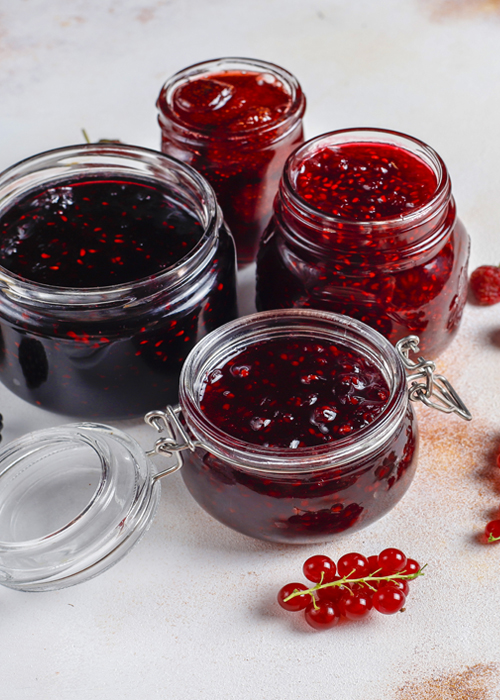
It may seem that the making of homemade canned food does not require so detailed knowledge to get good results, but this is a wrong general belief. Actually, it is a practice that requires formation and minimum knowledge to be carried out with all sanitary guarantees as possible.
Several essential factors should be taken into account, such as cleaning and care during makings, knowing the possible microorganisms and bacteria that may contaminate our canned food, temperature and cooking times control, PH making grade, water activity and some more tips that we should clarify along the following lines and with some tutorials.
CLEANING AND CARE
If, as a general rule, we should notice an extreme cleaning while cooking, even more attention should be paid when cooking canned food. We should follow some strict food hygiene rules to guarantee the healthiness of our canned food.

BOTULISM
Botulism is a food borne intoxication caused by a toxin produced by the bacteria Clostridium Botulinum, more concretely by the consumption of the toxin produced by its spores. It is one of the most fatal illnesses we may contract at a feeding level since it may cause death, even with the right clinical treatment. The muscle and nerve paralysis that it produces, may affect the respiratory system and heart. Clostridium spores are resistant to high temperatures (212ºF for several hours) and they develop when exposed to low oxygen levels, so that the making of canned food requires certain cares we should not overlook. We should take special care when making low-acid or alkaline canned food from certain vegetables, seafood, fish and meat. (See FOOD PH section)
Making canned food using pressure cookers allow us to reach the suitable temperature for the bacterial spores destruction (Clostridium Botulinum ), 250ºF. for 20 min.
FOOD PH
The PH level of an ingredient or making shows if it is acid or alkaline food. There is a scale which calculates PH values between 0 and 14, considering 7 as neutral PH. Pure water is 7 PH. But if we refer to cooking terms, most food ranks are between 2 and 9. 2 PH belongs to acidic foods such as wine and alcohol vinegar or some citrus juices. Products with lower PH are not suitable for consumption, sulfuric acid 1PH, hydrochloric acid 0 PH. According to alkaline foods with higher PH, we have sodium bicarbonate which is 9 PH or yeast 8.4 PH. The PH level of tooth paste is 9.9, ammonia 11 and bleach 13.
In relation to the subject in question, the making of canned food, we consider a food to be acidic when the PH level is under 4.6, so alkaline foods will be those with a PH over 4.6. The reason of this scale is that with a 4.6 PH level or under, most bacteria and microorganisms are prevented from developing since they could contaminate our canned food.
Adding acids to reduce the PH of the makings until 4.6 is allowed with commercial canned delicate vegetables or foods that cannot be subjected to high temperatures, since Clostridium Botulinum is unable to prosper and produce botulinum toxin. Food PH does not have a constant value, it mainly depends on the season, ripening, coolness, etc. but, we may have some guide values.
Some food PH values:
Acidic PH values:
Basic PH Values:
Taking these models as an example, we could think that if we make canned food with tomato sauce, which is 4.2 PH, we could be safe from the toxin, but we should take into account the rest of the ingredients added to the recipe, such as onion, carrot or peppers. These ingredients raise PH and we could reach the risk zone over 4.6.
COOKING TIMES AND TEMPERATURE CONTROL
You may find large homemade canned food recipes where double boiler is used with traditional pots to start canning. We may be told to maintain the cooking time for 45, 60 or 120 min, but with all that has been told until now we will see that this thermal treatment is only suitable for makings with a PH under 4.6.
Sterilization and pasteurization:
We may distinguish between 2 main thermal treatments for the making of canned food, Sterilization and pasteurization. Sterilization through application of high temperatures is defined as “the process by which all microorganisms life forms capable of producing food alteration in normal storage conditions, are destructed or inactive for a certain period of time”. Pasteurization “is the process of heating food to partially reduce pathogenic agents without changing its nutritional values, structural and gustatory qualities”.
The thermal treatment used and the cooking time of foods intended for canned food makings, mainly depends on three factors:
For canned food with a PH over 4.6, we should go to sterilization treatments with temperatures over 250ºF, for at least 20 min.
WATER ACTIVITY
Water activity, which should not be mixed up with the total humidity grade of food, is the quantity of water available in food which may be used by microorganisms and bacteria to live in, develop and multiply. This is a very interesting point when making canned food. Most food preservation methods are focused on reducing water availability, either because of evaporation, dehydration, liofilization, freezing or by adding sugar or salts. It is calculated with a scale from 0 to 1, having a water activity of 1. The rest of foods are between 0, 22 and 0.99 AW. The lower AW value of a food, the greater its preservation will be.
The water activity grade may also point out the type of microorganisms that will be more easily developed. For instance, bacteria need AW value over 0.86, while yeast and mold need lower activity, between 0.60 y 0.95.
Some water activity examples are:
GENERAL TIPS:
*Canned food in oil with a PH over 4.6 and subjected to a simple pasteurization, may develop toxins.


UNLOCK
10% OFF
YOUR ORDER WHEN YOU SIGN UP FOR EMAIL